Researchers found that surveyed deep-water fish, large crustaceans and small cephalopods in the northern and eastern Gulf of Mexico remained scarce through 2023, raising concerns about marine food webs.
A study published Oct. 19 in the Proceedings of the National Academy of Sciences compared a 2011 sampling campaign with nine surveys conducted from 2015 to 2023. Across the later surveys, fish abundance was 63.5% lower, large crustacean abundance was 62.0% lower and small cephalopod abundance was 59.7% lower than in 2011.
The decline was evident when surveys resumed about 3½ years later; the study does not establish when within that interval it occurred. Among the animals measured, krill fell 72.8%, lanternfish 62.9% and Cyclothone bristlemouth fish 69.0%.
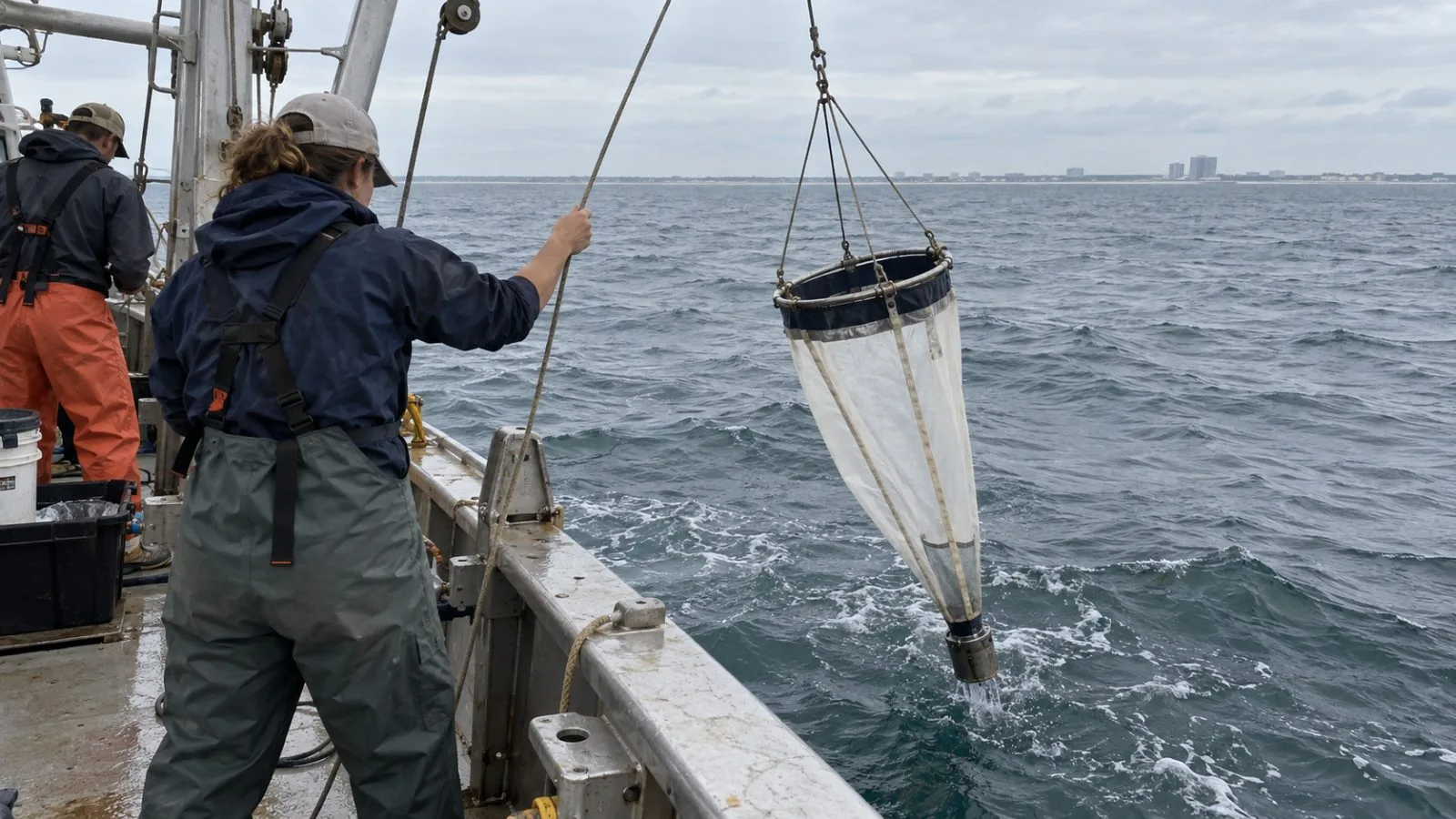
Researchers sampled the water column from the surface to a depth of 1,500 meters using nets and acoustic measurements. Genetic analysis also found signs of reduced diversity in two of the three lanternfish species examined. The findings for small cephalopods do not establish a comparable decline among larger squid or octopuses, which the nets sampled poorly.
Changes in deep-water conditions or food supply did not account for the lower counts, the researchers said. They identified the 2010 Deepwater Horizon spill and the response to it as the most plausible explanation, without establishing a direct causal link. The comparable survey series began after the spill; older records from one eastern Gulf station do not provide a Gulf-wide measure of conditions before it.
These animals serve as prey for whales, dolphins and commercially important fish. Some also move toward the surface at night and carry carbon deeper when they descend. The study raised the possibility that fewer animals could weaken that movement of carbon but did not measure any effect on carbon storage or predators.
The April 20, 2010, Deepwater Horizon explosion killed 11 workers. A U.S. court found that 3.19 million barrels of oil, about 134 million gallons, entered the Gulf during the 87-day spill, according to the National Oceanic and Atmospheric Administration. BP spokesperson Paul Takahashi told The Associated Press that the company had made changes intended to prevent a similar event.
The researchers cited the slow recovery of herring and orcas after the 1989 Exxon Valdez spill as a historical comparison. They identified lingering pollution, reduced genetic diversity and difficulty finding mates at lower population levels as possible contributors to the Gulf losses.