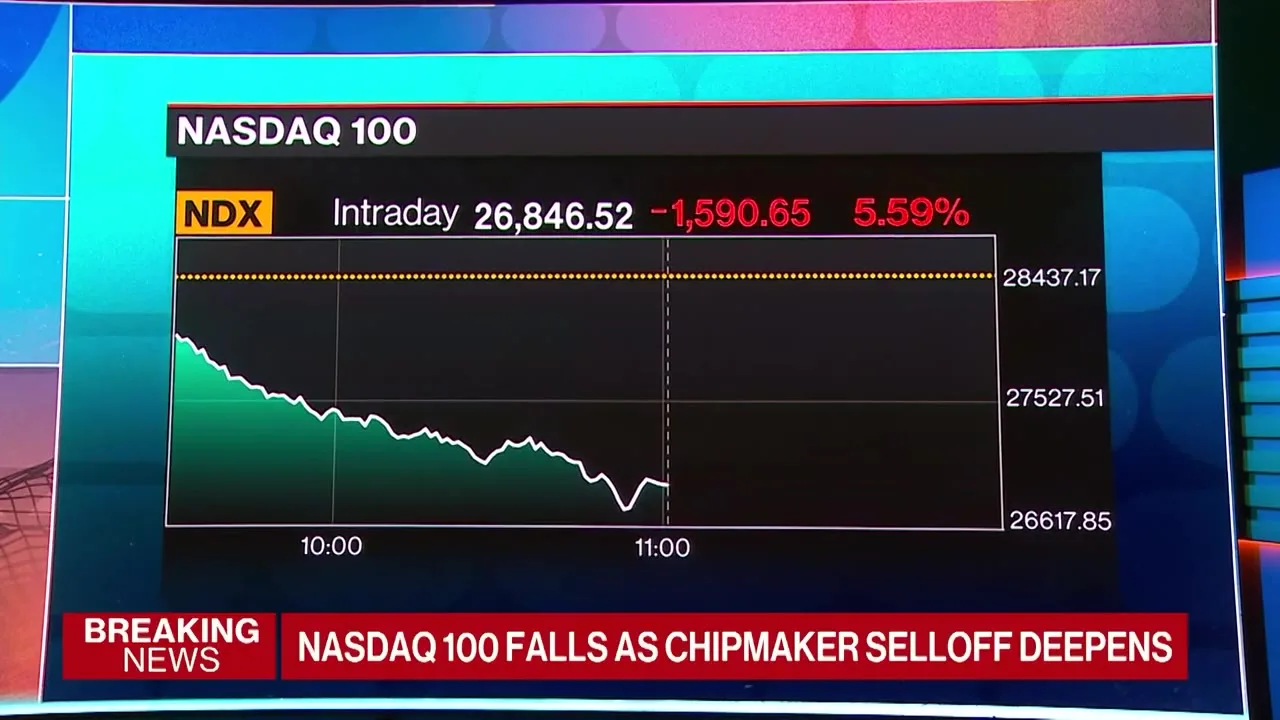
Technology’s slide has left health care and consumer staples outperforming it so far in the second half of 2026, as analysts question artificial intelligence spending and the economic outlook.
AJ Bell’s review of 11 groups in the S&P Global 1200 put energy first for the second half so far, followed by health care and consumer staples, CNBC reported. Information technology ranked last after falling more than 11%, a reversal from its 28.4% gain in the first half. CNBC linked energy’s strength to higher oil prices following the U.S.-Iran war.
The Nasdaq Composite was still up 8.7% for 2026 through Nov. 9, despite a 5.3% loss in October. It was down 0.7% month to date in November when CNBC reported the figures on Nov. 11. South Korea’s broad Kospi index, which has heavy semiconductor exposure, lost 16.2% in October and was down more than 8% month to date, CNBC reported.
CNBC also reported that the MSCI World Information Technology index fell 7% in October and a further 4.6% month to date in November. MSCI’s U.S. technology index had lost 11.5% since October. Over the past month, gains in MSCI’s health care, consumer staples and utilities indexes contrasted with those technology losses.
CNBC cited concerns about AI capital spending, cash flow, debt and circular financing as sources of technology volatility. EconoTimes previously covered Goldman Sachs’ defensive-stock screen featuring Tyson Foods and CVS Health amid questions about the earnings benefit from AI investment.
HSBC Head of EM and Global Equity Strategy Alastair Pinder said markets were already accounting for greater execution risks and delays in AI spending, CNBC reported. He described the move toward defensive shares as extreme and said fundamentals remained broadly healthy. Pinder cited forward earnings multiples of 40 for Walmart, near a record high, and 13 for Nvidia, near a record low.
AJ Bell investment director Russ Mould described equity markets as “in a state of alert.” He said the second-half pattern could reflect worries about next year’s economic outlook and concern that an AI bubble may be deflating.