
Many of us have no idea whether or not our period is “normal”. It’s no wonder why, since not only is everyone’s different, but stigma still keeps many of us from asking questions or discussing what we go through every month with friends and family.
You can listen to more articles from The Conversation, narrated by Noa, here.
But there is such as thing as bleeding too much. In fact, around a quarter of women experience a clinical condition known as menorrhagia – also called heavy menstrual bleeding. This is when your period is abnormally heavy or prolonged. Here’s what you need to need to know about the condition.
What counts as a heavy period?
Typically, during a “normal” period, you lose between 70ml and 80ml of fluid (the equivalent of around two double espressos). Around 50% of the fluid lost is blood. But for people with heavy menstrual bleeding, they may lose around 160ml-400ml of fluid (a little less than a pint of liquid).
The most common symptoms of heavy menstrual bleeding are:
- Bleeding through pads or tampons every one to two hours,
- A period that lasts more than seven days,
- Passing blood clots larger than 1 inch (around the size of a 10p coin).
Are heavy periods bad for you?
Despite how common it is, most women with the condition aren’t even aware they have it. Many even assume their period is “normal”. But this way of thinking can be a problem, as heavy menstrual bleeding can sometimes be a sign of an underlying issue – such as fibroids, endometriosis, or a pelvic infection or bleeding illnesses. A recently fitted intrauterine device (IUD) may also temporarily cause heavy menstrual bleeding.
Around two-thirds of women with heavy menstrual bleeding also go on to have long-term iron deficiency anaemia as a result.
When we menstruate, we lose red blood cells which are integral for carrying oxygen (a source of energy) throughout the body. If you bleed heavily every month, you lose more red blood cells than normal.
Anaemia can take a while to develop, but can cause a range of symptoms that can have a major affect on your daily life.
While pale skin or lips are tell-tale physical signs, a person with anaemia may also feel more tired than usual, irritable, dizzy, confused and even depressed. Anaemia can also cause headaches, brain fog, increased heart rate and even weight loss.
What can you do about heavy periods?
If you suspect you may have heavy menstrual bleeding, it’s important to speak to your doctor as soon as you can. Diagnosis can take up to several months after you first visit your GP, so it’s important not to put it off.
Going to your appointment armed with information is always useful. For example, it’s good to have an idea of your usual blood loss either by using menstrual cups to measure volume or tracking how many sanitary items you use every cycle.
Keeping a menstrual diary or using a tracker app can also help, as well as knowing if the condition runs in the family. If you haven’t done this, it’s likely your doctor will ask you to track these things for a few months before diagnosing you.
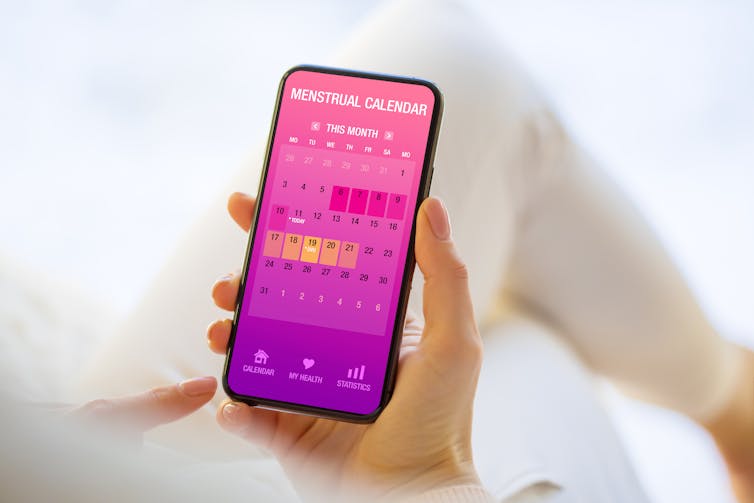
Keeping track of your period can be useful when speaking to your GP. Kaspars Grinvalds/ Shutterstock
Your doctor will be able to prescribe you certain medications that may lessen the effect of heavy menstrual bleeding – including the contraceptive pill or tranexamic acid (which controls bleeding and helps blood clots). Surgical options may also be needed should the condition be caused by another issue, such as fibroids.
If you suspect you may have anaemia, it’s similarly important to track your symptoms carefully, especially how you feel both before and after your period. Many common conditions, such as anxiety, cough, flu, and food allergies, have overlapping symptoms with iron-deficiency anaemia, so asking your doctor for a blood test is important as it will tell you whether or not you’re anaemic.
If you’re diagnosed with anaemia, iron supplements may be prescribed to help your body generate new red blood cells. A healthy, balanced diet containing foods high in iron – such as dark meats, chickpeas, beans, leafy greens and nuts – may also help.
Why it’s important to receive help
But as many women with heavy menstrual bleeding know, it often takes far too long before they get the help they need. This can mean years of unnecessary suffering, with the condition affecting everything from their personal life, school attendance, participation in sports and even their work. Those who develop anaemia as a result will experience even more effects on their physical and mental health.
This is why there needs to be far more openness and education about women’s health. Not only does this mean talking more about what is and isn’t normal when it comes to periods, it also means making sure healthcare providers are properly educated about the signs and symptoms of this condition – and the harms that can come from it. Having a more open discussion and raising awareness may help more women get the help and treatment they need sooner.