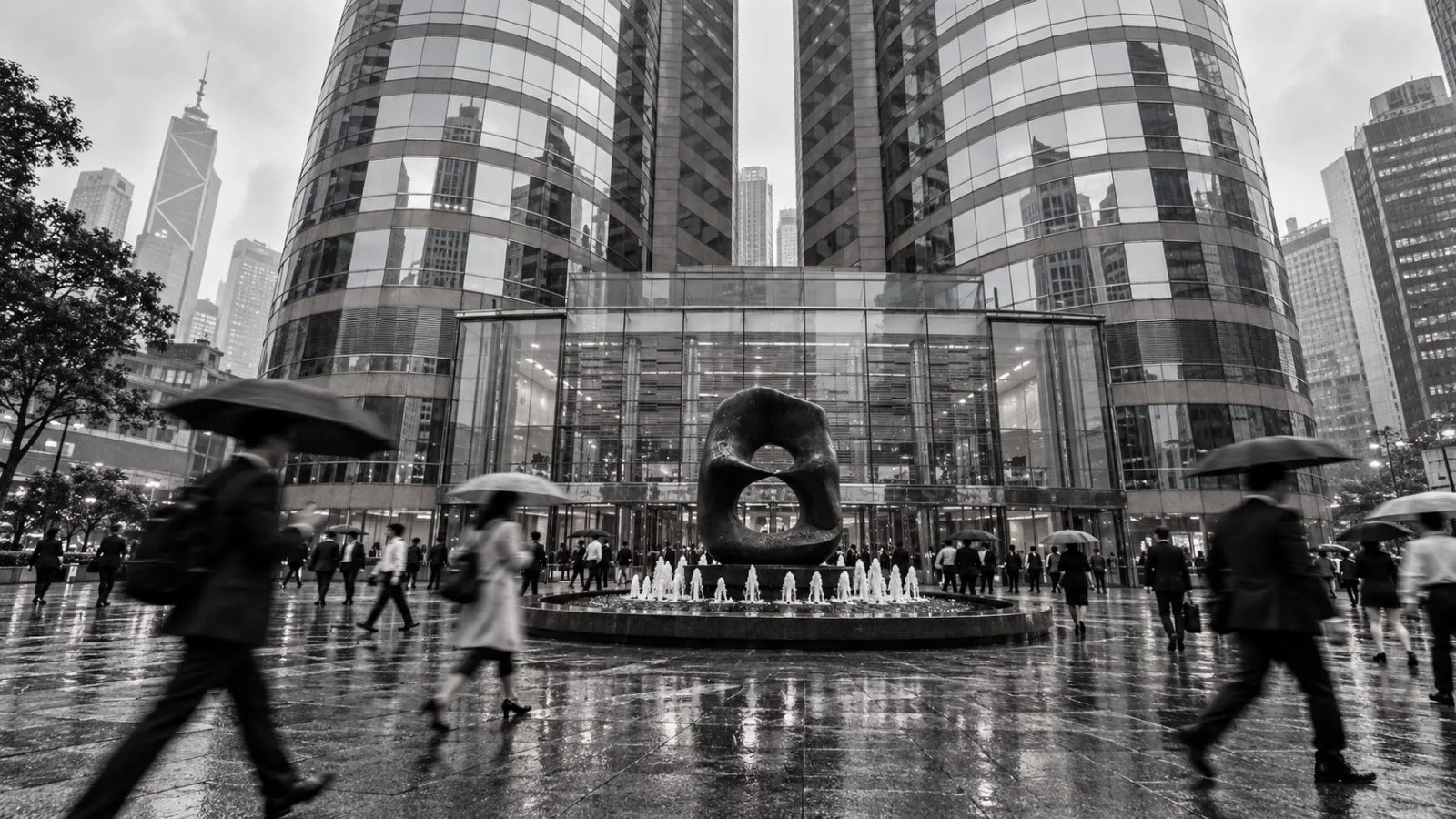
Hong Kong equities are becoming an early channel for investors cautiously rebuilding China exposure, while official measures seek to strengthen market liquidity and corporate support, according to an FXStreet report citing BNY strategist Jackit Wong.
BNY’s iFlow score for Hong Kong equity holdings increased to 0.98 on Nov. 12 from 0.95 on Oct. 29. FXStreet reported that daily Hong Kong equity scored flow was positive from Nov. 4, while mainland China’s weekly equity scored flow was stronger year to date in 2026 than in the prior two years.
Wong said the shift points to selective re-engagement rather than a broad return to risk-taking. He identified Hong Kong as the most liquid offshore channel for investors seeking China exposure without committing as heavily to mainland assets. BNY recorded a 2026 high of 1.10 for Hong Kong equity scored holdings, compared with 1.24 in 2025; those levels are monitoring points, not forecasts.
The People’s Bank of China said Nov. 4 that it would lower the interest rate on its relending facility for stock repurchases and increased-holdings loans by 25 basis points to 1%. The program covers 21 national banks and five systemically important city commercial banks, offers full support for eligible loans and carries a one-year term that can be extended according to banks’ needs.
Banks had applied for more than 200 billion yuan ($29.77 billion) in quotas after a Nov. 2 meeting, the central bank said. Since the facility began in October 2024, signed loans had reached about 440 billion yuan, with cumulative disbursements above 280 billion yuan. A joint meeting of the central bank, the National Financial Regulatory Administration and the China Securities Regulatory Commission said the program would become a long-term institutional arrangement.
Hong Kong’s Securities and Futures Commission unveiled a strategic action plan Sept. 23 to implement the city’s first five-year plan and its 2026 Policy Address, with a focus on capital-market depth and international competitiveness.
Hong Kong Exchanges and Clearing said equities rebounded in the first week of November as Southbound investors shifted to net buying and trading activity rose. Overall and Southbound turnover in September and October 2026 was still 30% below the average for January through August. Hong Kong-listed companies and borrowers eligible for the central bank-backed financing are the clearest potential beneficiaries; the supplied sources identify no specific group bearing a direct cost.