


 UK Finance Minister Healey Calls for Fiscal Discipline Amid Global Risks
  Gold Prices Hit One-Week High as Oil Falls, Fed Rate Outlook Weighed
  Bangladesh GDP Growth Accelerates to 4.6% on Industrial Rebound
  US Treasury Yields Ease After Strong 10-Year Auction as Global Bonds Struggle
  Oil Prices Slip as Trump Rules Out Iran Strike Before Midterms
  Oil Prices Rise as Gulf Hurricane and Middle East Supply Risks Mount
  IMF, World Bank Meetings Face Global Economic Risks Amid Iran War
  Wall Street Falls as Oil Prices Rise and Tech Stocks Slide
  Trump Calls for Zelenskyy Replacement Amid Russian Diesel Deal
  Gold Prices Rise Above $4,200 as Russia-Ukraine Energy Truce Eases Oil Concerns
  Asian Currencies Steady as Dollar Eyes Fourth Weekly Gain
  Oil Prices Trim Gains After Trump Rules Out Iran Strikes Before Midterms
  Fed Minutes Signal Another Rate Hike by Year-End
  Asian Stocks Mixed as OpenAI Revenue Concerns Hit Chipmakers
  US-Led Coalition Targets Global Factory Overcapacity


 Add as a preferred source on Google

The long-term impact of COVID-19 on the economy will not be clear for some time. But in the UK, the easing of pandemic related restrictions has coincided with significant labour shortages and the driving up of wages. Statistics show that wages have risen 7.4% in the past year, and the number of job vacancies has continued to rise (up to 953,000 in July 2021).
Those vacancies have appeared amid continued travel restrictions from abroad, and the prolonged furlough scheme, which is keeping over 1 million people tied to employers that don’t have work available for them.
The wage increase has been most noticeable in sectors with the highest demand such as hospitality, haulage and distribution, where trained staff have become more valuable – and perhaps, as a result, more selective about the jobs they do.
Zero-hours contracts, for example, may become less appealing when people have the choice of jobs with guaranteed shifts. There is a similar impact on the related gig economy, in which workers are paid as and when they work, often for digital platforms like Uber or Deliveroo. Again, workers may decide that a more traditional and regular income is preferable.
This could become a major problem for these firms, as their business model depends on workers not being paid while they are waiting between fares or deliveries. Uber drivers may have recently won worker rights, but even this does not entitle them to earn while they are logged on and available rather than driving a passenger.
Yet high customer service (and satisfaction) levels depend on enough drivers being available when a booking arrives, or delivery riders when a takeaway order is made. So to attract and retain drivers and riders, firms will need to pay more.
There is evidence that is indeed happening. Uber’s cut from each fare has fallen for the same period from 25.8% last year to 18.7% this year, as they offer increased incentives to attract drivers.
But it is likely customers will end up covering this cost with increased fares as Uber attempts to reduce its losses by the end of the year. All of the major “taxi app” platforms are currently making significant and continuing losses, so it seems likely that significant price increases for passengers will be unavoidable.
Yet consumers can be highly sensitive to price rises, which may in turn lead to a drop in demand as users choose other forms of transport. When Uber first appeared in London, low fares increased customer demand to such an extent that driver numbers (across all firms) increased from 65,000 to 120,000, with Uber claiming 45,000 of them. Increased fares may reverse this trend.
Supply and demand
It is likely that labour shortages will drive costs higher and service levels will decline. Takeaway food delivery in particular requires high availability of riders to avoid food arriving cold. The need to reheat a burger and chips after delivery is hardly an appealing prospect.
For ride hailing, the challenges over labour shortages and price sensitivity may mean it becomes impossible to justify the high valuations accorded by stock markets and venture capital investors.

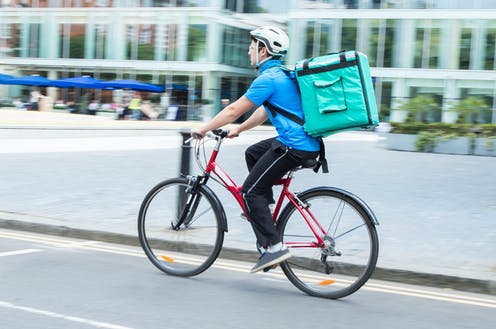
Better pay for gigs? Shutterstock/kentoh
One of the major investors in Uber, which holds over 20% of the shares, is rapidly reducing its exposure, selling a third of their shares over the next few months, suggesting they they may be losing faith in ride hailing to make profits.
In this and other sectors, labour shortages in the UK may well be here to stay. Brexit has made access for unskilled migrant workers more difficult, as the current rise in British “staycations” and the extra pressure it has placed on the domestic hospitality industry has shown.
But while labour shortages are bad for output and customer service, they may well help to improve improve pay and conditions for some of the lowest paid in society. Among them, gig workers and those on zero hours contracts may benefit the most.







