


 AI Agents Could Disrupt Financial Services, Bernstein Says
  Trump, Tech Leaders Sign ‘Morally Binding’ AI Safety Accord
  Robinhood Stock Nears $114 as Jobs Data Boosts Risk Appetite
  Morgan Stanley Raises TD Synnex Price Target to $359 on Strong AI Demand
  SoftBank Shares Fall After $10 Billion OpenAI Investment
  BlackRock Sees AI Agents Fueling New Crypto Demand
  Polymarket Traders Bet on Trump AI Rename to ‘Super Intelligence’
  NEAR Intents Hack Drains $3.8 Million, NEAR Price Falls 7.5%
  Ripple and Cardano Expand Blockchain Adoption in Brazil
  Apple CEO John Ternus Plans Major Overhaul
  Ripple Locks 700 Million XRP Back in Escrow After October Release
  Michael Saylor Sees Strategy, Strive Expanding Bitcoin Credit Market
  Ethereum Price Eyes $3,000 as Fed Rate Hike Odds Drop
  WordPress Malware Uses Ethereum to Evade Removal
  TD Cowen Starts SpaceX at Buy, Sees AI Compute Driving Growth
  China Says U.S. Shares Responsibility for AI Governance
  Cardano Price Struggles as NIGHT Token Surges 20%


 Add as a preferred source on Google
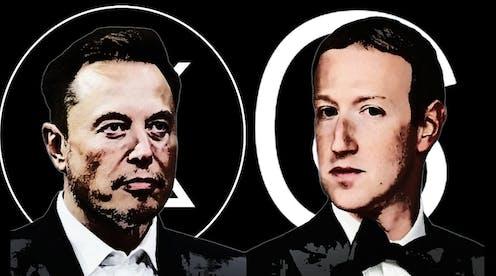

Technological innovation in the last couple of decades has brought fame and huge wealth to the likes of Elon Musk, Steve Jobs, Mark Zuckerberg and Jeff Bezos. Often feted as geniuses, they are the faces behind the gadgets and media that so many of us depend upon.
Sometimes they are controversial. Sometimes the level of their influence is criticised.
But they also benefit from a common mythology which elevates their status. That myth is the belief that executive “visionaries” leading vast corporations are the engines which power essential breakthroughs too ambitious or futuristic for sluggish public institutions.
For there are many who consider the private sector to be far better equipped than the public sector to solve major challenges. We see such ideology embodied in ventures like OpenAI. This successful company was founded on the premise that while artificial intelligence is too consequential to be left to corporations alone, the public sector is simply incapable of keeping up.
The approach is linked to a political philosophy which champions the idea of pioneering entrepreneurs as figureheads who advance civilisation through sheer individual brilliance and determination.
In reality, however, most modern technological building blocks – like car batteries, space rockets, the internet, smart phones, and GPS – emerged from publicly funded research. They were not the inspired work of corporate masters of the universe.
And my work suggests a further disconnect: that the profit motive seen across Silicon Valley (and beyond) frequently impedes innovation rather than improving it.
For example, attempts to profit from the COVID vaccine had a detrimental impact on global access to the medicine. Or consider how recent ventures into space tourism seem to prioritise experiences for extremely wealthy people over less lucrative but more scientifically valuable missions.
More broadly, the thirst for profit means intellectual property restrictions tend to restrict collaboration between (and even within) companies. There is also evidence that short-term shareholder demands distort real innovation in favour of financial reward.
Allowing executives focused on profits to set technological agendas can incur public costs too. It’s expensive dealing with the hazardous low-earth orbit debris caused by space tourism, or the complex regulatory negotiations involved in protecting human rights around AI.

Who pays for the clean up? Frame Stock Footage/Shutterstock
So there is a clear tension between the demands of profit and long-term technological progress. And this partly explains why major historical innovations emerged from public sector institutions which are relatively insulated from short-term financial pressures. Market forces alone rarely achieve transformative breakthroughs like space programs or the creation of the internet.
Excessive corporate dominance has other dimming effects. Research scientists seem to dedicate valuable time towards chasing funding influenced by business interests. They are also increasingly incentivised to go into the profitable private sector.
Here those scientists’ and engineers’ talents may be directed at helping advertisers to better keep hold of our attention. Or they may be tasked with finding ways for corporations to make more money from our personal data.
Projects which might address climate change, public health or global inequality are less likely to be the focus.
Likewise, research suggests that university laboratories are moving towards a “science for profit” model through industry partnerships.
Digital destiny
But true scientific innovation needs institutions and people guided by principles that go beyond financial incentives. And fortunately, there are places which support them.
“Open knowledge institutions” and platform cooperatives are focused on innovation for the collective good rather than individual glory. Governments could do much more to support and invest in these kinds of organisations.
If they do, the coming decades could see the development of healthier innovation ecosystems which go beyond corporations and their executive rule. They would create an environment of cooperation rather than competition, for genuine social benefit.
There will still be a place for the quirky “genius” of Musk and Zuckerberg and their fellow Silicon Valley billionaires. But relying on their bloated corporations to design and dominate technological innovation is a mistake.
For real discovery and progress cannot rely on the minds and motives of a few famous men. It involves investing in institutions which are rooted in democracy and sustainability – not just because it is more ethical, but because in the the long term, it will be much more effective.







