The new Hubble and Webb views released by NASA and the European Space Agency (ESA) expose different structures in a Carina Nebula pillar, helping astronomers study how stars form.
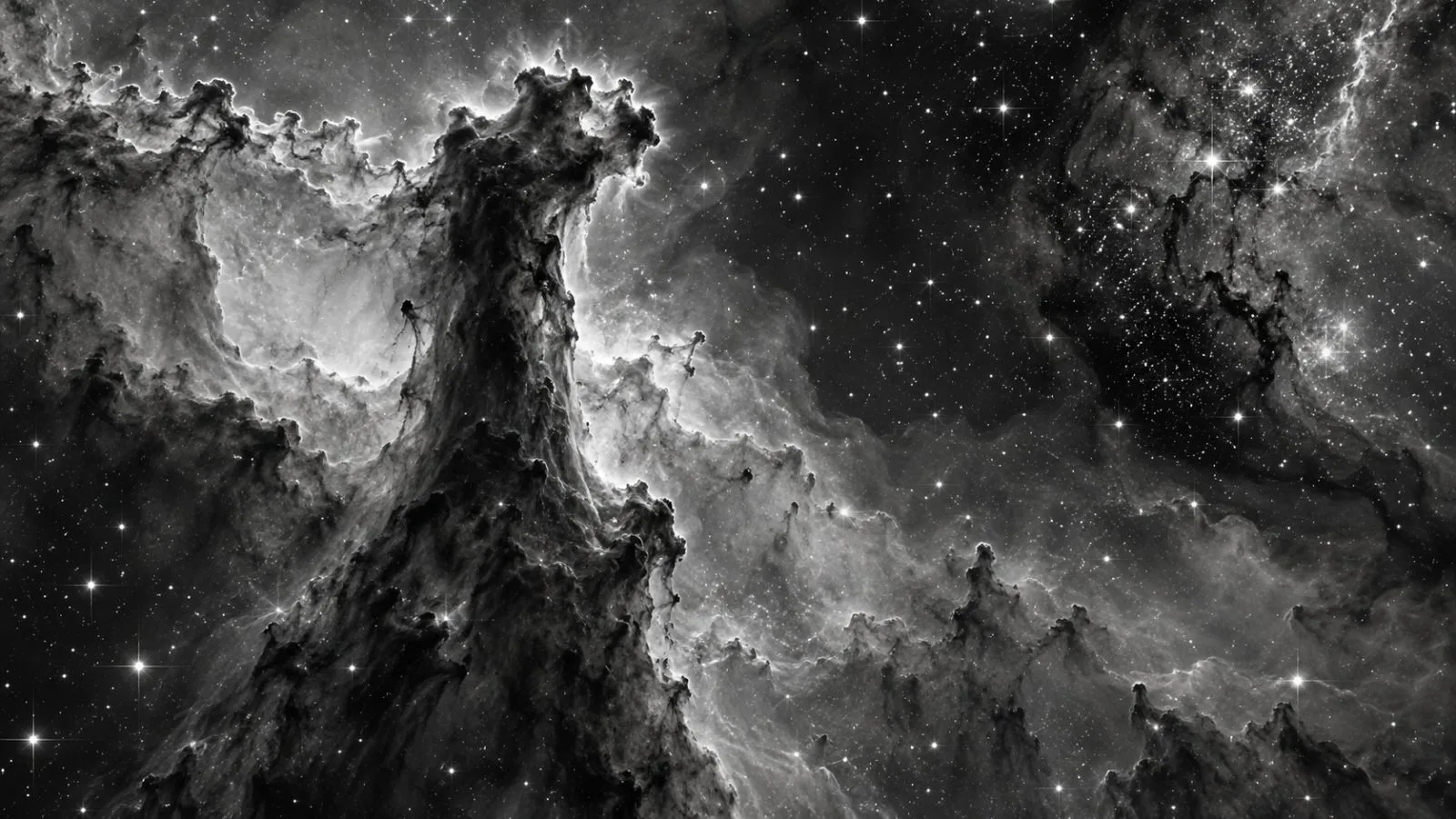
The feature lies about 7,500 light-years from Earth and is nicknamed the Cat’s Head Nebula for its silhouette. NASA and ESA say ultraviolet radiation and winds from massive stars probably carved its outline, while denser material within it has survived erosion so far. The agencies identify the area as a star-forming region.
The images show separate observations made months apart. Hubble’s Wide Field Camera 3 observed the area Jan. 15, 2026. Its visible-light image shows a dark column bordered by bright gas. Webb’s Near-Infrared Camera observed it May 27. That view is less obscured by dust, revealing more surface detail, a dense field of stars and faint galaxies in the background.
Webb also captured the region with its Mid-Infrared Instrument. In MIRI’s image, emissions from warm dust and starlight-energized carbon-based molecules trace structures inside the nebula. Hubble’s filters register light from oxygen, hydrogen and sulfur, as well as starlight scattered by dust. Together, the instruments show the same region in different ranges of light.
Some bright points remain uncertain. NASA says the spot that gives the pillar an eye-like appearance may be a young star partly hidden by dust. ESA says another bright source to the pillar’s right may also be a very young star; the image does not establish whether a filament crossing it is connected to the source.
NASA describes the nebula as a temporary formation that is expected to disperse as stars form and change over time. The different images give astronomers several ways to examine the region’s star-forming activity.