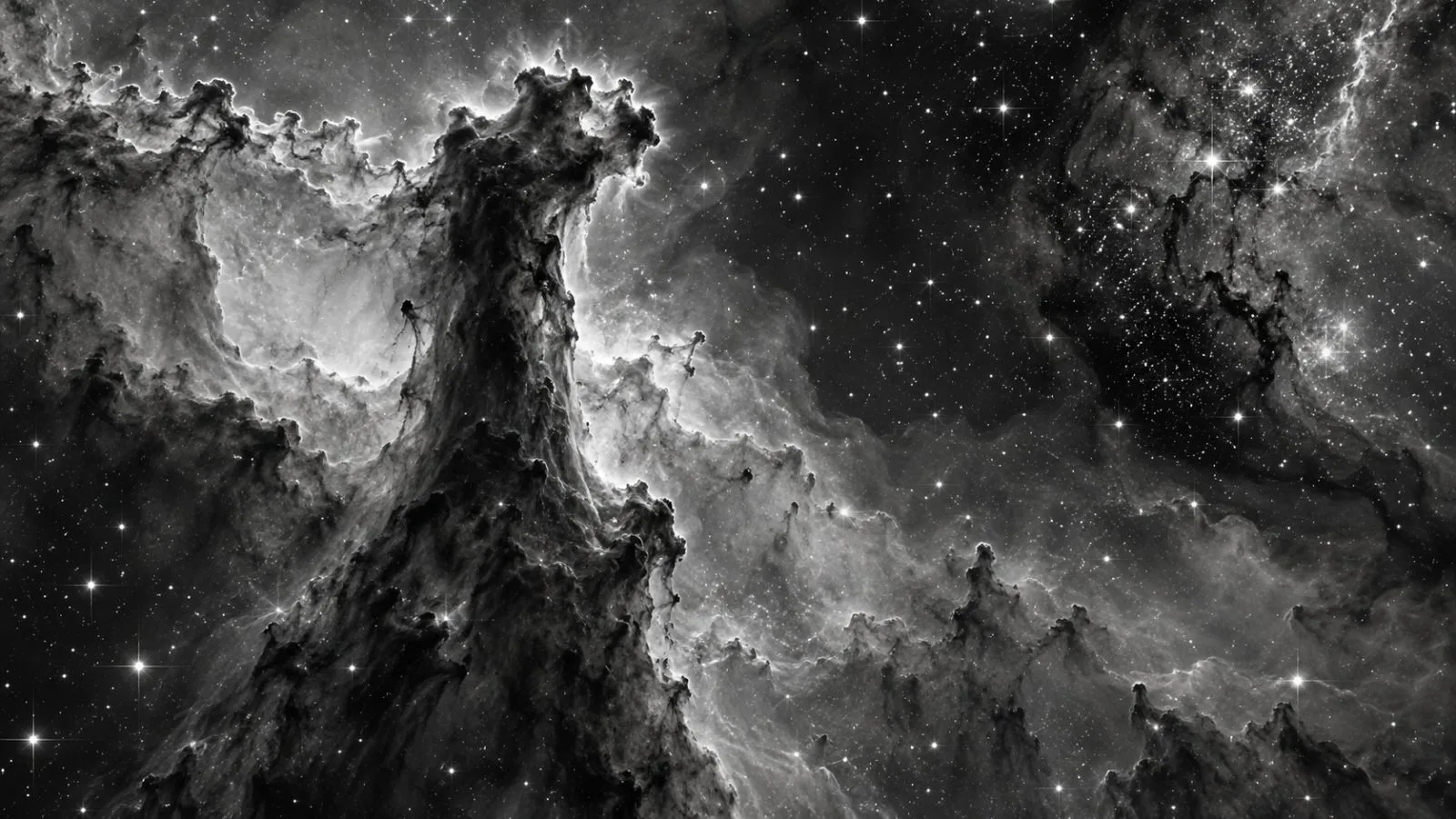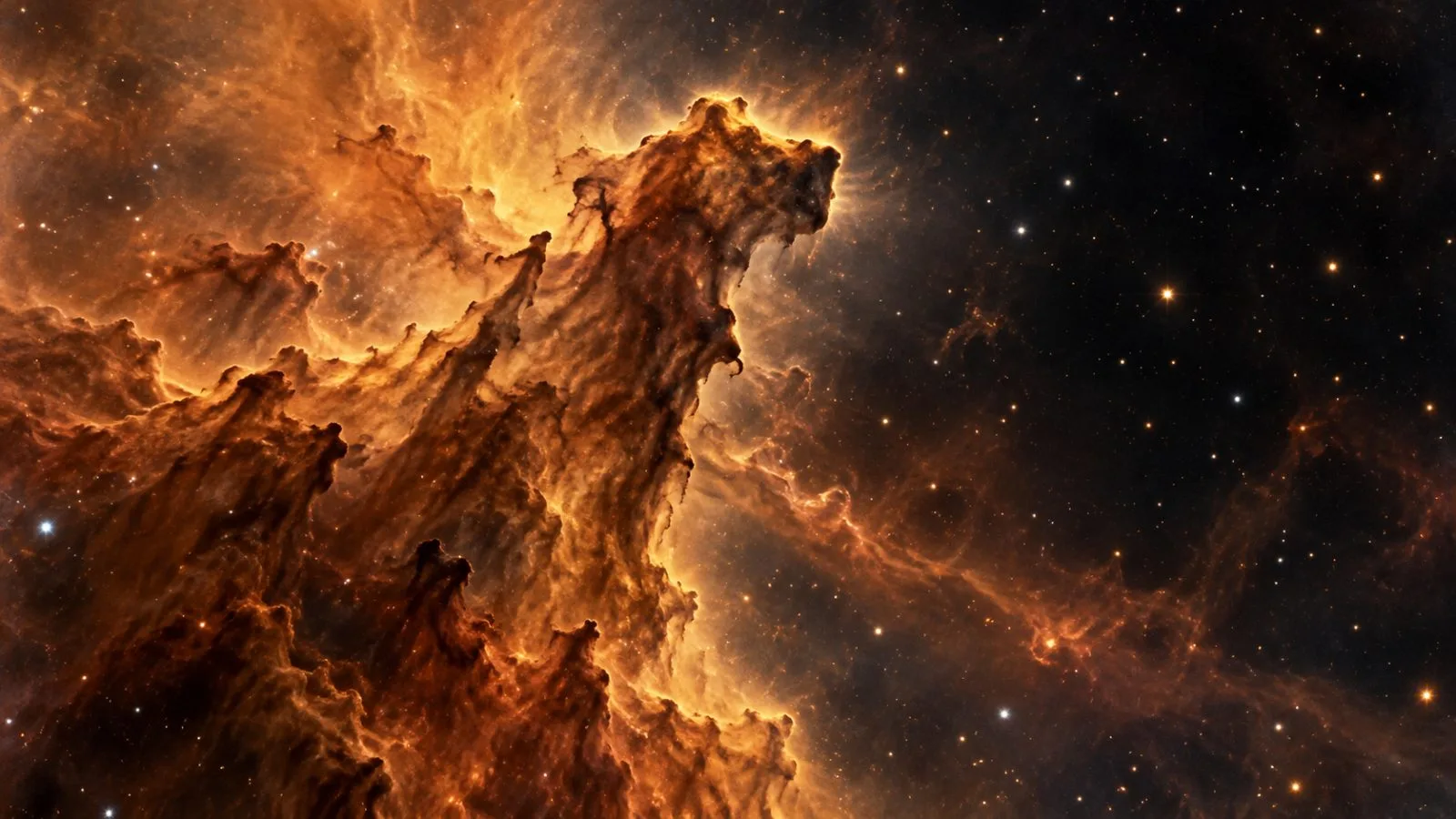
NASA’s James Webb Space Telescope released a mid-infrared view of the Cat’s Head Nebula on Oct. 29, showing structures in a star-forming pillar roughly 7,500 light-years from Earth.
NASA’s separate image article was published Oct. 30 and identifies Oct. 29 as the release date. The Cat’s Head occupies a small section of the Carina Nebula.
The mid-infrared view reveals internal structures through signals from warm dust and carbon-based molecules energized by starlight, NASA and the European Space Agency said in a joint release. Webb’s near-infrared observations show stars and faint galaxies behind the dust, while Hubble’s visible-light image captures another view of the pillar.
NASA says the pillar’s cat-like form likely reflects ultraviolet radiation and winds from massive stars. Denser material has remained intact as surrounding gas and dust erode, the agency says. NASA describes the formation as temporary and says it is expected to dissipate over time as stars develop.
The MIRI image revisits a region in EconoTimes’ earlier coverage of Hubble and Webb views of the Cat’s Head pillar.