The International Criminal Court rejected a request to quote victims in Tagalog during opening statements in former Philippine president Rodrigo Duterte's case, the judge presiding over the hearing said.
The decision prevents victims' lawyers from using the Philippine language to recount experiences their clients shared with them. The judge said interpretation would be available and required the opening remarks to be delivered entirely in English.
The exchange came during Reuters' live coverage, titled “LIVE: Former Philippine president Duterte attends ICC hearing,” published Nov. 2.
Earlier, Duterte's defence lawyer, addressed as Mr. Haynes, said he would probably outline the defence at the start of the case. He said he would settle that position within the next few days.
“I think it's more likely than not that I will say something at the start of the case,” Haynes said, citing the case's stature and his client's status.
The prosecution said it hoped to shorten its opening statement to three hours or less, from an initial allocation of four to six hours. Victims' lawyers also planned to shorten their allocated three hours.
The judge gave the defence permission to explain its position publicly without losing its right to make an opening statement later, although that later statement might be shorter.
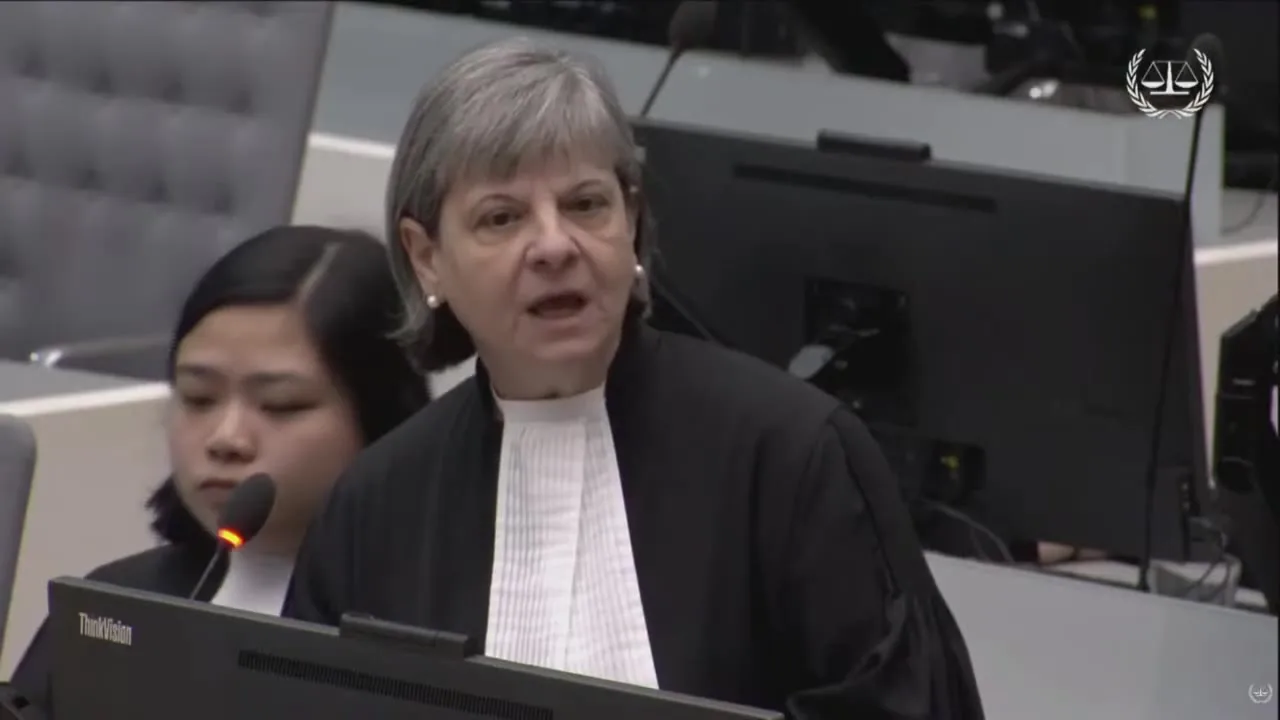
A lawyer representing victims then requested permission to quote parts of their accounts in Tagalog. Individual passages would last one or two minutes, with the language used for about 15 to 20 minutes in total.
The lawyer said victims following the hearing would connect more closely with the presentation if they could hear their experiences recounted in Tagalog.
The judge said the Rome Statute, the court's founding treaty, designated English and French as its working languages. Using another language required an exceptional reason, the judge said.
The judge also cited added cost and complexity, and said some victims spoke other languages. The court would explore whether a Tagalog translation or transcript could be made available on its website.
The court did not confirm whether it would provide that written translation. “It must all be in English,” the judge said of the opening remarks.
The judge also shortened the hearing day to allow the defence time to consult Duterte before his return to detention. The court would sit from 10 to 11 a.m., 11:30 a.m. to 12:30 p.m., 1:30 to 2:30 p.m. and 3 to 4 p.m.
The schedule covers the first block of evidence through the Christmas break and remains subject to review.