The International Energy Agency (IEA) forecasts renewable power capacity in the Middle East and North Africa will more than double by 2031, while the Gulf Cooperation Council Interconnection Authority (GCCIA) operates a regional electricity market.
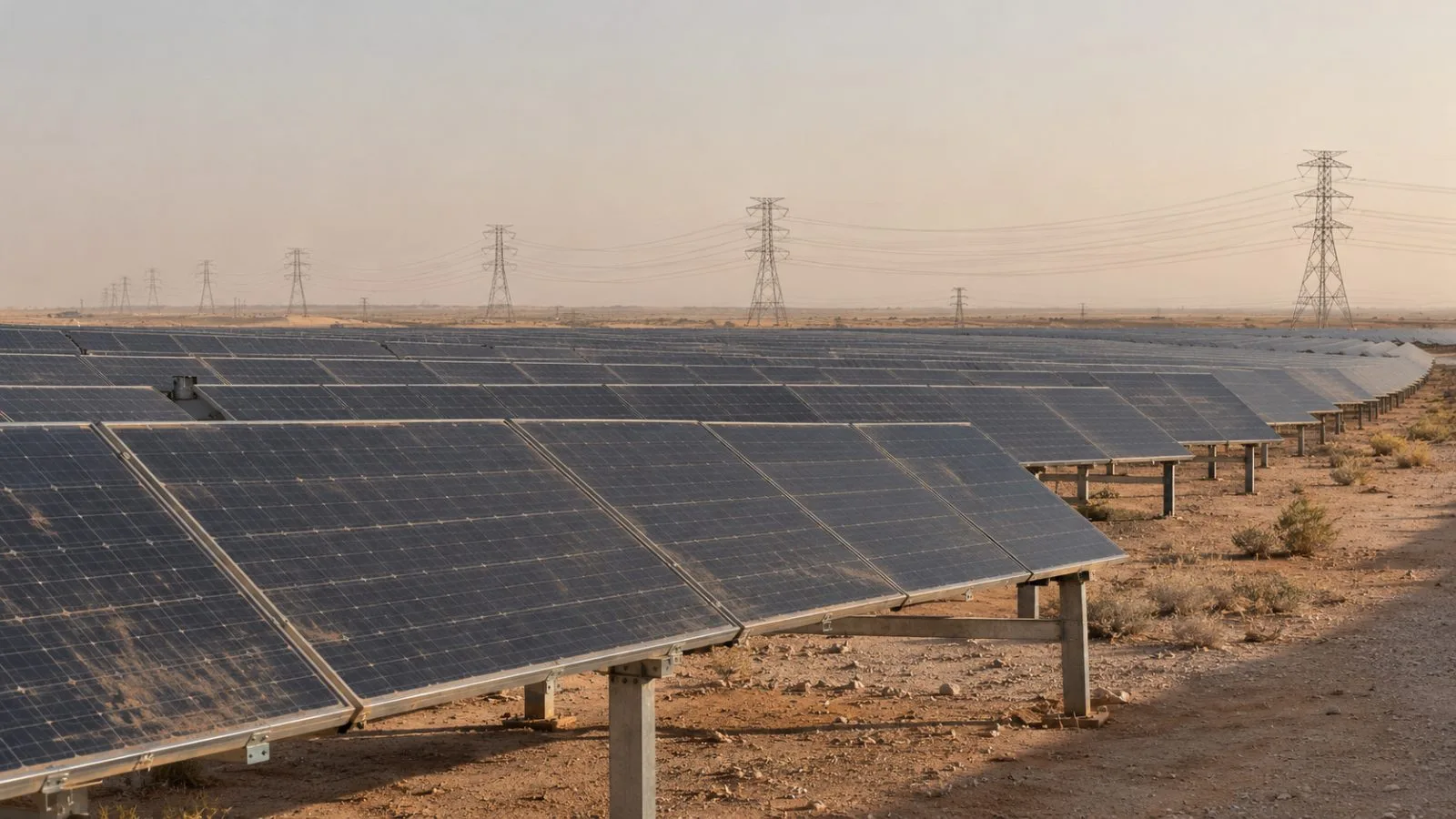
The agency’s global outlook calls for close to 4,800 gigawatts (GW) of renewable capacity to be added over 2026-31, up 57% on the prior six years. Solar photovoltaic (PV) is forecast to account for three-quarters of global renewable capacity additions through 2031. Saudi Arabia is projected to record a fivefold acceleration in renewable deployment over 2026-31, with the United Arab Emirates next in the regional picture. IEA Executive Director Fatih Birol has cited energy security and lower reliance on imported fuels as drivers of the shift.
The IEA expects 17 countries to draw more than half their electricity from variable renewables by 2031. To support that shift, it points to stronger transmission networks, storage, on-demand generation and demand that can adjust to supply.
GCCIA’s Power Exchange and Trade Agreement supports scheduled electricity transfers, bilateral contracts, shared generation capacity and operating reserves among member states. The authority says interconnection can reduce fuel use and operating expenses by helping members use available generation more efficiently.
Within the existing grid, Oman is served through a link via the United Arab Emirates. Direct connections serve the remaining Gulf Cooperation Council members, GCCIA says. Its project listing describes a separate direct Oman route as under construction, covering about 530 kilometers of 400-kilovolt lines.
In a Nov. 10 editorial, The National argued that Gulf governments could coordinate their separate solar plans through shared infrastructure and more cross-border electricity trade. The IEA published its outlook Nov. 6, before COP31 opened in Antalya on Nov. 9. The conference is scheduled to run through Nov. 20.