In countries with compulsory voting, such as Australia and many in Latin America, the system usually ensures an overwhelming majority of voters cast their ballots election after election.
In the United States, it’s a very different story. Two-thirds of eligible voters turned out to vote in the 2020 presidential election – the highest rate since 1900. Turnout in presidential elections before 2020 tended to hover between 50% and 65%.
Often, it’s the voters choosing to stay home on the couch who effectively decide an election’s outcome.
Under the United States’ unusual Electoral College presidential voting system, the candidate who wins the most votes nationally does not necessarily win the election. Twice in the past 25 years, Democrats have won the popular vote in the presidential race and still lost the election. That includes Donald Trump’s win over Hillary Clinton in 2016.
As such, victory depends on getting more voters “off the couch” in key battleground states where the decisive Electoral College votes are up for grabs. In those states, it doesn’t matter what percentage of people show up to vote, or how much a candidate wins by, it is winner take all.
A voter who doesn’t vote, therefore, actually makes an active choice — they remove a vote from the candidate they would have likely chosen, and so give an important advantage to the person they would not have voted for.
The “couch” is effectively where Americans go to vote against their self-interest.
Who is more incentivised to vote?
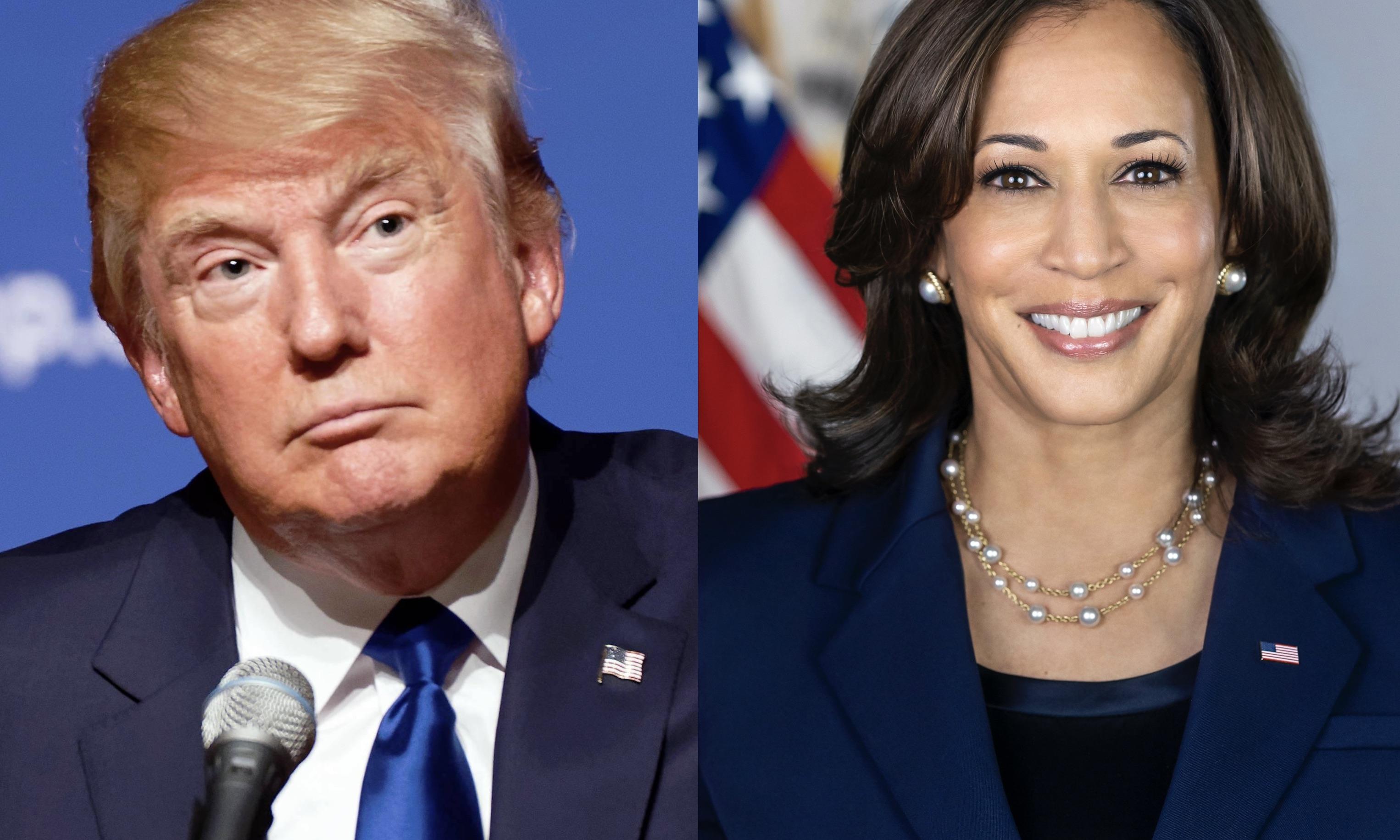
As this year’s presidential election between Trump and Kamala Harris approaches, we ask a simple question: whose “couch” will decide one of the most consequential elections in living memory?
Recent research demonstrates that partisanship is an important driver of voter choice in presidential elections.
The fact that the US is deeply divided is not news to most, but current survey data show how evenly split along partisan lines it actually is. With about 30% of Americans identifying as a Republican and 30% identifying as a Democrat, there is virtually no difference in the total number of voters who support each major party.
The remaining 40% of Americans identify as “independent” – that is, not loyal to either major political party. Almost seven decades of research on the American voter shows, however, that independents heavily “lean” towards one party or the other, with about half leaning Republican and the other half leaning Democrat.
One possible insight into which group has greater incentive to vote is polling on people’s dissatisfaction with their party’s candidate.
According to the most recent Gallup Poll data, 9% of Republicans currently have an unfavourable opinion of Trump. In contrast, only 5% of Democrats have an unfavourable opinion of Harris.
Partisan voters who are dissatisfied with their party candidate have a massive incentive to “stay on the couch” and refrain from voting. They don’t really want to vote for “the other team”, but they can’t stand their own team anymore either.
For example, Republican women in the suburbs, veterans and traditional Republicans have started to abandon Trump over his stances on reproductive rights and national security, and his temperament. The Trump campaign clearly knows this. At a rally in New York a few days ago, he told attendees to “get your fat ass out of the couch” to go vote for him.
Should these disaffected Republican and Republican-leaning voters stay home on November 5, Harris may well have a decisive edge over Trump.
When the couch wins, America loses
In 2016, Trump defied the polls and traditional voter turn-out trends by convincing some disaffected, working-class Democrats to stay on the couch, vote for an unelectable third party candidate or, in some cases, vote for him.
Could this happen again? Or will Democrats be able to reverse this phenomenon by getting exhausted Republicans suffering Trump fatigue to stay home, while motivating everyone from Taylor Swift fans to “never Trumpers” to veterans of foreign wars to get out to vote.
Recent trends suggest overall turnout will be comparatively high, in line with the past three federal US elections.
Democrats have traditionally benefited from higher voter turn-out, but it is not as clear this is still the case in 2024. Recent research shows higher turnout rates seem to have favoured the Republican Party since 2016.
Yet both parties still have significant numbers of people who don’t vote. According to the Pew Research Center, 46% of Republicans and Republican-leaning independents didn’t vote in the past three elections (2018, 2020 and 2022), compared to the 41% of Democrats and Democratic-leaning independents.
So again, who sits on the couch matters. Inevitably, many of those who stay home will get precisely what they don’t want. When the couch wins, America loses.