India’s Unified Payments Interface (UPI) remains free for consumers paying at shops, even as a planned merchant fee has been pushed beyond the Diwali shopping season. The National Payments Corporation of India (NPCI) said on Oct. 13 that the merchant discount rate (MDR) on select person-to-merchant (P2M) transactions would begin immediately after Diwali, on a date to be notified separately.
The official start date remains unconfirmed. The framework had been scheduled to take effect on Oct. 15, but NPCI’s newer announcement deferred it. NDTV Profit and Moneycontrol have reported a possible launch in the second week of November; NPCI has not confirmed that date.
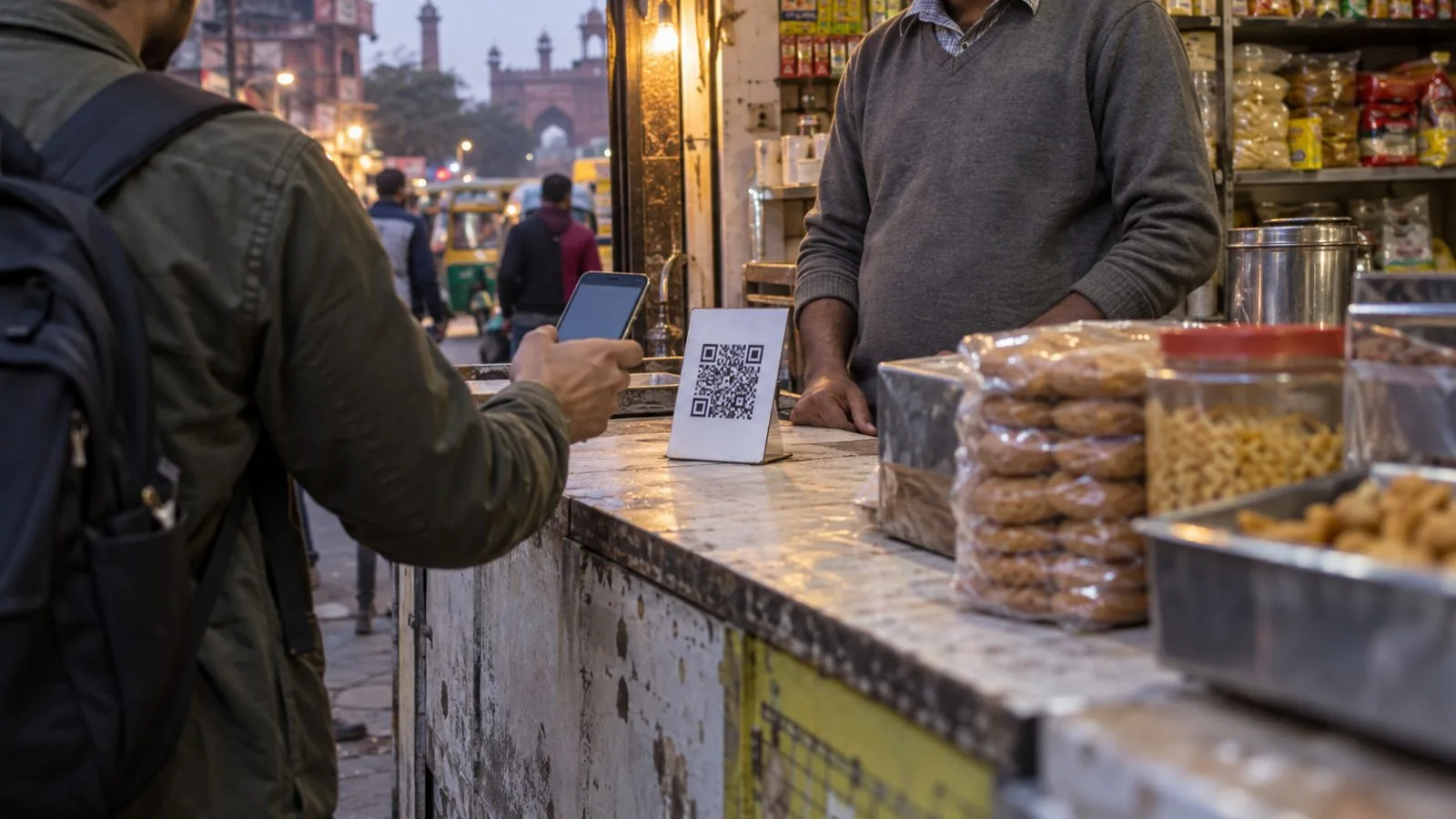
For eligible merchant payments above ₹2,000, the planned standard MDR is 0.4%, capped at ₹300 for transactions of ₹75,000 or more. A ₹3,000 purchase would generate a ₹12 fee for the merchant under the framework. Small merchants in the P2PM category who receive up to ₹1 lakh per month through UPI QR codes remain exempt, even when an individual payment exceeds ₹2,000.
For shoppers, the key rule is that the MDR is a merchant-side charge. The Department of Financial Services’ official FAQ says merchants cannot pass MDR charges on to customers and that consumers should pay the posted price. The Ministry of Finance has also said banks were advised to ensure merchants do not pass the charge on.
The ministry estimates that about 96% of P2M transactions will remain unaffected. It says MDR collections will be distributed among payment-system participants, including banks and payment application providers, to support UPI’s operation and expansion.
If a checkout charge is described as an MDR or UPI fee, the official guidance gives consumers a basis to challenge it: the policy assigns that cost to the merchant, not the customer. NPCI and government guidance do not specify a complaint process or penalty for merchants that pass MDR to customers.