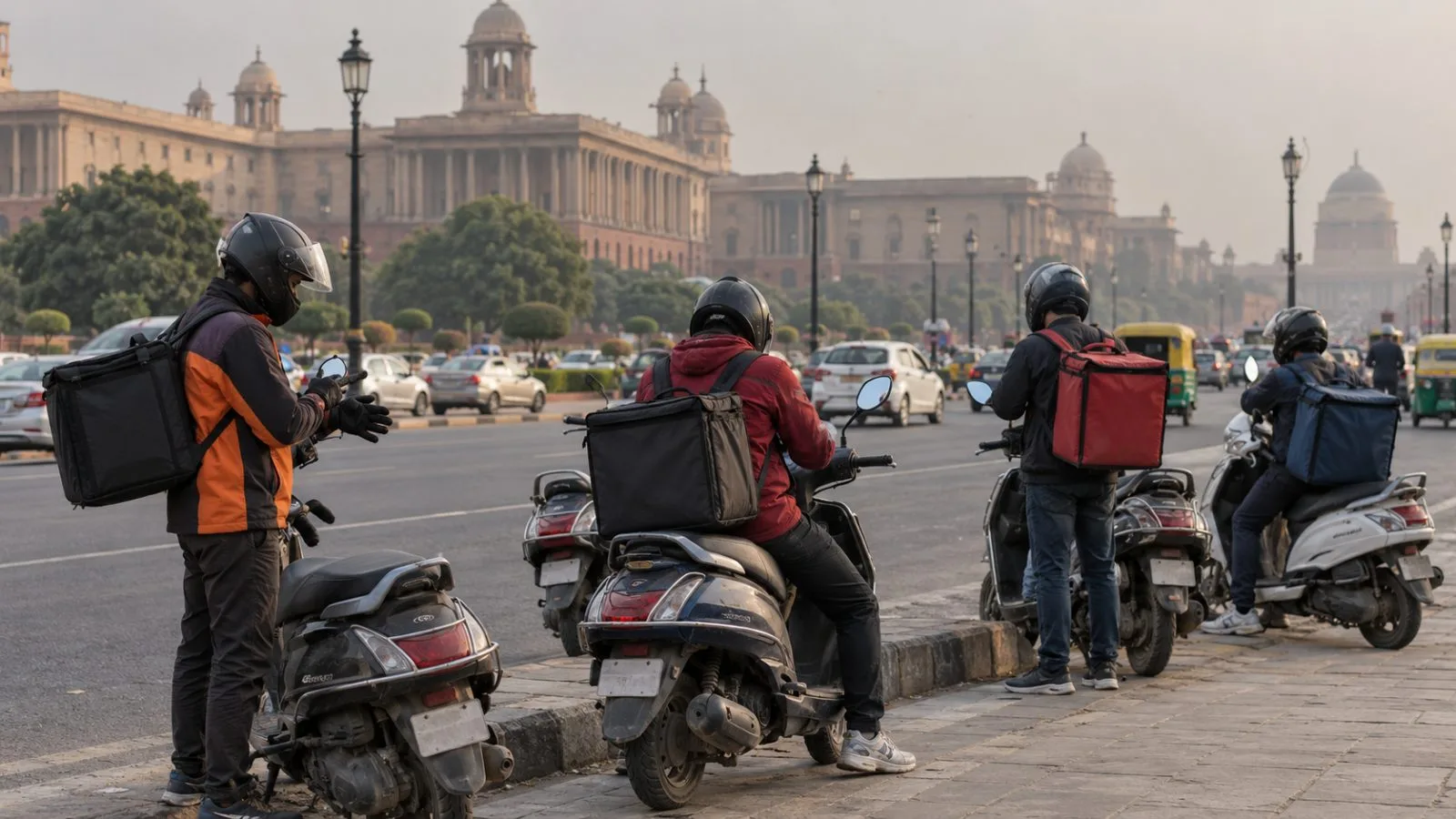
India's revised social security board roster gives platform-company and worker-organization nominees a formal role in shaping gig welfare, while leaving any new benefits and funding levels undecided.
The notification, dated Oct. 28 and published in the Gazette on Oct. 29, assigns gig and platform worker matters to the National Social Security Board constituted under the Code on Social Security, 2020. The same board handles issues concerning unorganised workers; for gig-related matters it uses a separate roster and has a three-year term from publication.
The five platform-company nominees are Dr. Jaskiran Bedi of Eternal Group, Neha Singhvi of Swiggy Limited, Panduranga Acharya of Zepto Limited, Richa Mohanty of Urban Company and Manasvi Mann of Rapido.
Worker-side nominees are Indranil Banerjee and Kishanbhai Govindbhai Patani of the Indian Federation of App-Based Transport Workers; Ashok Kumar Shukla of Bharatiya Mazdoor Sangh; Virat Jaiswal of the National Front of Indian Trade Unions; and K Ganesh Rao of the Trade Union Coordination Centre. The notification identifies these nominees through their union affiliations but does not establish whether each personally works in a gig or platform job.
The Union Minister for Labour and Employment chairs the board, and the ministry secretary is vice-chairperson. The roster gives platform companies and worker organizations formal representation through their nominees, in a body that can shape proposed welfare measures.
The board’s duties include advising the central government on applying the Code, putting forward possible schemes and tracking programs run centrally. It may also examine state record keeping and spending from the relevant fund and account. The board is required to meet at least three times a year.
The Code permits schemes covering life and disability protection, accident insurance, health and maternity benefits, old-age protection and crèche facilities. A Ministry of Labour and Employment FAQ says the central government will notify aggregator contributions to gig and platform worker schemes; the notification sets no amount.
NITI Aayog estimated India had 7.7 million gig workers in 2020–21 and projected 23.5 million by 2029–30. The agency described the estimate as indicative because of gaps in workforce data. The notification and ministry announcement do not give a date for the board’s first meeting.