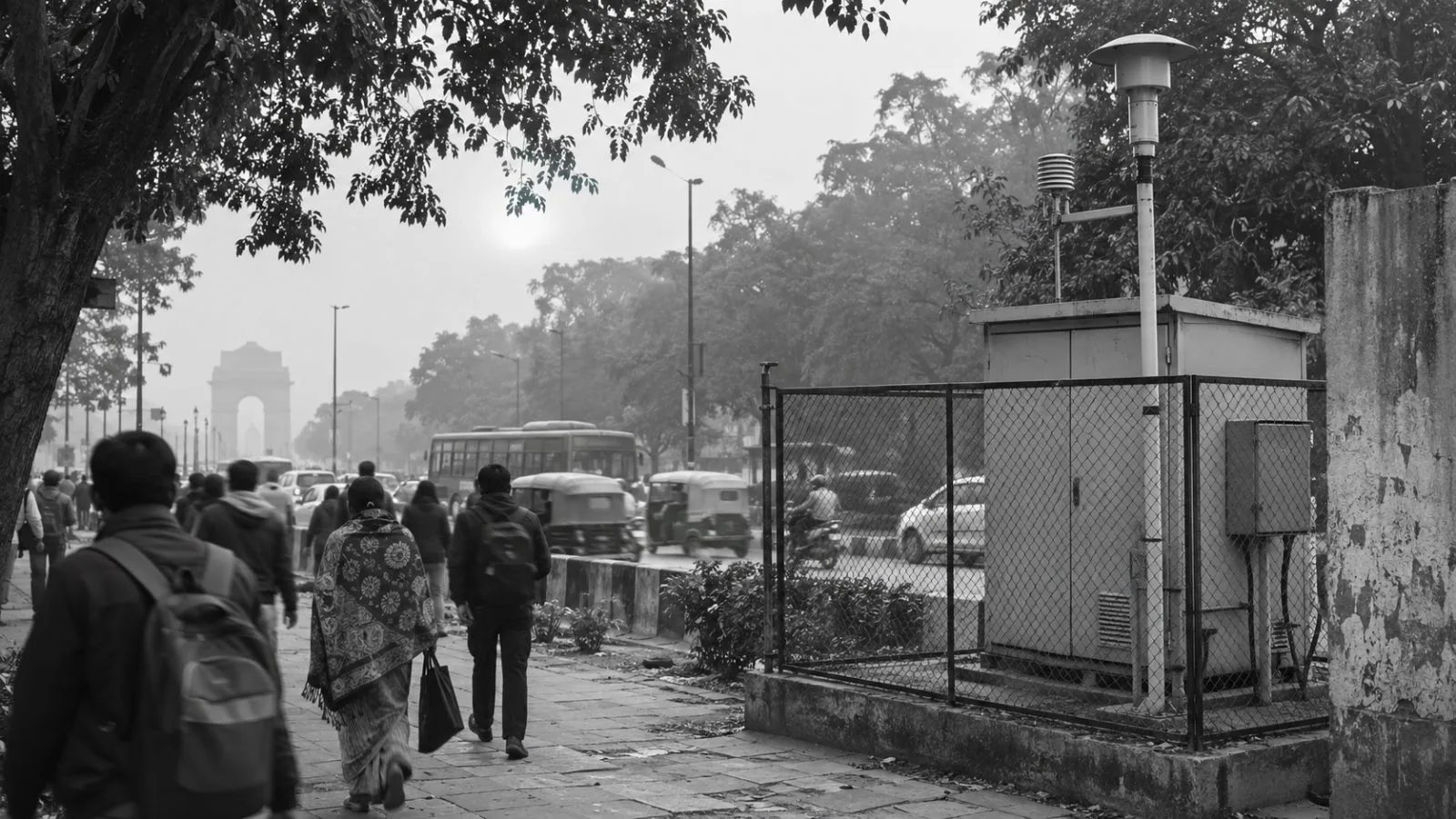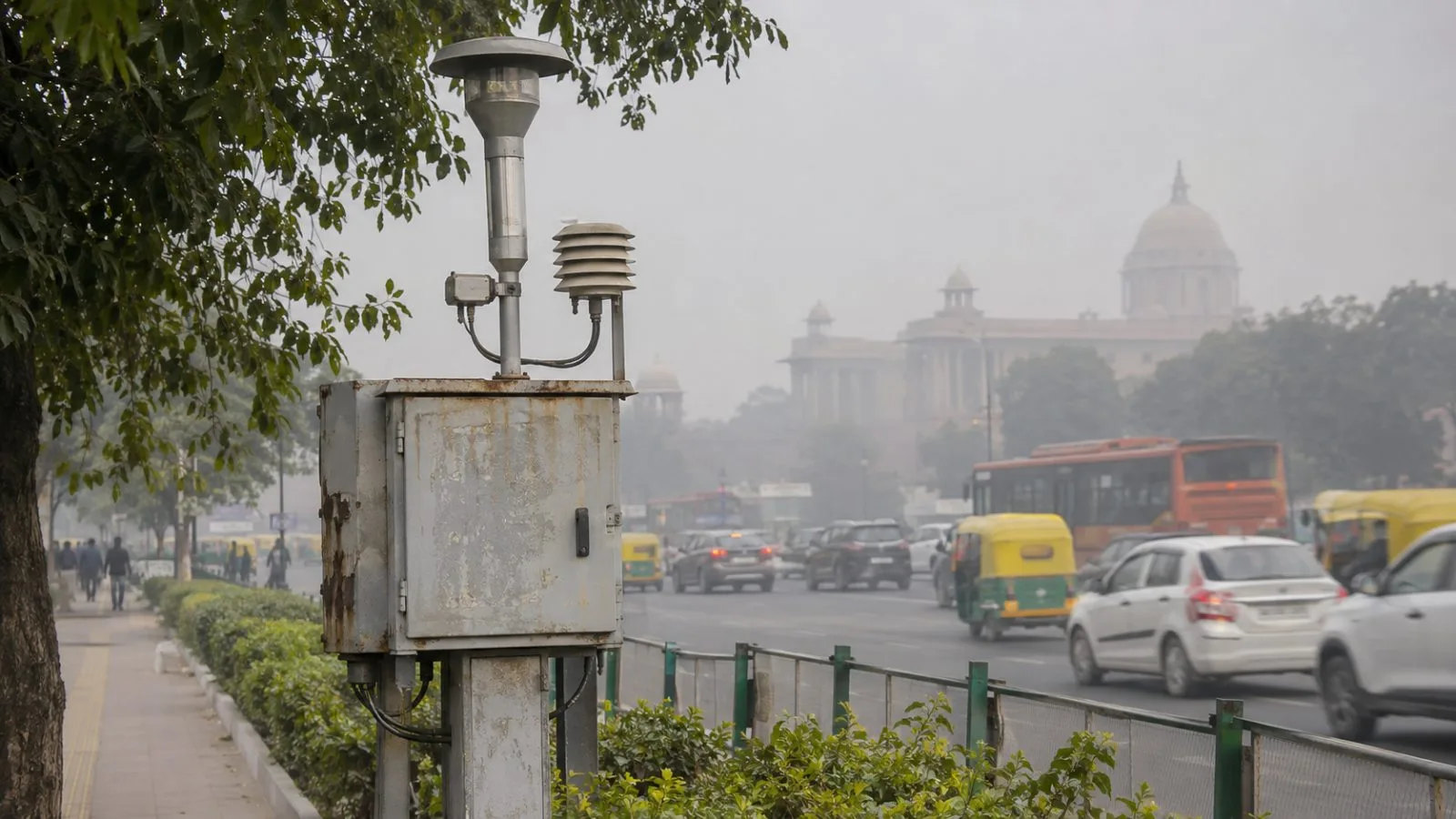
India’s Central Pollution Control Board says its data system omits particulate readings above monitors’ calibrated range, a rule that can leave gaps in Delhi’s station records during extreme pollution episodes.
In a Nov. 10 statement, CPCB said particulate-matter analyzers used when India introduced the National Air Quality Index in 2015 were calibrated to measure up to 1,000 micrograms per cubic meter (µg/m³). Its automated system omits hourly results exceeding that ceiling. The affected hour is also left out of that station’s daily average for the pollutant, the board said.
Hindustan Times reported that its review of CPCB hourly records found no PM2.5 reading at 36 of Delhi’s 59 stations at 2:30 p.m. ET Sunday, Nov. 8 (19:30 UTC; 1 a.m. IST Monday, Nov. 9). CPCB did not identify the cause of each station gap or provide concentrations for those hours.
The analyzer ceiling is about 66.7 times the World Health Organization’s 24-hour PM2.5 guideline of 15 µg/m³. That comparison puts an instrument limit alongside a health guideline; it does not show that any Delhi station reached the ceiling. WHO says PM2.5 can penetrate deep into the lungs and is associated with respiratory and cardiovascular effects.
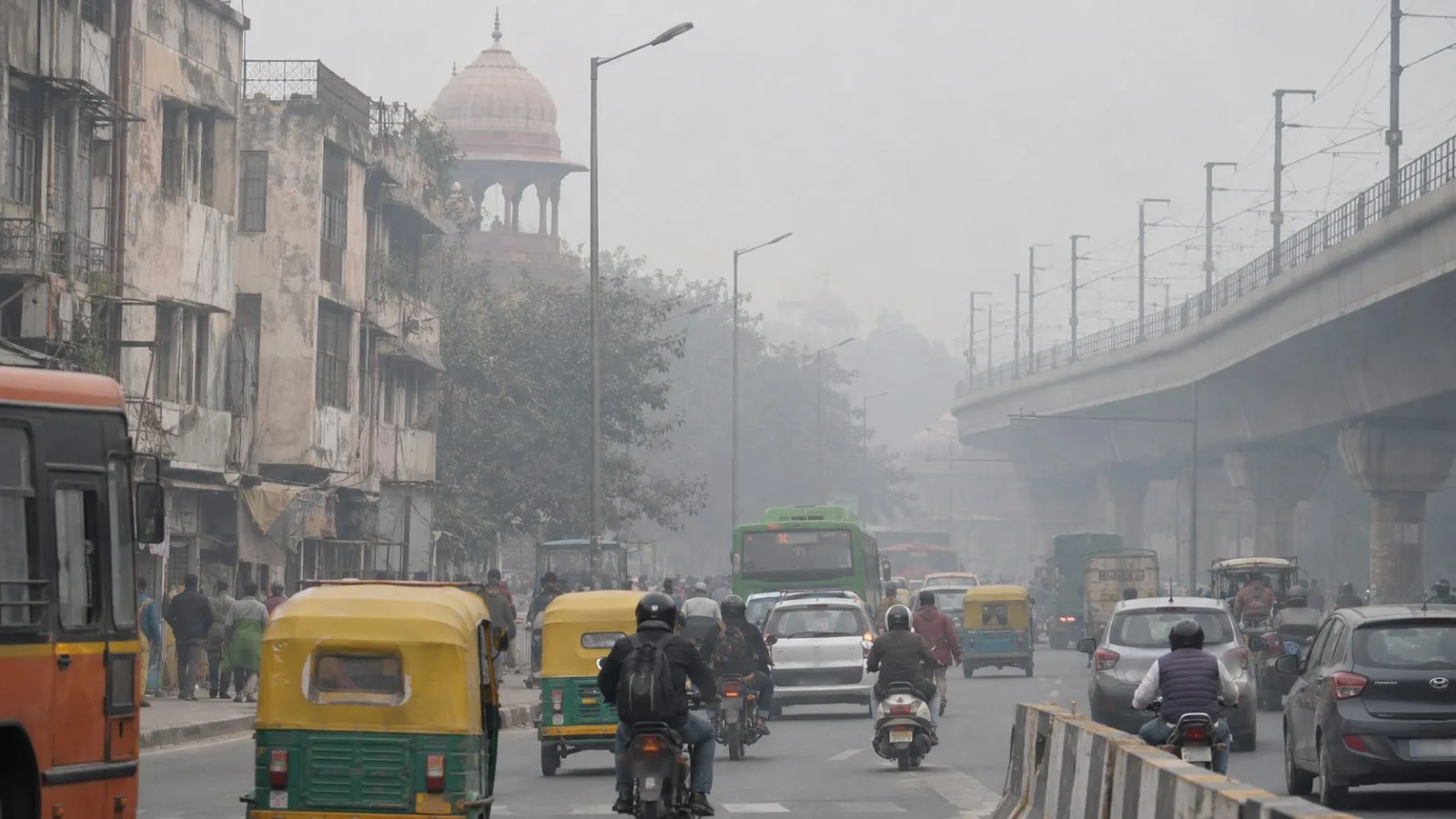
The Associated Press reported that New Delhi’s air quality index exceeded 350 in several areas on Nov. 9, after Diwali fireworks the previous night. AQI is an index, distinct from a PM2.5 concentration measured in µg/m³. The AP also described Delhi’s seasonal pollution as compounded by fireworks, crop-residue fires, vehicle emissions, industry and construction dust; cooler weather and low winds can keep pollution near the ground.
Saurabh Bharadwaj, Delhi president of the Aam Aadmi Party, accused the government of data fraud in a video posted to X, according to a Channel NewsAsia report citing AFP. CPCB attributed possible gaps during extreme episodes to its measurement and validation process; its statement did not say monitors were deliberately switched off.
CPCB said consultations were underway on handling readings beyond the system’s design range, with no timetable for a decision.