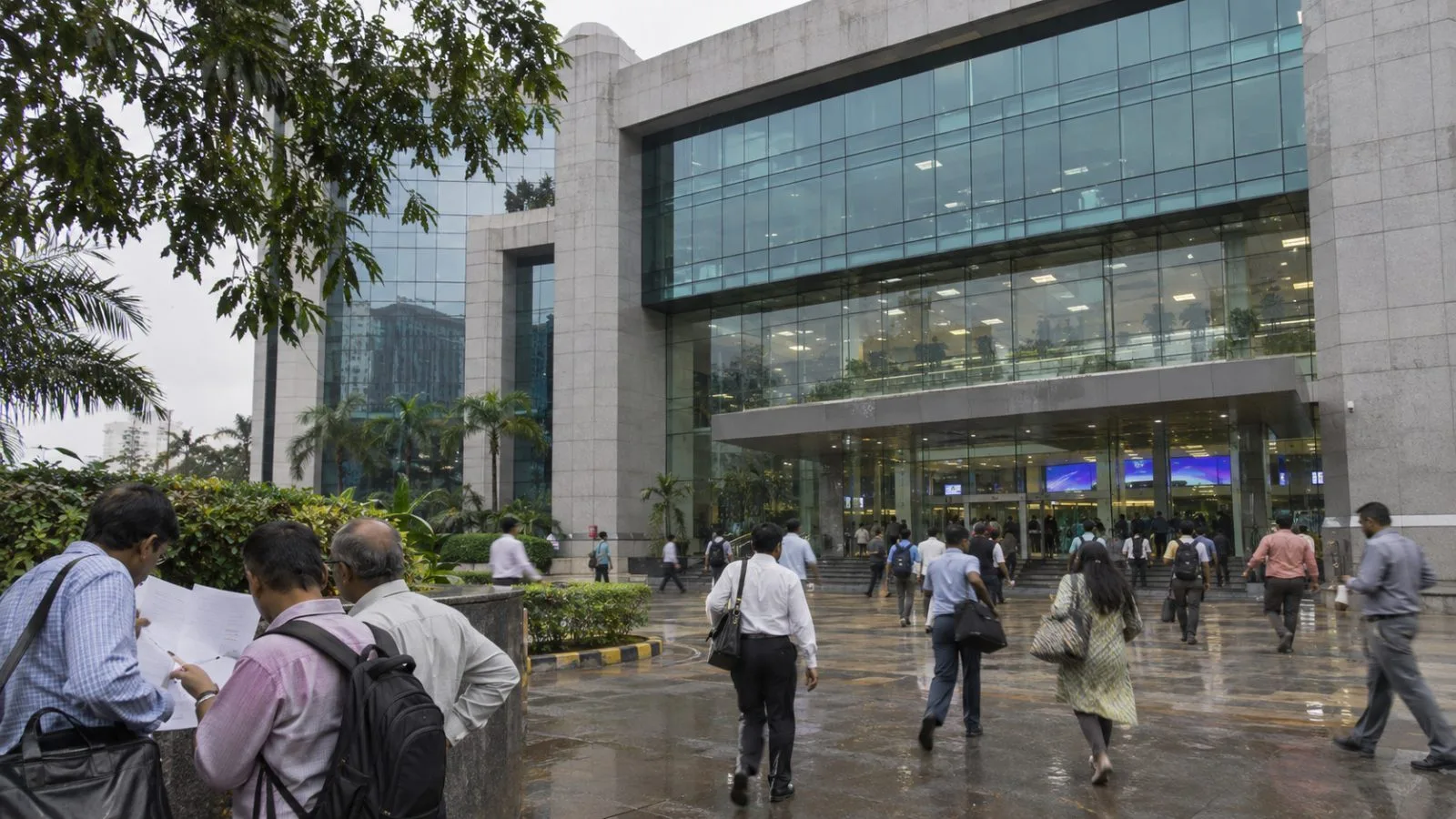
Indian large-cap stocks could attract an early share of global money if investors reduce concentrated artificial-intelligence positions, according to market participants cited by Mint. Any such shift would depend on Treasury yields, oil prices and other risks.
The Nifty 50 climbed nearly 11% from Nov. 1 through Nov. 19, compared with gains of 7.5% for the Nifty Midcap 100 and 6.2% for the Nifty Smallcap 250, Mint reported. Foreign portfolio investors bought more than ₹1.17 trillion of Indian equities over the same period, citing National Securities Depository Ltd. data.
Nilesh Shah, managing director of Kotak Mahindra Asset Management, said large caps are positioned to receive returning foreign money because they carry greater index weight and offer liquidity and governance standards. “But it will not be automatic or uniform,” Shah said, according to Mint.
Shankar Sharma, founder of GQuant Investech, said benchmark-focused investors generally start with the biggest companies when increasing their India exposure. “That is just the way money flow happens,” Sharma said, according to Mint. He also said Middle East risks had not disappeared.
Morningstar data showed renewed inflows into Asia-Pacific exchange-traded funds and Indian-domiciled funds. The firm reported approximately $130 billion of net Asia-Pacific ETF inflows in the third quarter of 2026, after two quarters of outflows, with equity ETFs accounting for 73% of the regional total.
India-domiciled ETFs attracted ₹351.2 billion during the quarter, including ₹235 billion for equity ETFs. Large-cap equity ETFs received ₹218.8 billion, while India’s ETF assets under management reached ₹11.5 trillion, Morningstar said.
Valuations remain a consideration. Downstox’s NSE data showed a Nifty 50 price-to-earnings ratio of 20.78 at the Nov. 19 close, while Mint reported the index’s 10-year average at 24.77. Mint, citing NSE data, put the Nifty Next 50 at 17.70 times earnings against a 10-year average of 22.80.
Nitin Raheja of Julius Baer India named banks and energy companies as possible beneficiaries, while Vinay Jaising of ASK Private Wealth pointed to telecom stocks, Mint reported. Jaising compared India’s roughly 20-times earnings valuation and 15% CY26-to-CY28 earnings-per-share growth with about five times and 28%-29% for South Korea, and 18 times and 28%-29% for Taiwan.
Analysts quoted by Mint said future allocations will also depend on the dollar, oil prices, U.S. Treasury yields, geopolitical conditions and earnings prospects in South Korea, Taiwan, China and Brazil. The reported flows indicate renewed interest in Indian exposure, but they do not establish a lasting move away from AI-linked markets.