India’s pollution regulator is discussing how to handle readings beyond its calibrated range after an analysis found a one-hour gap in Delhi’s Diwali data, limiting the public record of the pollution episode.
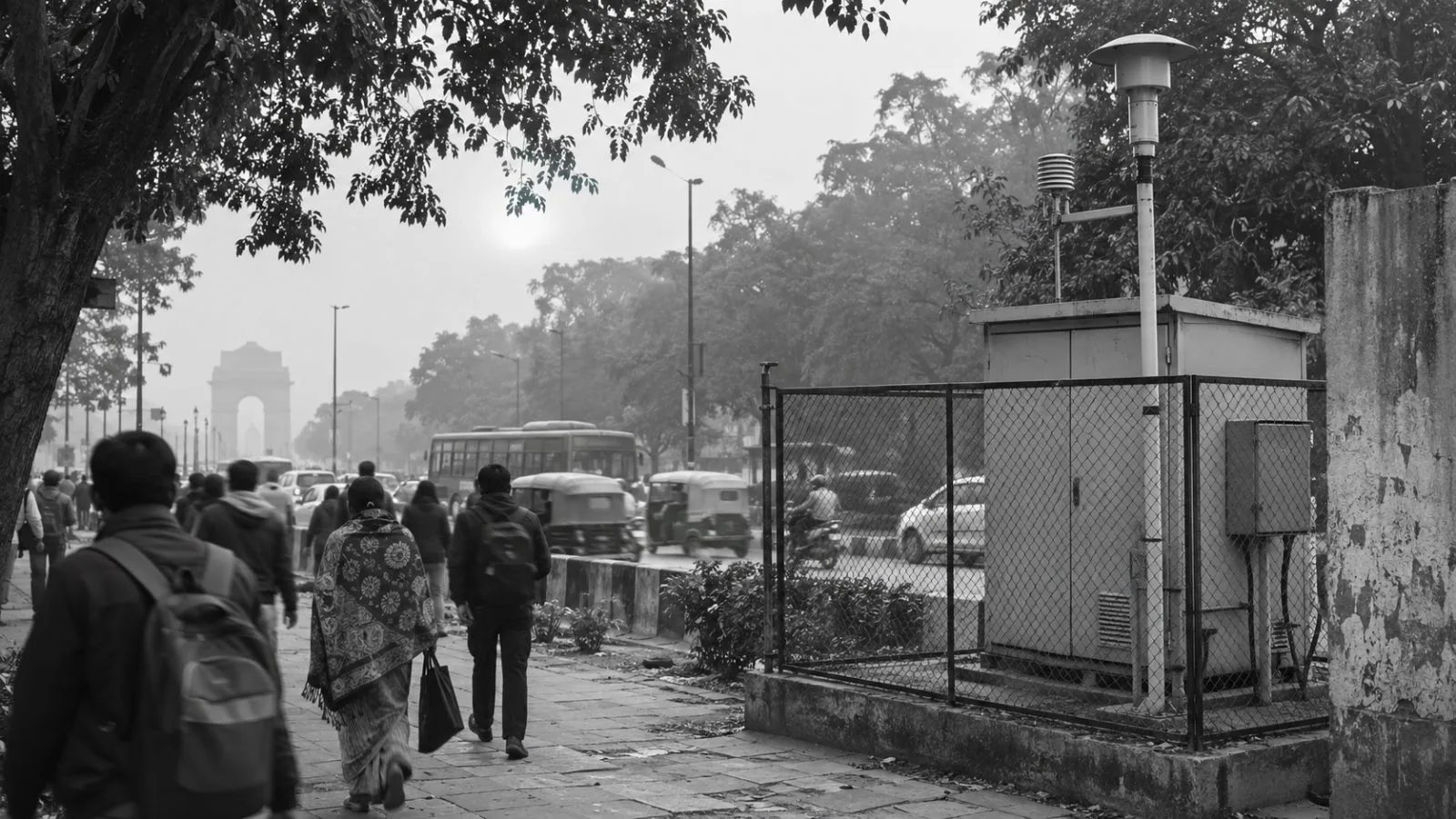
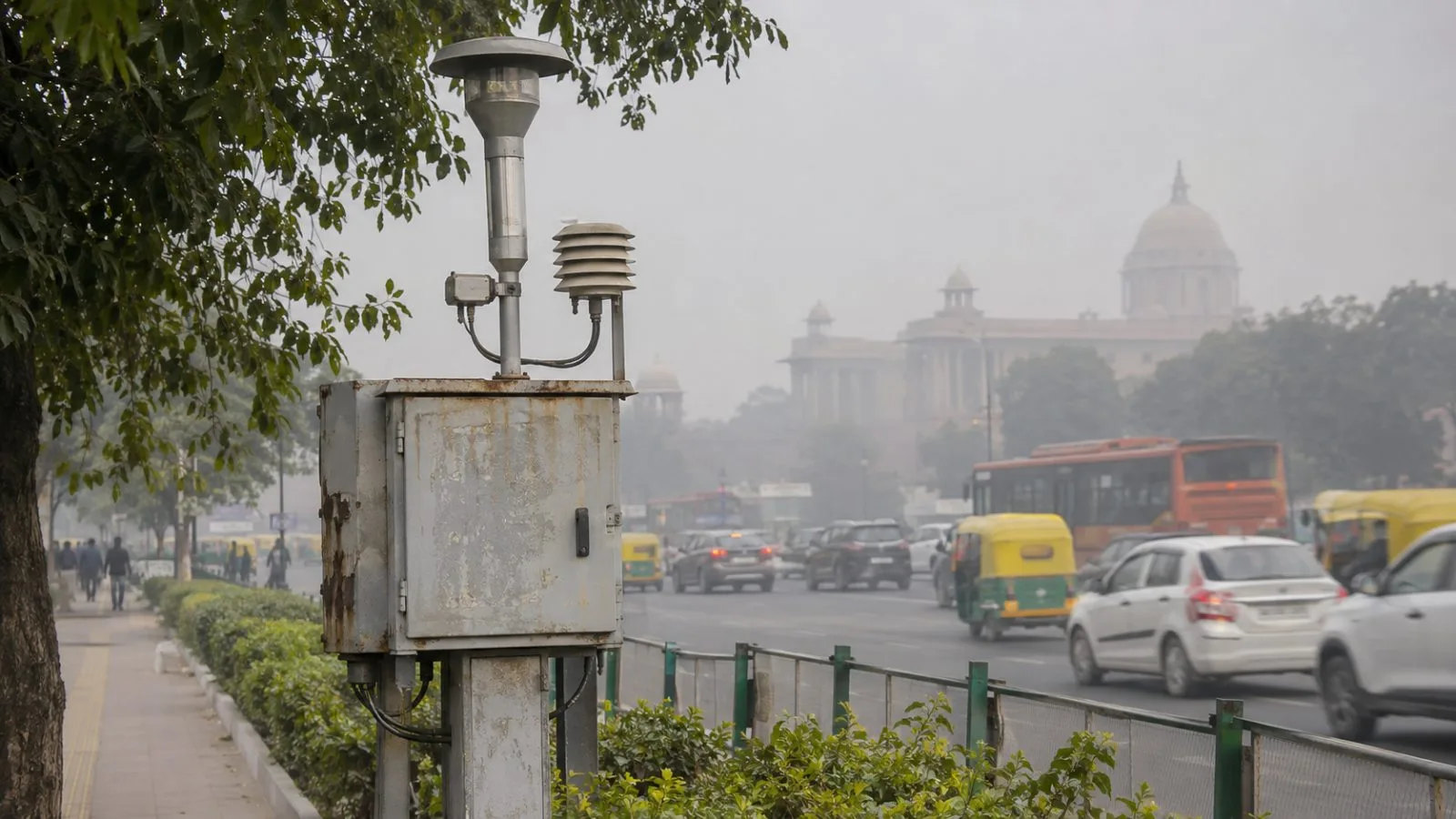
An analysis by Hawa Ka Hisab of hourly data from the Central Pollution Control Board (CPCB) found that 36 of Delhi’s 59 reporting stations had no PM2.5 reading from 2:30 to 3:30 p.m. ET Sunday, Nov. 8 (19:30–20:30 UTC; 1–2 a.m. India Standard Time Monday, Nov. 9). For the same hour a week earlier, 58 of 59 stations had reported a reading, the group said.
CPCB said particulate analyzers in use when India introduced its national Air Quality Index in 2015 had a calibrated range from zero to 1,000 micrograms per cubic meter. The board’s automated validation process removes hourly readings above that ceiling before calculating the pollutant’s 24-hour average. CPCB said discussions are underway on processing measurements beyond the system’s design range.
An hourly PM2.5 concentration and an AQI score are different measures. CPCB calculates most pollutant sub-indexes using a rolling 24-hour average, and its guide says a score normally needs at least 16 hours of readings; the official index runs to 500. The board’s explanation describes how it handles some measurements above the design ceiling, but does not establish that the rule caused all 36 missing station-hour entries. The gaps leave the public with a less complete record of pollution during the episode. A previous EconoTimes report covered Delhi’s post-Diwali citywide AQI readings, a separate measure from the missing hourly PM2.5 data.
The Supreme Court of India temporarily permitted certified green crackers in the Delhi region during two daily windows on Saturday, Nov. 7, and Sunday, Nov. 8: 7:30–8:30 p.m. ET on Friday, Nov. 6, and Saturday, Nov. 7 (6–7 a.m. IST the next day), and 9:30–11:30 a.m. ET on Saturday and Sunday (8–10 p.m. IST the same day). The earlier general ban resumed Nov. 9.
In an Oct. 29 order, the court directed CPCB to report air quality before, during and after Diwali and separately ordered inspections of monitoring stations alleged to be nonfunctional. The reports and supporting affidavits are due Dec. 14, with a hearing listed for Dec. 16.