India's proposed drive to lift manufacturing to 25% of gross domestic product by 2035 puts factory artificial intelligence to a scale test, with company-level efficiency gains yet to show a nationwide payoff.
The government's Economic Survey 2025-26 places the target within a proposed National Manufacturing Mission and cites a 12.9% manufacturing share in 2023. The mission was announced in the 2025-26 budget, but the survey says its objectives and institutional arrangements remained proposals.
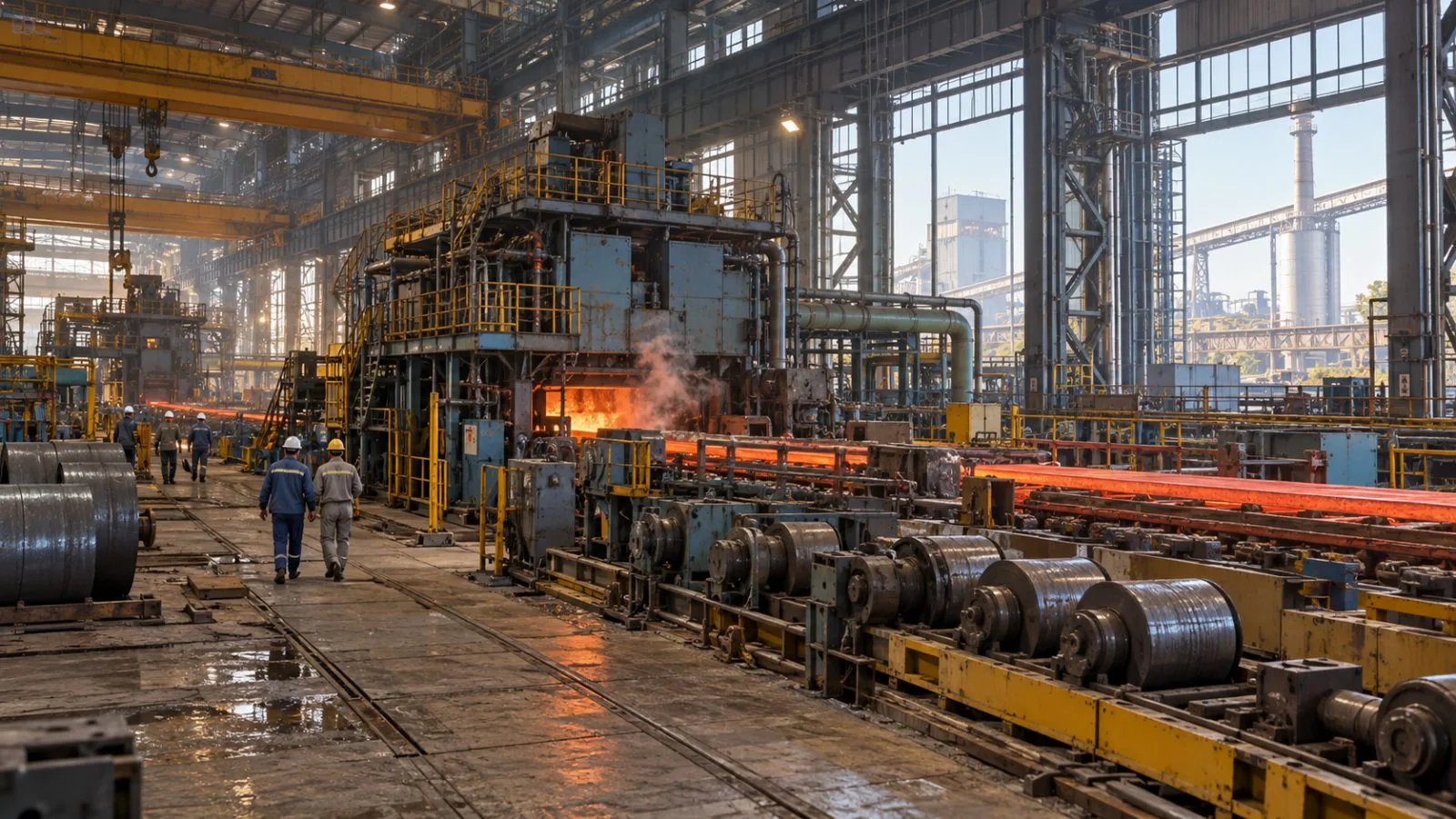
JSW Steel's Integrated Report 2024-25 offers an example of AI in operation. The company said its predictive maintenance system was in use at 10 plants, monitoring more than 2,900 critical assets, and credited it with avoiding 25,000 hours of unplanned downtime. That company-reported result measures operations at JSW, not AI's contribution to India's manufacturing share.
NITI Aayog's roadmap includes AI alongside robotics, digital twins and advanced materials. It calls for reliable energy and data connections, shared testing facilities, financing and training to help manufacturers expand beyond pilot projects. The roadmap also seeks affordable access to advanced digital tools for micro, small and medium-sized enterprises (MSMEs).
Government publications give different readings of manufacturing's current share. The Economic Survey's first advance estimate put it at 12.8% of nominal GDP for fiscal 2025-26, while an August government factsheet said manufacturing accounted for about 16% to 17% of GDP. A later Ministry of Statistics and Programme Implementation (MoSPI) estimate put the industry at 14.8% of total gross value added, a measure with a different denominator.
The 25% ambition predates the current AI roadmap: India's National Manufacturing Policy, notified in 2011, sought the same GDP share. The World Bank said in October that AI's long-term economic and labor-market impacts remain uncertain.
MoSPI is scheduled to release GDP figures for July-September on Nov. 30.