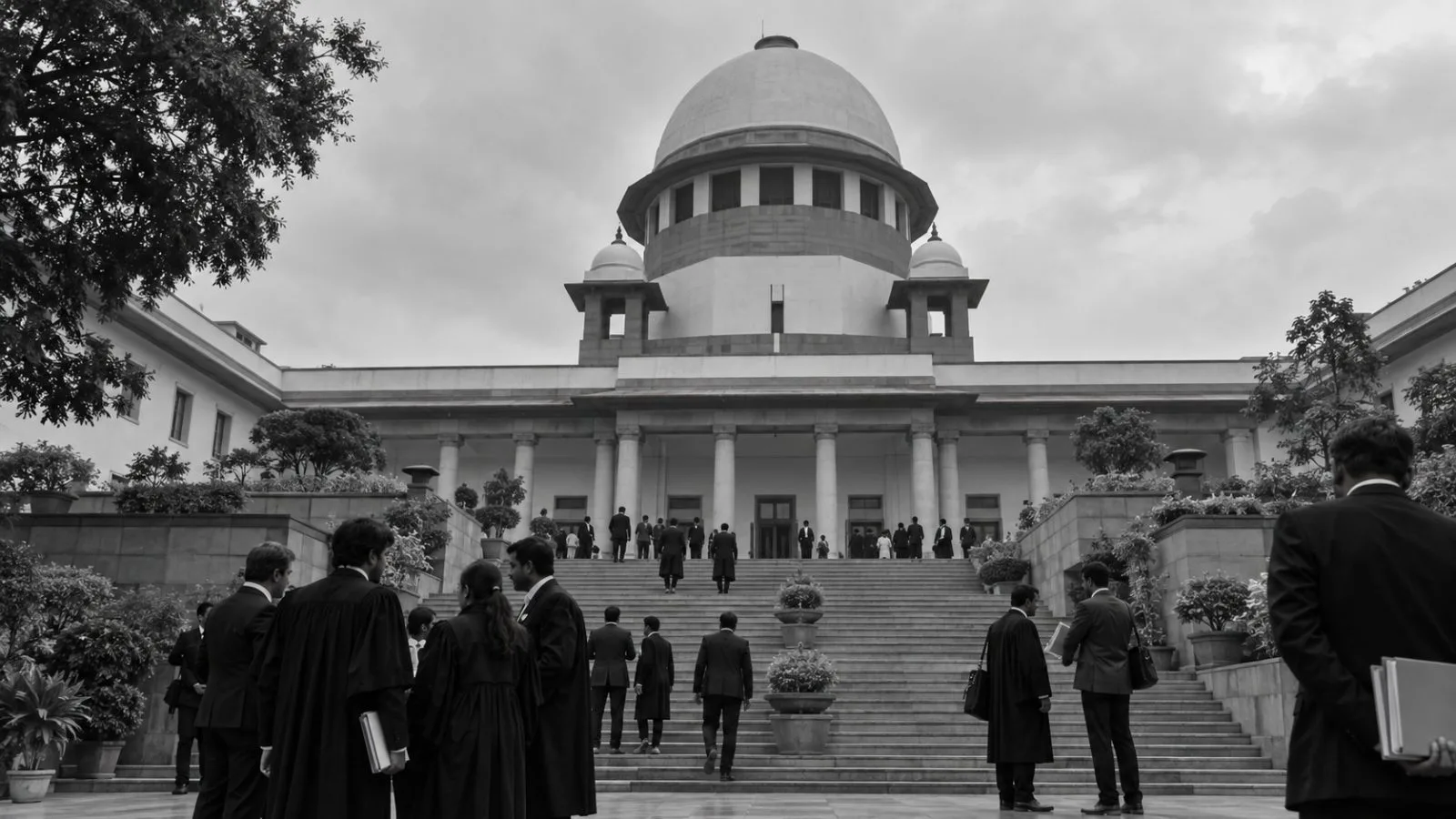
India’s Supreme Court has opened proceedings over a digital-privacy statute challenged by publishers, who say its application to newsrooms may hinder investigations and place confidential sources at risk.
The Digital News Publishers Association (DNPA) is contesting parts of the Digital Personal Data Protection Act, 2023, and the Digital Personal Data Protection Rules, 2025. Supreme Court Observer and LiveLaw reported that the court issued notice on the petition and its stay request, then declined interim relief before hearing the Union government. Court reporting describes DNPA as representing 21 news publishers.
The Act received presidential assent on Aug. 11, 2023. It permits personal-data processing with an individual’s consent or for what the statute calls “certain legitimate uses.” It also provides for consent withdrawal and erasure in some circumstances. Qualifying research, archiving and statistical purposes can be exempt under specified conditions, but the Act has no express exemption for journalism.
DNPA argues that notice, consent and erasure requirements could obstruct reporting; the court has not ruled on that claim. Senior Advocate Madhavi Goradia Divan, representing the association, argued that putting news gathering at the discretion of people being reported on would complicate coverage. Supreme Court Observer reported her asking, “How will news be reported?” Chief Justice of India Surya Kant said, “A balance has to be struck,” according to Supreme Court Observer and Bar and Bench.
The petition also challenges Section 36, which lets the Central Government require information from the Data Protection Board of India, data fiduciaries or intermediaries. DNPA says that power could expose journalistic sources. LiveLaw reported that the filing also contests Rules 16, 17 and 23, as well as Section 44(3), which changed the Right to Information Act’s treatment of personal information.
A government commencement notification issued Nov. 13, 2025, put Section 44(3) into effect on that date and schedules Section 36, among other provisions, to take effect 18 months after publication. The Supreme Court is scheduled to hear the matter on Nov. 17.