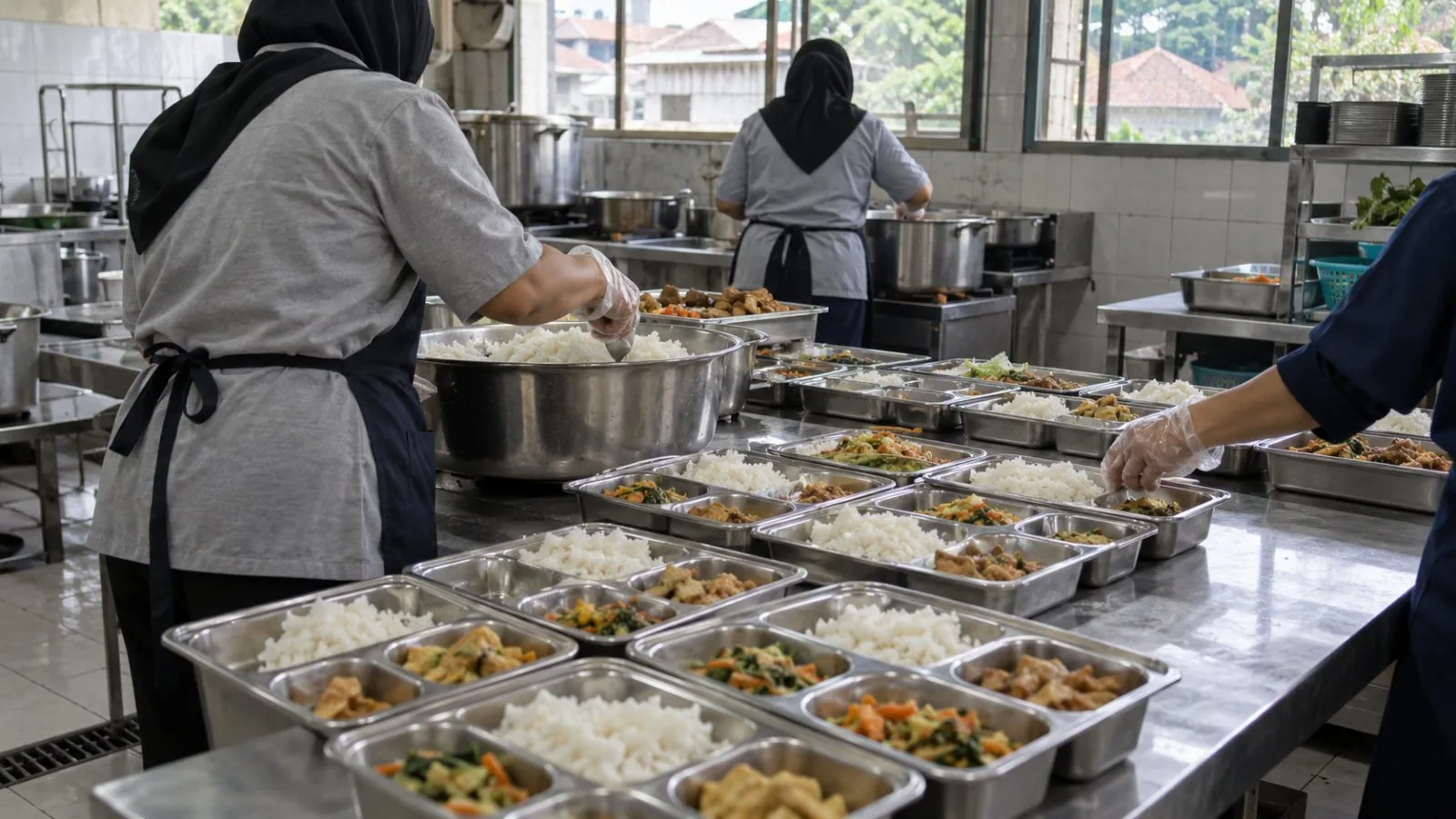
Indonesia's expanding free meals program posed budget and food safety tests for President Prabowo Subianto as he entered his third year in office on Oct. 20.
The National Nutrition Agency has a Rp240.20 trillion allocation for 2027, including about Rp232.50 trillion for meals. It aims to reach 72,464,886 people that year. The target is not a count of meals already delivered.
The Finance Ministry reported 56.99 million beneficiaries by Aug. 31. In its Oct. 20 anniversary statement, the presidential office put the number at 62 million. The figures refer to different dates.
Delivering meals on that scale has brought safety concerns. The National Nutrition Agency permanently closed two kitchens in Central Java on Oct. 13, citing conditions that endangered health and safety and delayed reporting. It said meals for 4,965 affected beneficiaries would be reassigned to other kitchens.
By Sept. 30, Indonesia's budget shortfall stood at Rp319 trillion, or 1.24% of gross domestic product, the Finance Ministry reported. The approved 2027 budget projects a deficit of 2.4% of GDP. The ministry has also said a Constitutional Court ruling requires free-meals spending to be separated from the constitutionally mandated education allocation by the 2028 budget at the latest.
Economic indicators have improved. Statistics Indonesia reported 5.29% growth in the second quarter of 2026 from a year earlier. Its poverty survey counted 22.93 million people below the national poverty line in March 2026, or 8.07% of the population, down from 8.47% in March 2025. The data measure those changes without isolating the effect of any one policy.
Statistics Indonesia counted 34.69 million metric tons of rice produced for food consumption in 2025, up 13.29% from 2024. Its figures also show Indonesia imported 450,734 metric tons of rice in 2025.
Prabowo has directed ministers to examine free tuition at public universities. The Ministry of Higher Education, Science and Technology said it was assessing universal and phased options against available fiscal capacity. On Sept. 23, the ministry gave a special team two to four weeks to bring proposals to the president.