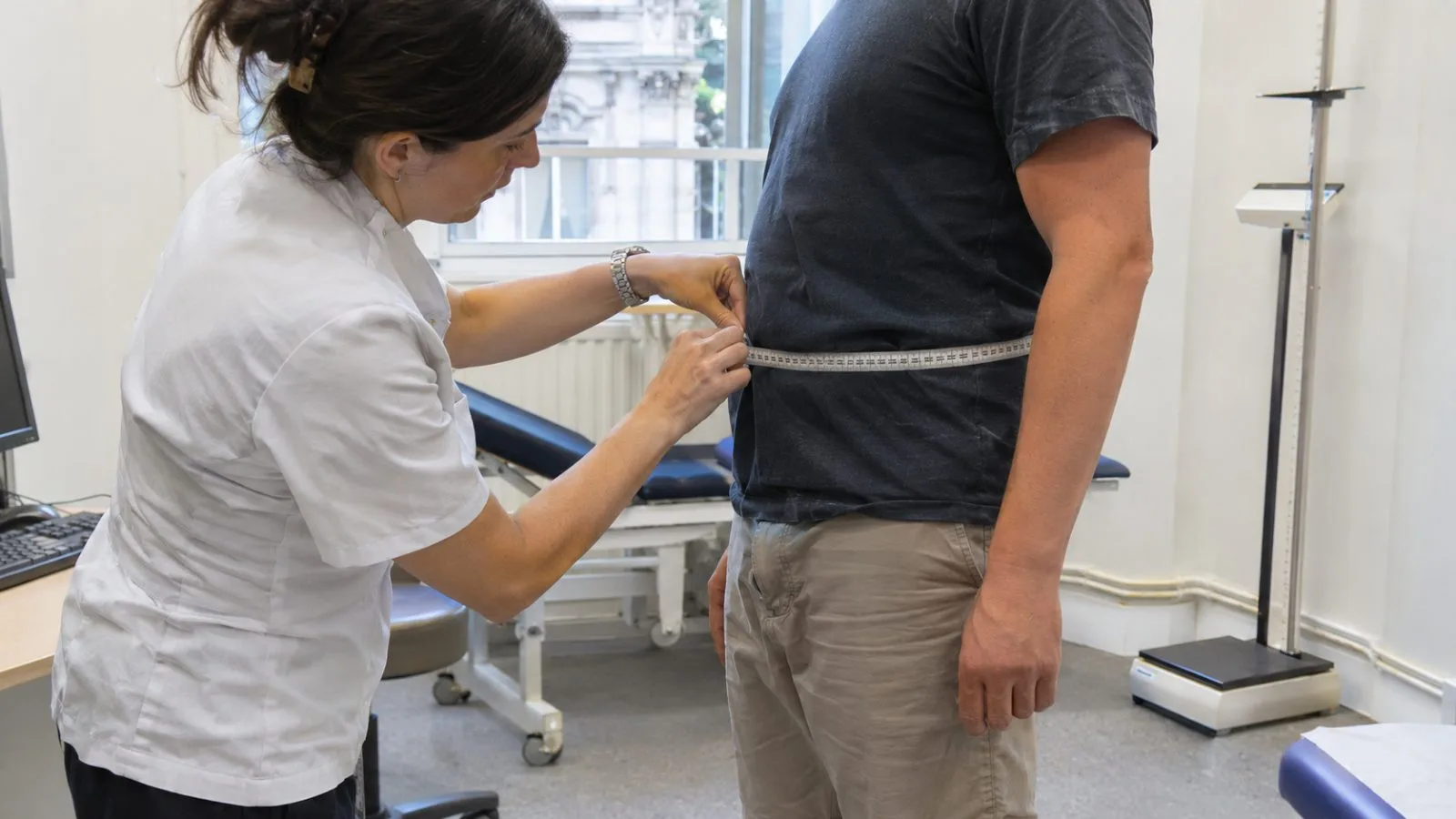
The Nature study of 844,108 adults across four countries found that adding waist measures to BMI changed obesity classifications and helped separate excess adiposity from cases with obesity-related organ dysfunction.
Researchers tested a framework proposed by a 2025 Lancet Diabetes & Endocrinology Commission. It uses waist circumference and waist-to-height ratio alongside BMI to assess excess body fat.
Across the study groups, 5.2% to 8.6% of participants classified as overweight by BMI met both waist criteria for obesity-level adiposity. Conversely, 1.2% to 3.1% of those classified as obese by BMI had no elevated waist measurements. The figures use different denominators: the first refers to participants classified as overweight by BMI, and the second to those classified as obese. The reported ranges varied among groups; neither figure is a share of the full sample.
The study defined clinical obesity as excess adiposity plus at least one sign of obesity-induced organ dysfunction. Preclinical obesity meant excess adiposity without that dysfunction; the framework describes this group as having elevated health risks while organ function remains preserved.
Clinical obesity accounted for 23% to 31% of obesity cases across the groups. The study associated higher mortality risk with obesity identified using waist measurements alongside BMI; it did not find the same association when obesity was identified using BMI alone.
Over 10 years, 77% to 91% of people classified as having preclinical obesity did not progress to clinical obesity. In the framework, the two categories distinguish excess adiposity without identified organ dysfunction from excess adiposity accompanied by such dysfunction.
Professor Francesco Rubino, the study’s senior author and chair of metabolic and bariatric surgery at King’s College London, said BMI alone cannot show whether a person is already ill or faces risk. He said diagnosis should help match care to each person’s needs.