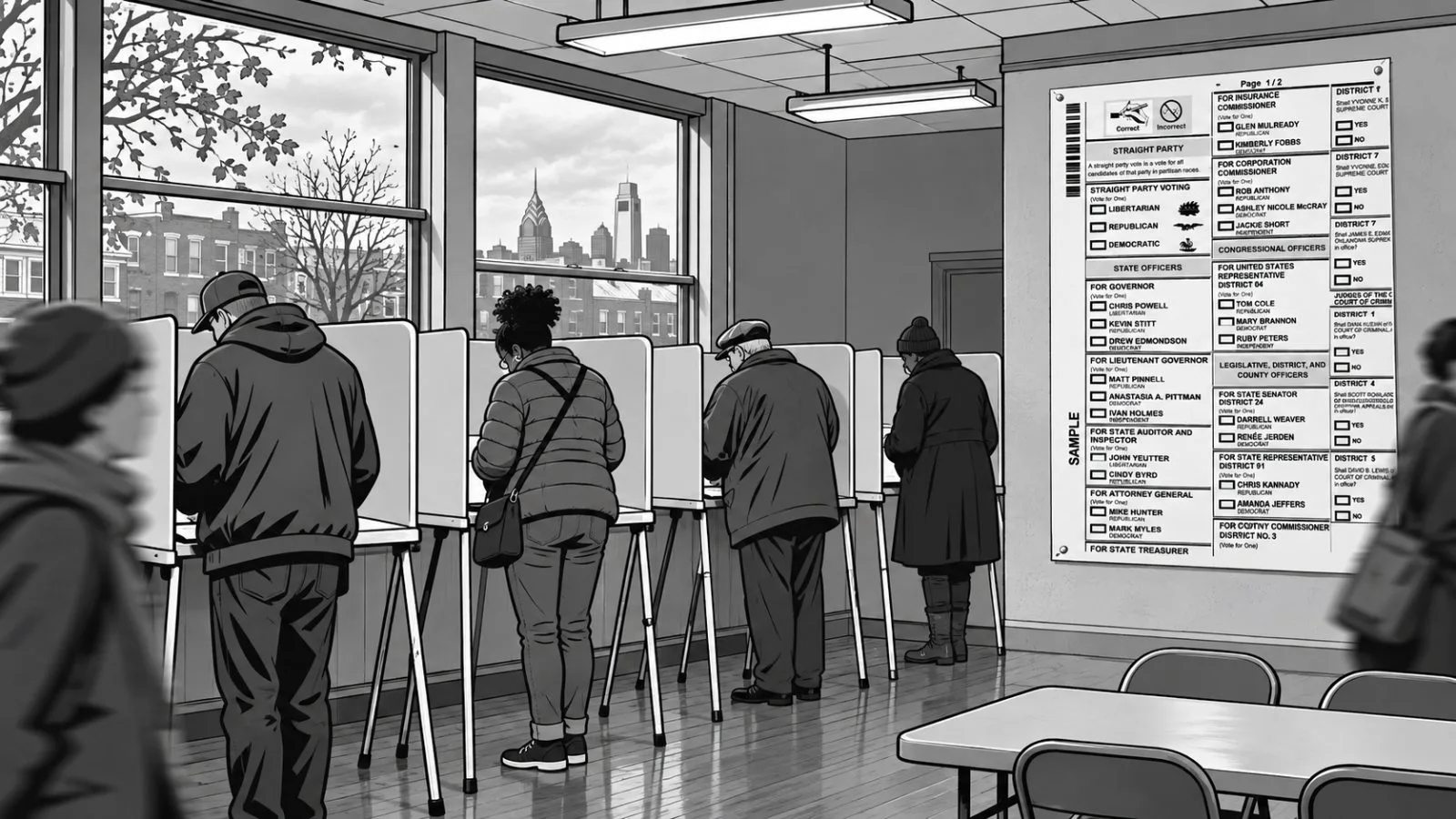
As Americans voted in the Nov. 3 midterm elections, economic indicators and polling presented President Donald Trump’s Republican Party with a difficult backdrop: inflation had picked up, gasoline costs were much higher than a year earlier, and public ratings of the economy had weakened. The six indicators below show the pressures in the data; they are not an election forecast.
1. Overall inflation accelerated
The CPI-U rose 3.7% over the 12 months through September, up from 3.4% through August. Prices increased 0.6% in September from the previous month.
2. Gasoline prices rose faster than the broader energy index
The BLS reported gasoline prices rose 9.1% in September and were up 34.2% over the year. The broader energy index rose 20.4% over the same 12-month period.
3. Pump prices remained far above year-ago levels
AAA’s national average on Nov. 3 was $4.1694 per gallon for regular gasoline and $6.2921 for diesel. On the same date a year earlier, the averages were $3.0361 and $3.5371 per gallon, respectively.
4. Food inflation was more mixed
The September food index was unchanged from August and 2.5% higher than a year earlier. Grocery prices were up 1.8% year over year, while food away from home was up 3.5%. The figures show continued annual increases, but not a month-to-month rise in the overall food index that September.
5. Many Americans were concerned about costs and pessimistic about the economy
In Pew Research Center’s survey of 5,062 U.S. adults, conducted Sept. 28-Oct. 4, 73% said they were very concerned about food and consumer-goods prices, and 74% about gasoline and energy prices. Only 21% rated national economic conditions excellent or good. Separately, 65% said Trump’s economic policies had made conditions worse, while 19% said they had made them better.
6. Trump’s approval and the congressional ballot favored Democrats
A Reuters/Ipsos poll conducted Oct. 22-26 found 32% of adults approved of Trump’s job performance. Approval of his handling of the economy stood at 25%, and approval of his handling of the cost of living at 20%. Among likely voters, 53% favored or leaned toward a Democratic candidate for Congress in their district, compared with 44% for a Republican.
The IEA’s figures describe global energy supply conditions but do not identify the causes of U.S. gasoline prices. The IEA’s October report said global diesel and gasoil availability was 1.7 million barrels per day below the year-earlier level in the third quarter, while Strait of Hormuz oil flows rose by 3.7 million barrels per day to 10.9 million barrels per day in September.