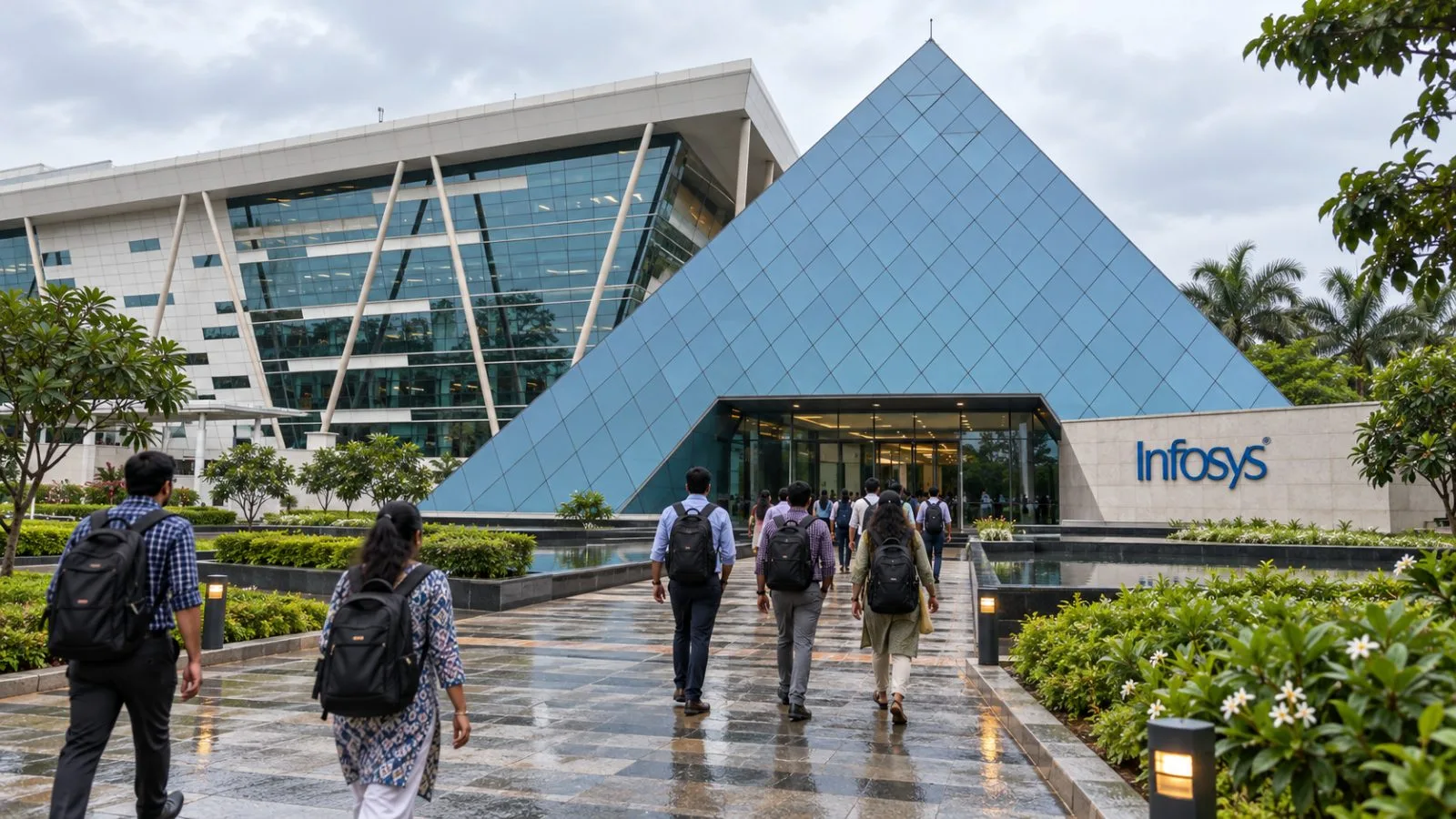
Infosys said a U.S. Department of Justice (DOJ) investigation into how it classified certain H-1B visa recipients continues, and it cannot predict whether the outcome could materially harm its business.
Infosys said discussions with federal officials are continuing alongside its internal review. The October filing says the inquiry concerns how the company classified certain employees who received H-1B visas in immigration documents submitted to certain U.S. government authorities. It does not name those employees or a client, describe the documents, or specify the conduct DOJ is examining.
The company said it cannot forecast the inquiry’s outcome, including whether it could materially harm its business and operating results. The filing gives no estimate of potential costs or timetable.
Infosys included the disclosure in results announced Oct. 23, 2026, for the quarter and half-year ended Sept. 30, 2026. It had described substantially the same investigation in a filing dated July 23, 2025. That earlier filing said the employees worked for one of its clients; the latest filing does not name one. The filing dates establish that Infosys had disclosed the inquiry by July 2025, but do not establish when DOJ began its investigation.
Infosys’ annual filing describes H-1B visas as allowing specialty-occupation professionals to remain in the United States for up to six years.
DOJ separately said Infosys Corporation agreed to a $34 million civil settlement in 2013 to resolve government allegations of visa fraud and abuse of immigration processes. DOJ’s account said the allegations included B-1 visa holders performing skilled work in the United States and failures to maintain Form I-9 employment-verification records. The settlement agreement required additional auditing of Form I-9 records, reporting on B-1 visa use, continued use of detailed invitation letters and corporate disciplinary processes. Although DOJ’s 2013 allegations included the use of B-1 visa holders for work that otherwise required H-1B visa holders, Infosys’ latest filing does not link that case to the current investigation.