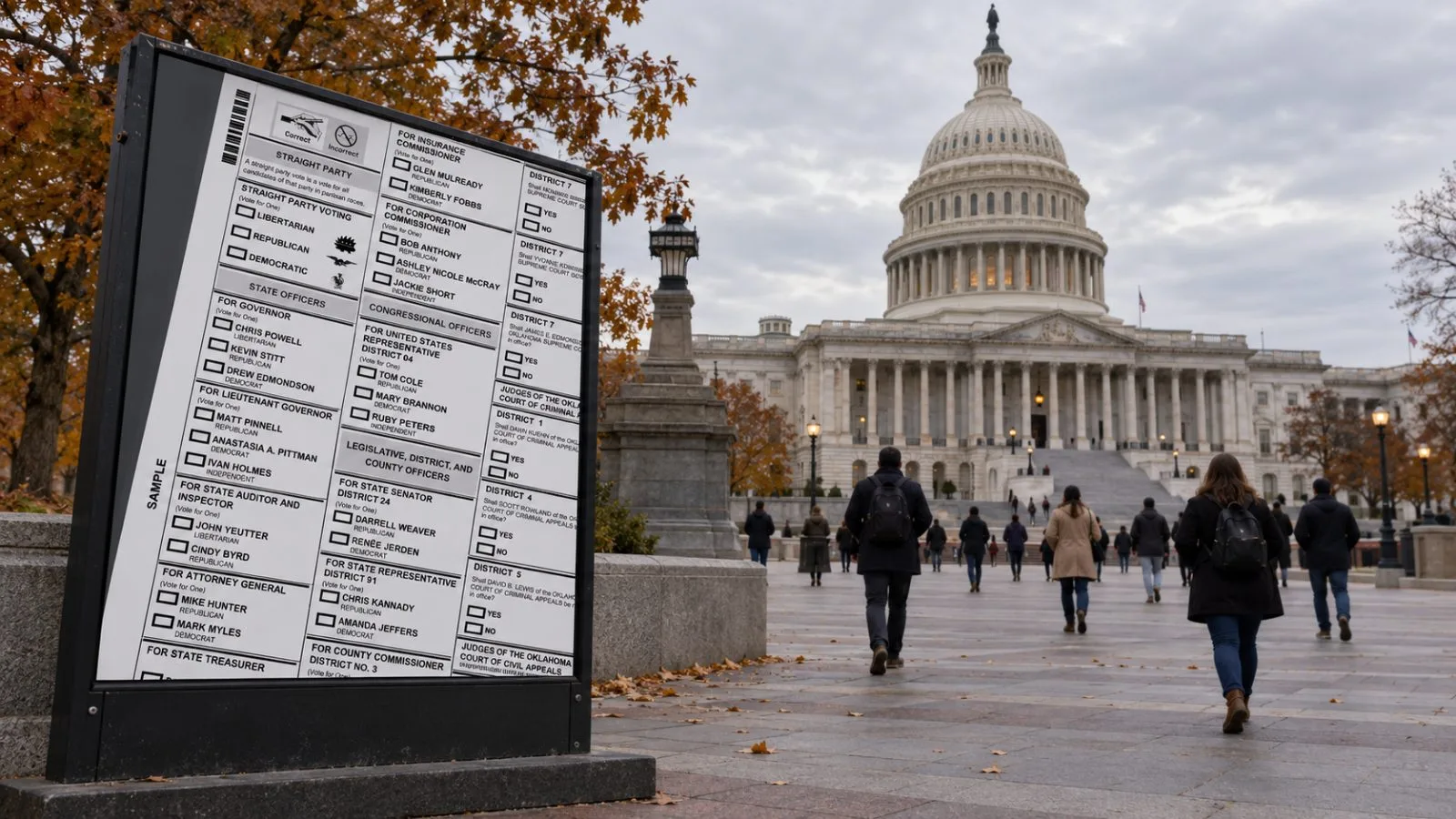
With the Nov. 3 midterm approaching, investment firms see Democrats favored to take the House but differ on the Senate, a split that could shape oversight and the next round of fiscal bargaining.
The Federal Election Commission lists the vote as the next regularly scheduled federal general election. All 435 House seats and about one-third of the Senate are up for election. The outcome will determine the balance of power in both chambers for the next two years.
Morgan Stanley Wealth Management’s Oct. 27 outlook favors a Democratic return to House control and describes the Senate contest as close, with Democrats holding a slight edge. The firm says Democrats would need four additional seats to control the 100-member Senate. Amundi’s Oct. 23 analysis favors divided control, with Democrats taking the House and Republicans retaining the Senate. Amundi also says a Democratic sweep is “very likely.”
Wells Fargo Investment Institute says narrow majorities may leave little room for major legislation. Lawmakers would face the president’s veto power and Senate debate rules, while divisions within each party could further limit proposals. Under the chamber’s usual rules, 60 senators must support cloture, the procedure for ending debate on most bills.
A Democratic House could still increase scrutiny of the administration. Reuters’ election scenarios say Democrats would gain control of House committees and subpoena authority, giving them a means to pursue investigations even if legislation stalls.
The Bipartisan Policy Center estimates the U.S. could reach its debt limit sometime between late winter and mid-summer 2027 if lawmakers do not act. Treasury’s cash and special borrowing measures could then cover payments for another six to nine months before the X Date, when the government would lack resources to pay every obligation on time.
The center points to the 2011 and 2013 debt-limit confrontations, when short-term Treasury yields rose and taxpayers faced higher interest bills. It warns that prolonged brinkmanship could also raise borrowing costs for households and businesses.
Morgan Stanley ranks inflation, economic growth and corporate earnings ahead of the election as drivers of the overall market, while saying administration actions and congressional investigations may affect specific stocks. Voters are scheduled to cast ballots Tuesday, Nov. 3.