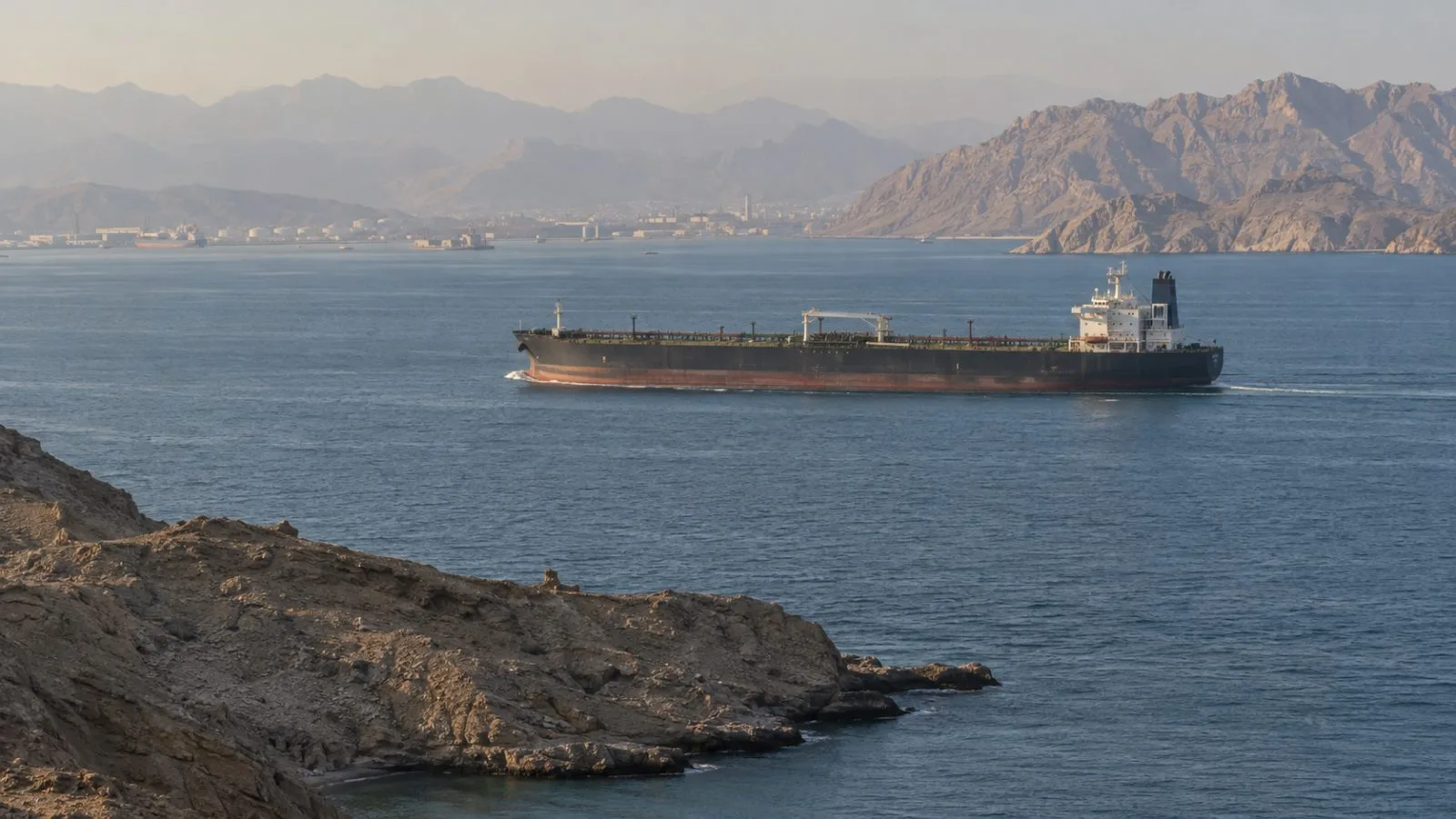
Iranian army spokesman Brig. Gen. Mohammad Akraminia said the Strait of Hormuz would reopen if U.S. forces left the region, as concern about the key oil route accompanied Friday's market gains.
Weekly gains were larger for West Texas Intermediate (WTI), which rose 10.4%, than for Brent, up 4.9%. Brent briefly reached $110 a barrel during Friday trading and settled at $109.86 at 2:30 p.m. ET (18:30 UTC), up 3.7%. WTI's settlement was $101.41, a 3.5% increase.
In an Oct. 16 post, Akraminia made a U.S. departure from the region a condition for reopening the strait. Akraminia said Iran would expel U.S. forces that remained in the region; he gave no escalation schedule or details about which U.S. forces he meant.
In its Friday account, the Saudi-led coalition said it had intercepted three drones across southern Saudi Arabia and the Riyadh region, as well as two cruise missiles over the Red Sea and one ballistic missile aimed at Yanbu. It did not name a launch source.
The Strait serves shipping between the Persian Gulf, Gulf of Oman and Arabian Sea. In 2025, an average of about 20 million barrels of crude and oil products moved through it each day, roughly one-fifth of all petroleum liquids consumed worldwide.
EconoTimes previously covered an Iranian military statement about a tanker fire near Hormuz.