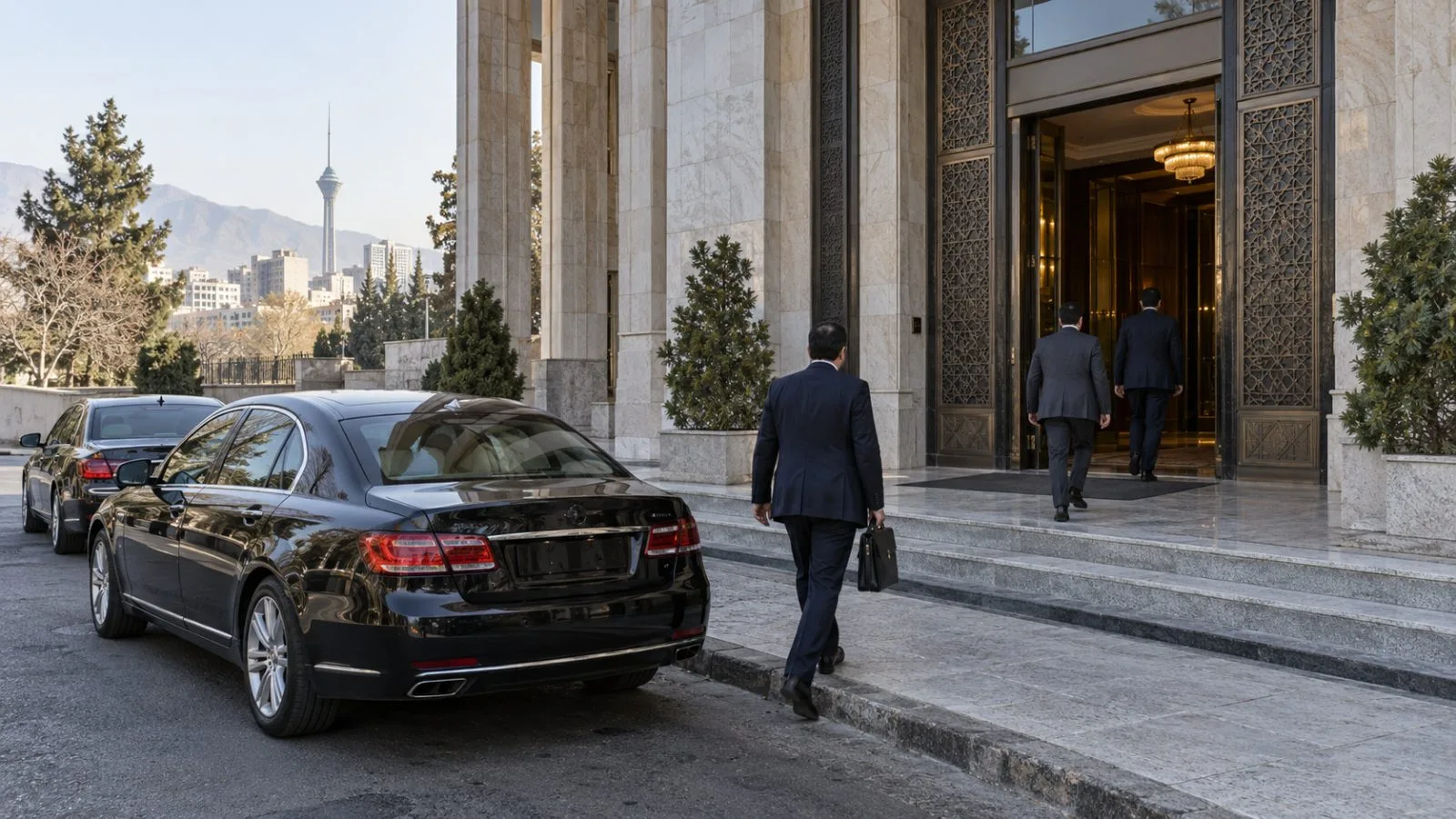
Iranian President Masoud Pezeshkian pressed Russian Foreign Minister Sergey Lavrov in Tehran on Oct. 19 for faster action on energy, transport and trade agreements under the countries' strategic partnership.
Pezeshkian's office said he wanted quicker implementation of commitments already made. Russia's Foreign Ministry said the discussions covered investment and joint transport, logistics and energy projects. It also pointed to continued contact among government bodies, lawmakers, regional authorities and businesses.
The earlier presidential meetings between Pezeshkian and Russian President Vladimir Putin took place in Bishkek on Sept. 1 and Avaza on Oct. 8. The countries' comprehensive strategic partnership treaty took effect Oct. 2, 2025, according to Russia's Foreign Ministry.
Lavrov gave an update on a transport project in separate remarks after talks with Iranian Foreign Minister Abbas Araghchi. He said Russian contractors were conducting engineering surveys for the planned Rasht-Astara railway.
Regional security also came up in the Pezeshkian-Lavrov meeting. Pezeshkian said U.S. military bases heightened tensions and called for cooperation among countries in the region. Russia's Foreign Ministry said Lavrov reiterated Moscow's willingness to help resolve the situation around Iran during the Tehran talks. The ministry said he separately briefed Iranian officials on his Oct. 18 contacts in Bahrain with representatives of Arabian Peninsula countries.
Pezeshkian pointed to his planned visit to Moscow as a chance to turn the bilateral agreements into concrete results.