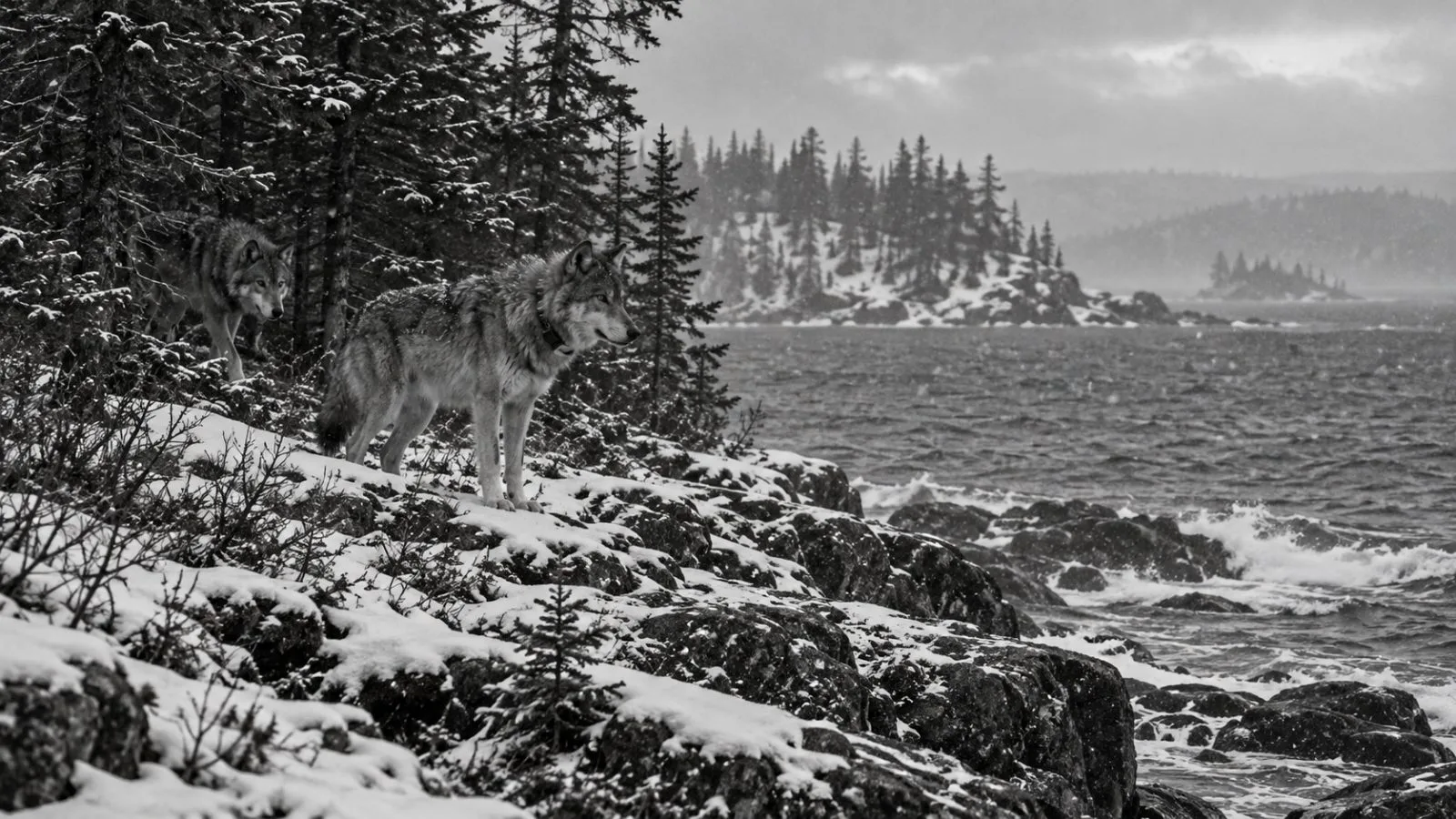
A five-year review of Isle Royale’s wolf reintroduction found the population self-sustaining, with annual breeding and pup recruitment, while leaving its 20-year persistence as a modeled outcome.
The National Park Service (NPS) moved 19 wolves to the Lake Superior island from Minnesota, Michigan and Ontario between September 2018 and September 2019. Researchers documented three packs, 10 litters and at least 29 pups. The assessment tracked the population from Sept. 24, 2018, to Sept. 1, 2023, using GPS collars, remote cameras, howl surveys and population modeling.
Camera-based minimum counts climbed from 10 wolves in winter 2019-20 to 23 in each of the next two winters, then reached 27 in 2022-23. A separate Michigan Technological University winter study estimated 31 wolves in February 2023. The assessment said its camera counts generally came in slightly below aerial estimates, reflecting different survey methods.
The authors judged that the restoration had re-established a self-sustaining population. They projected that it would likely meet the 20-year persistence goal, but the study did not observe that full period. Simulations estimated a 4% extinction probability over 20 years without modeled inbreeding depression. In a scenario where inbreeding affected first-year survival and reproduction, the estimate rose to 18%.
The effort followed a steep population decline. Isle Royale averaged 22 wolves from 1960 to 2000 and reached 50 in 1980, but a related, nonbreeding pair remained when relocations began. The NPS sought to restore wolves’ role as top predators and address concerns that growing moose numbers could affect island forests and vegetation.
The researchers said the island’s separation may limit future genetic exchange, while one family group’s influence could affect the population’s long-term genetic resilience. They recommended tracking survival in the first year of life and reproductive rates to inform management.