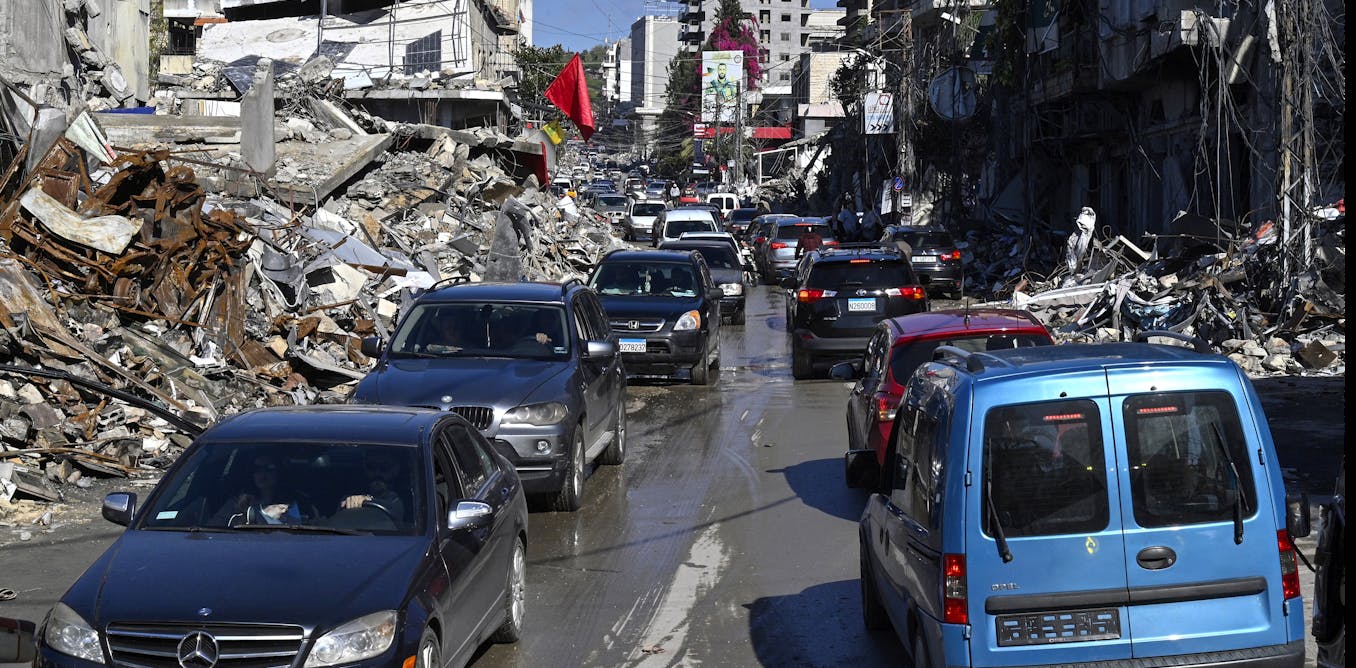
The Israeli military has destroyed a major Hezbollah underground network at the Ali al-Taher ridge in southern Lebanon, completing what Israeli officials described as the consolidation of a security zone in the strategically important area.
Prime Minister Benjamin Netanyahu and Defence Minister Israel Katz said Thursday that Israeli forces would remain at the ridge to prevent the Iran-aligned Hezbollah group from returning and rebuilding its military capabilities.
Located about 15 kilometers (10 miles) from the Israeli border, the Ali al-Taher ridge has emerged as one of the most heavily contested locations in the Israel-Hezbollah conflict. Lebanese security sources previously said Hezbollah had established an underground command center and weapons storage facilities in the area.
Lebanon's state-run NNA news agency reported that Israeli forces carried out a powerful explosion at the ridge. The blast was reportedly heard and felt across Nabatieh and nearby communities.
According to the Israeli military, troops secured "operational control" of the ridge above and below ground before dismantling Hezbollah's infrastructure. The underground network stretched for more than 2 kilometers (1.24 miles) and contained dozens of rockets, missiles and drones, along with anti-tank missiles, mines and explosive devices.
Israel said the tunnel system also housed a central command complex operated by Hezbollah's Badr unit. The facility included command centers, weapons storage rooms and living quarters designed to allow Hezbollah fighters to remain underground for extended periods.
Israeli forces have advanced into southern Lebanon and captured several strategic positions since fighting erupted on March 2. The Ali al-Taher ridge has been a key focus of those operations and falls within Israel's expanded, self-declared buffer zone.
A U.S.-brokered framework reached following a June ceasefire called for Israel to gradually withdraw its forces from southern Lebanon while the Lebanese military disarmed Hezbollah.
Implementation has stalled, however. Hezbollah has refused to surrender its weapons, while Israel maintains that its troops will not withdraw until the militant group is disarmed and prevented from rebuilding its military presence near the Israeli border.