


 North Korea Slams US Taiwan Arms Sales, Reaffirms Russia Support
  Trump Offers US Help to Russia After Plague Lab Worker Dies
  Cardano Price Surges 10% as ADA Targets $0.30
  Trump Orders Firing Squad Execution for Fort Hood Gunman
  France Student Protests Intensify Nationwide
  Bitcoin Outflows From Binance Hit Three-Year High as Whales Accumulate
  JD Vance Says Iran Must Cut Nuclear Enrichment to End War
  Cuba Says US Contacts Continue but Formal Talks Remain Stalled
  Vance Demands Iran Cut Nuclear Enrichment to End War
  Ukraine to Intensify Strikes on Russian Oil Refineries
  Zcash Mining Profits Surge as Liquidity Risks Grow
  JPMorgan CEO Jamie Dimon Warns Mythos AI Raises Cyber Risk Tenfold
  Russian Bombs Kill Six, Injure Nearly 60 in Kharkiv
  OKXICE Files for 24/7 Tokenized US Stock Trading
  Trump Opens Tax-Exempt Dyed Diesel Access as Fuel Prices Surge
  Peter Brandt Flags Key XRP Breakout at $1.6572
  US Dollar Surge Tests Bitcoin as Fed Rate Bets Rise


 Add as a preferred source on Google
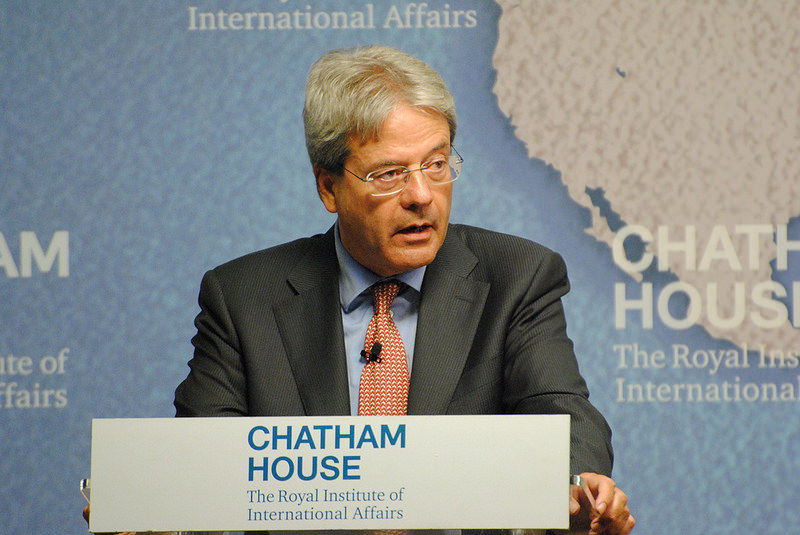

Only days after its prime minister resigned over a lost referendum, Italy found itself with a new government and a new prime minister, Paolo Gentiloni. But however smooth the transition was, the turbulent circumstances that led up to it are far from resolved.
The referendum rejected Matteo Renzi’s proposal to rewrite approximately a third of the constitution and recalibrate the dysfunctional relationship between the chamber of deputies and the senate. It was a risky move – and by polling day, it became a referendum on him and his administration, with populist opposition parties the Five Star Movement (M5S) and the Northern League seizing their chance to rail against the establishment.
Thanks to Italy’s weak economic situation, this all drew unprecedented international attention, with European elites especially worried about the potential political and economic shock that a No vote might trigger. But when that vote came, the sky didn’t fall in. The markets had clearly pre-adjusted in anticipation; minus a temporary fall in the value of the euro, they seemed ready to give Italy time to sort itself out. And so it did.
Renzi kept his promise and resigned immediately. The president, Sergio Mattarella, knew that calling fresh elections was not an option: while the constitutional reform was rejected, the new electoral law for the Chamber of Deputies is already in place, meaning Italy now has two different electoral systems for two chambers with identical powers. Without further electoral reforms, different parties or coalitions could end up majorities in each chamber, virtually guaranteeing legislative gridlock.
Mattarella spent two days in hectic discussions with delegations from all 26 political parties and groupings. Renzi’s Democratic Party did its bit by helping Mattarella identify who would secure the party’s support, and once a clear consensus emerged, Mattarella gave Paolo Gentiloni a mandate; he moved quickly to choose his ministers, who were sworn in on December 9.
By Italian standards at least, this was a remarkably swift transition between governments – at only 17 minutes, Gentiloni even broke the record for the shortest-ever confidence speech – but it comes with a strong dose of irony and déjà-vu. The referendum may have issued a verdict on Renzi and his government, but what has been installed instead appears to be little more than a refitted version of what Italy apparently rejected.
Same as the old boss
Gentiloni is no outsider. He was a member of the Democratic Party’s founding committee in 2007, supported Renzi’s successful leadership bid in 2013, and served as his minister of foreign affairs. His government’s majority is almost identical to Renzi’s, and his cabinet almost a carbon copy, with all but five ministers held over. Even Maria Elena Boschi, who was responsible for getting the failed proposal through parliament and who had promised to resign in the event of a No vote, was not just kept on but promoted.
Gentiloni’s goals are much the same as Renzi’s: electoral reform, sorting out the crisis in Italy’s banks, relief measures to the Italian earthquake zone and securing agreement with the unions on a new public workers’ contract. In his confidence speech, he explicitly embraced the Renzi government’s record and claimed continuity with it. Renzi himself remains leader of the Democratic Party; he has already made it clear that far from retiring, he wants to lead the party into the next election campaign with a view to winning and then continuing his programme of reform.
So while Gentiloni can claim to be a stabilising force in a time of crisis, he’s also viewed as a player in an establishment stitch-up. The transition protects the government from the blow dealt to Renzi, and gives him and his troops time to regroup. As far as the anti-establishment is concerned, it’s almost as if the Yes vote won after all. It’s not lost on them that Gentiloni is now the fourth prime minister in a row to have been appointed without a clear electoral victory; the last leader with that sort of legitimacy was Silvio Berlusconi when he was returned to power in May 2008.
Small wonder then that this government has already drawn as much opprobrium as any other in the history of the Italian Republic. The opposition parties took the unprecedented measure of boycotting the parliamentary confidence debate, expressing their views in the piazza and online. Gentiloni was left to speak to a half-empty chamber. Many view the new government as little more than a device to keep the anti-establishment parties out of power – but their chance can’t be far off.
On his blog, M5S leader Beppe Grillo declared: “This government has received a vote of no confidence from 20m Italians.” And while it has not been formally acknowledged, politicians and party spokesmen have made it clear that this government’s lifespan will match the time it takes to pass a new electoral law.
Once that’s done, the pressure on Gentiloni to resign and allow fresh elections will be overwhelming. In the end, he’ll most likely go down in history as just the latest steward of a short-lived interim government.
 Martin J. Bull does not work for, consult, own shares in or receive funding from any company or organisation that would benefit from this article, and has disclosed no relevant affiliations beyond the academic appointment above.
This article was originally published on The Conversation. Read the original article.







