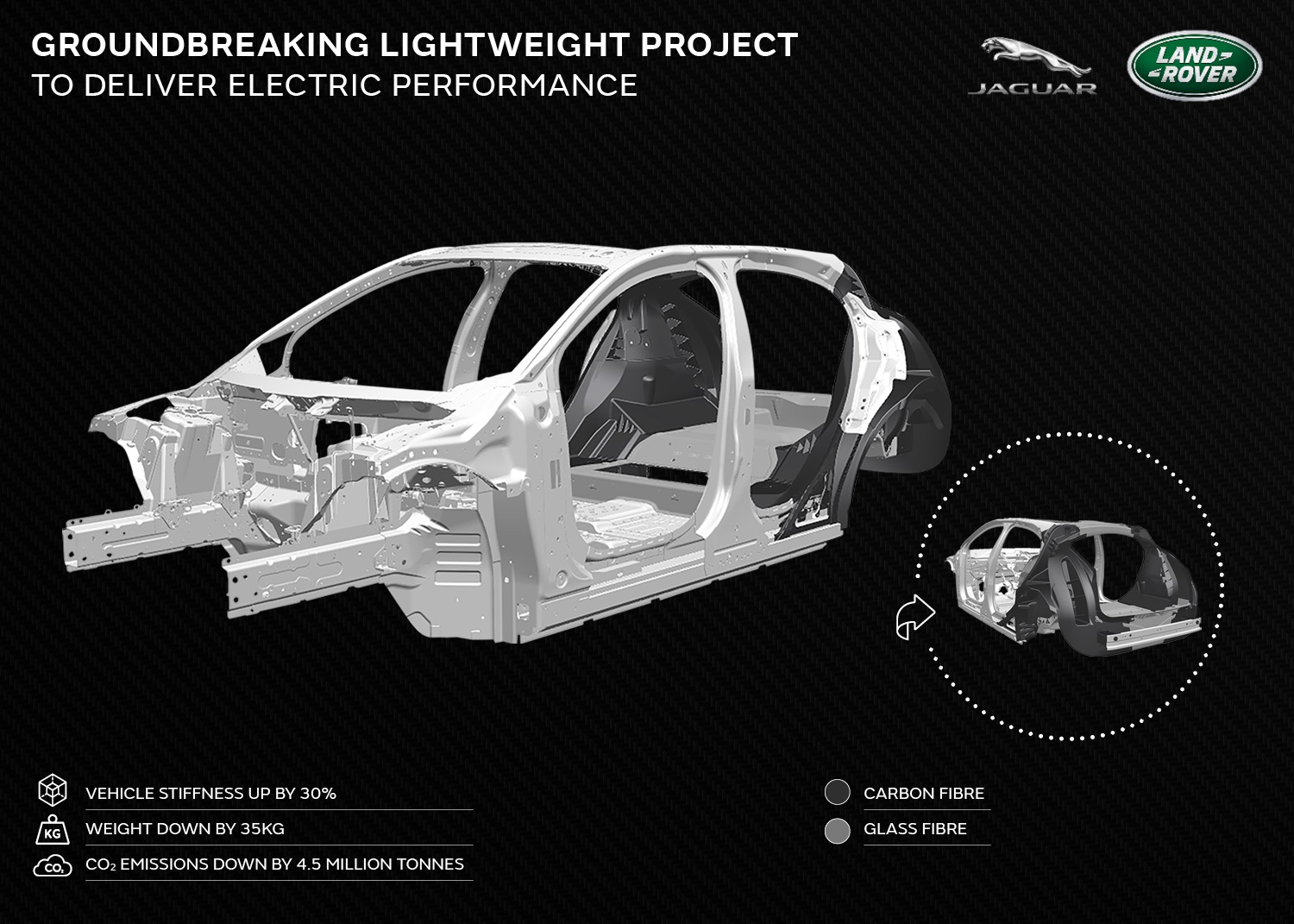
Jaguar Land Rover had launched a four-year research project to produce lighter electric vehicles with increased range, greater performance, and a more dynamic drive through the use of composites.
The research, dubbed the Tuscana project, will allow UK's biggest carmaker to develop lightweight vehicles and powertrain structures by using composites, such as carbon fiber, in place of aluminum and steel.
The resulting electric vehicle would be over 76.16 pounds lighter, 30 percent stiffer, and with upgraded vehicle crashworthiness.
The material should be capable of handling the increased torque generated by high-performance batteries.
The Tucana project also hopes to make the UK a world leader in low-carbon technology, helping prevent emissions of 4.5 million tons of CO2 between 2023 and 2032.
The Tata Motors-owned company will come up with prototype test vehicles by 2022.
The challenges Jaguar Land Rover faces include electrification, underutilization of its plants, rapid fall in diesel sales, and the pandemic's effect on the industry.