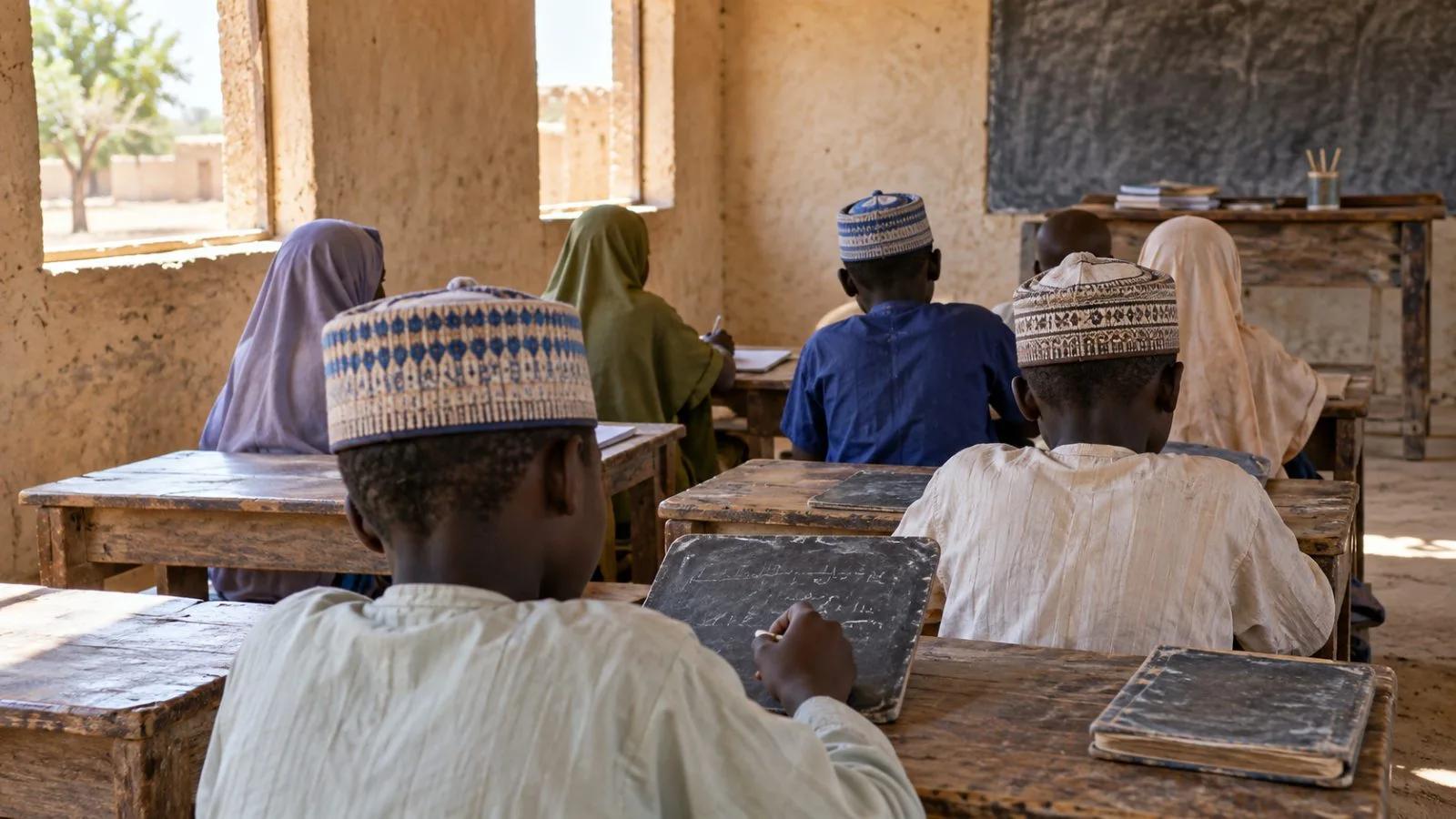
Jigawa State has budgeted ₦3.595 billion in 2026 capital spending for its Tsangaya Education Board, funding renovations and skills centers as it expands a model combining Qur’anic and basic education.
The amount is above the Board’s ₦1.83 billion original capital budget for 2025 and its ₦2.654 billion revised capital figure for that year, according to Jigawa’s approved budget.
The plan assigns ₦333 million to renovate seven model schools inherited from the federal government: Sule Tankarkar, Gagarawa, Danbarma Jahun, Gantsa, Gwiwa, Birniwa and Turabu. Another ₦700 million is set aside for skills acquisition centers at mega Tsangaya schools in Dutse, Kafin Hausa and Ringim.
The federal Tsangaya (Almajiri) Education Programme was launched under former President Goodluck Jonathan. The Universal Basic Education Commission (UBEC) says the programme seeks to widen access to basic education for Almajiri school-age children and discourage itinerancy and begging. A Ministry of Education progress report describes the model as combining Qur’anic and basic education.
The 2012 progress report says 32 schools had been completed by the time Sokoto held the first federal Almajiri-school commissioning on April 10, 2012. Its later milestones — 102 schools by December 2012 and 400 by 2015 — were targets.
Premium Times reported Sunday, Nov. 1, that Alaramma Illiyasu, a traditional Tsangaya teacher, had initially opposed the federal programme because he feared it would weaken Islamic education. After visiting a model school in Birniwa, he began transferring students there, the outlet reported. Premium Times also said the broader expansion could add places for more than 7,500 children, while 60 community schools were intended to serve more than 6,000.
“I was impressed by the learning environment and accommodation facilities,” Illiyasu told Premium Times. He said he had sought more places to double enrollment in the next academic session.