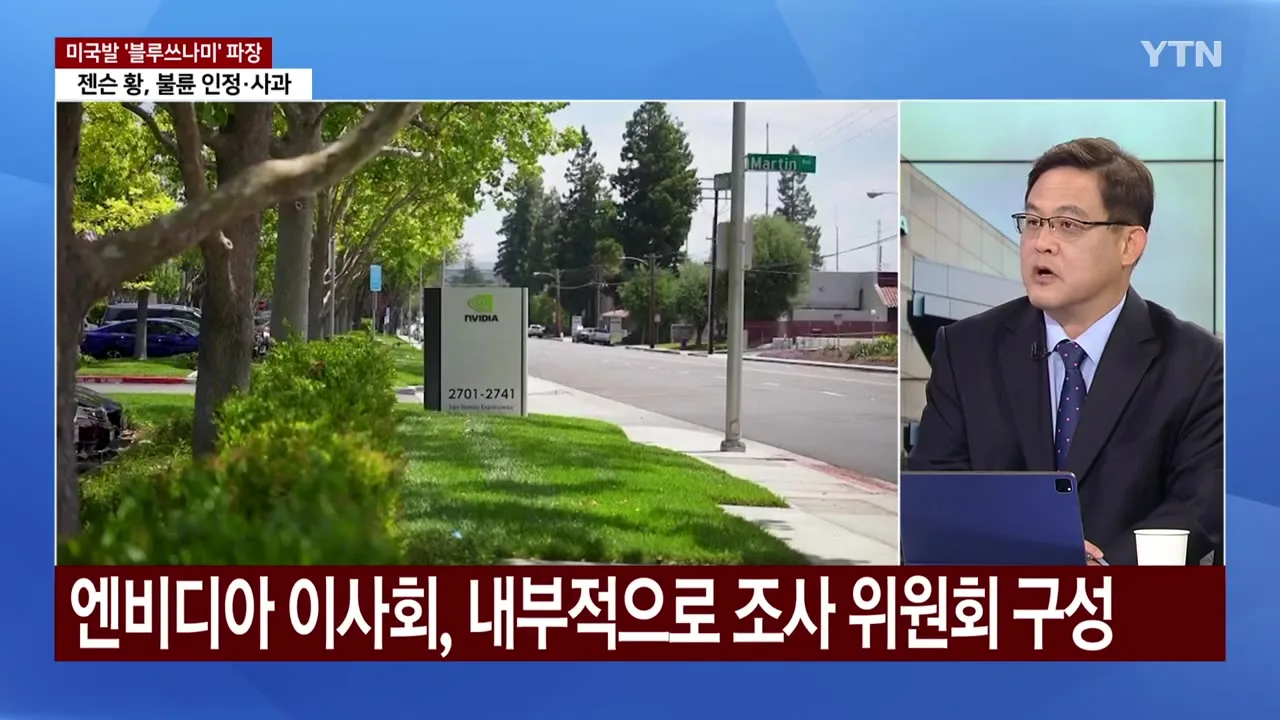
Tighter US restrictions on Nvidia’s chip sales to China could hurt South Korean semiconductor suppliers by reducing the American company’s revenue, Hyundai Research Institute research director Joo Won said on Nov. 8.
The risk depends on whether US politicians impose additional restrictions and whether Nvidia’s sales fall short of expectations. Speaking on YTN’s News UP, Joo said weaker revenue could then affect Korean chipmakers supplying the company.
Joo distinguished the possible effects of tighter export rules from questions about Nvidia’s management. Large companies rely on executives below their chief executive to run their businesses, limiting the direct effect of personal controversies on earnings.
He attributed the recent stock market declines primarily to uncertainty following the US midterm elections and concerns about possible restrictions on artificial intelligence data centres. He said it was difficult to judge how much developments involving Nvidia’s chief executive would affect its shares.
Foreign selling of Korean semiconductor shares reflected expectations that political uncertainty would continue to weigh on prices, in his assessment. He questioned whether the prospect of improved company earnings would be enough to bring buyers back while those concerns persisted.
Joo also questioned the basis for expecting a strong rebound in Korean stocks. “I am personally somewhat sceptical,” he said, in remarks translated from Korean, about whether US politics and conditions in the AI market would support such a recovery.
Turning to borrowing for stock purchases, he said a government decision to suspend brokerages’ collateral maintenance obligations for three months would give firms room to lower their requirements. The collateral ratio measures the value backing a loan against the amount borrowed.
Joo put the existing requirement at 140%. Brokerages can sell customers’ shares if their collateral falls below the required level and they fail to deposit more money. The temporary relaxation would not eliminate that possibility, and firms had yet to announce their revised thresholds.
On trade, Joo expected President Donald Trump to seek more foreign investment in US manufacturing through additional tariff pressure. He linked that expectation to the political appeal of domestic jobs and investment, while acknowledging that it remained a prediction.
He expected tighter limits on US government spending under a Congress controlled by Democrats. Changes in spending and tariffs could increase currency market volatility, although he left open whether the dollar would strengthen or weaken.
Joo saw broader political support for cooperation with South Korea in shipbuilding because it supports employment and US military capabilities. He was less certain about investment in Alaska’s liquefied natural gas infrastructure, citing unresolved electoral developments and questions about the project’s profitability.
He ended by linking pressure on the won to US policy uncertainty and expectations about the supply of dollars and interest rates. His assessment left the outlook dependent on decisions still to come, including brokerage collateral requirements, trade restrictions and the direction of US monetary policy.