


 XRP Ledger Foundation Confirms 100B Supply Safe After Security Fix
  Bitcoin Price Faces Volatility Ahead of US CPI and Fed Speech
  NEAR Price Surges 11% as Trading Volume Doubles
  Anthropic Launches Claude Dashboards and Motion AI Tools
  US Suspends Microsoft, Adobe From Green Card Program
  Ripple-Backed Evernorth Set for Nasdaq Debut With 473 Million XRP
  OpenAI Revenue Hits $50 Billion, Below Earlier $70 Billion Estimate
  Zcash Plans Quantum-Resistant Security Upgrade for January
  Yandex Data Center Hit by Drone Strike as Russia-Ukraine Cyber Infrastructure Attacks Escalate
  Ethereum Foundation-Linked Wallets Move $11.13M in ETH to Kraken
  Tencent Shares Fall as $5 Billion AI Bond Sale Weighed
  Samsung, SK Hynix Shares Fall as China's CXMT Advances DRAM Technology
  XRP Price Drops 3% Despite Ripple-Backed Evernorth Nasdaq Debut


 Add as a preferred source on Google
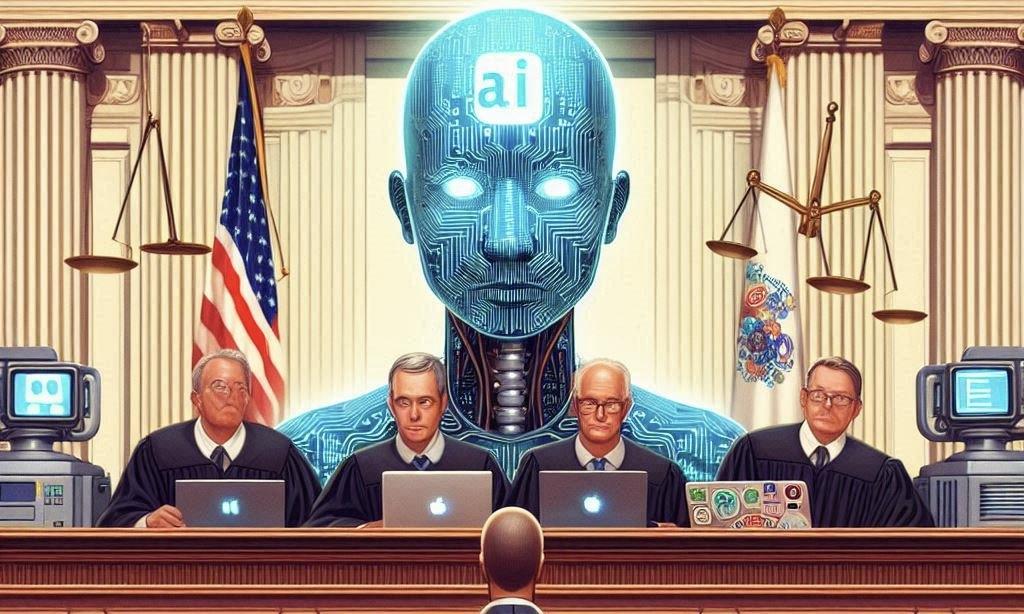
A judge has partially dismissed a billion-dollar class action lawsuit against Microsoft, OpenAI, and GitHub regarding the alleged unauthorized use of intellectual property to train the AI coding tool GitHub Copilot. The ruling marks a significant win for the generative AI industry amid ongoing legal challenges.
Generative AI Industry Wins as Judge Dismisses Key Claims in $1B Lawsuit Over GitHub Copilot
This victory for the generative AI industry and big tech grappling with several related lawsuits.
The plaintiffs in the lawsuit claimed that OpenAI "scraped" GitHub and utilized human-generated coding fragments to train GitHub Copilot without authorization, compensation, or acknowledgment. According to the lawsuit, the complainants sought $1 billion in compensation as Copilot reproduced human-generated code line-by-line.
In court documents made public thus far, each of the five anonymous complainants in the case is identified as "John Doe," ostensibly representing the class litigating.
Separate reports from Bloomberg Law and Law360 indicate that California Northern District Judge Jon S. Tigar dismissed the class claims from the Digital Millennium Copyright Act (DMCA). According to Bloomberg Law, the claimants "failed to demonstrate that their code was reproduced identically."
Judge Tigar submitted the dismissal on June 24. As evidenced by related documents, public access to the filing's text was restricted at the time. This restriction may have resulted from the exposure of previously redacted identities. It was unsealed on Friday, July 5.
Early Predictions of AI Lawsuit Impact Diminished as Key Claims Against Microsoft, OpenAI, and GitHub Dismissed
The lawsuit was initially filed in 2022. At that time, analysts and commentators generally believed that the case would have significant implications for the technology industry. For instance, James Vincent of The Verge stated that “the suit could have a huge impact on the wider world of artificial intelligence.”
Vincent cited a pair of programmers who were purportedly behind the lawsuit in the same article. At the time, they thought that “we’re in the Napster-era of AI” and that “letting Microsoft use other’s code without attribution could kill the open source movement.”
Those claims have been primarily dismissed as of July 2024. It is unclear what this means for Microsoft, OpenAI, and GitHub; however, it could result in the companies' unrestricted endeavors in AI-generated coding.
According to Cointelegraph, Microsoft and OpenAI are facing numerous related lawsuits, including one from the New York Times that is similar to this case. The New York Times, like the programmers who initiated the coding litigation, asserts that OpenAI used its IP to train its models and that these models occasionally generate outputs that contain identical information.
It remains to be determined whether the recent ruling in favor of OpenAI, Microsoft, and GitHub will impact that and other related cases.
Photo: Microsoft Bing







