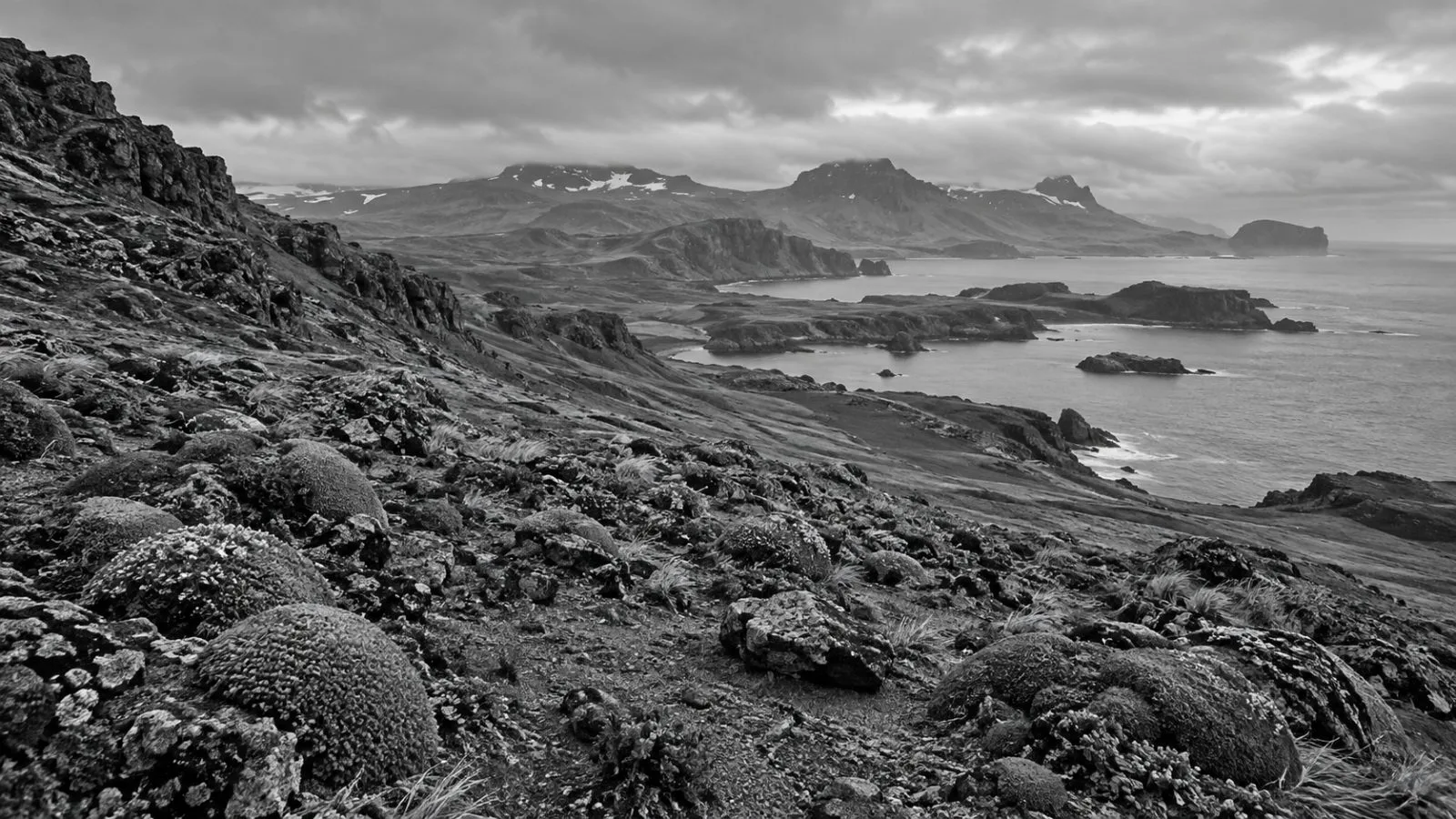
Plant and fungal communities on Kerguelen’s Ile Guillou remained more similar to a rabbit-affected site than a rabbit-free island 20 years after eradication, a 2015 study found.
In a 2015 paper in Biology Letters, Johan Pansu and co-authors compared Ile Guillou with rabbit-affected Isthme Bas and rabbit-free Ile Australia, using metabarcoding of extracellular DNA in soil. The plant and fungal communities on Ile Guillou were closer to those at Isthme Bas than to those at Ile Australia. Pansu and co-authors said their results showed “no indication of recovery” at locations where rabbits had been absent for 20 years.
The researchers proposed that vegetation changes linked to rabbits and increased erosion may have altered soil fungal communities. Both studies also discuss soil and climate conditions as possible limits on recovery.
A 2004 study in Biological Conservation traced the rabbits’ introduction to Kerguelen’s main island to 1874 and their later arrival on nine other islands. It describes the archipelago in the southern Indian Ocean, more than 3,500 kilometers from African and Australian coasts, with one main island and about 60 smaller islands.
The earlier paper identified 29 native plant species and described Kerguelen cabbage (Pringlea antiscorbutica) and cushion plant (Azorella selago) as especially sensitive to grazing. Its abstract reports that both plants disappeared in grazed areas, while the introduction says they were rare there. The paper also says Acaena magellanica became dominant in many coastal areas.
Poisoning eradicated rabbits on Ile Verte in 1992 and Ile Guillou in 1994. Surveys six years after removal on Ile Verte and five years later on Ile Guillou found significantly more plant species, while overall vegetation cover stayed similar. Introduced species, especially dandelion (Taraxacum officinale), increased after removal. Jean-Louis Chapuis, Yves Frenot and Marc Lebouvier, authors of the 2004 study, described overall responses as slow.
Evidence from the later DNA comparison covers only three islands and cannot establish how ecosystems elsewhere in Kerguelen changed.