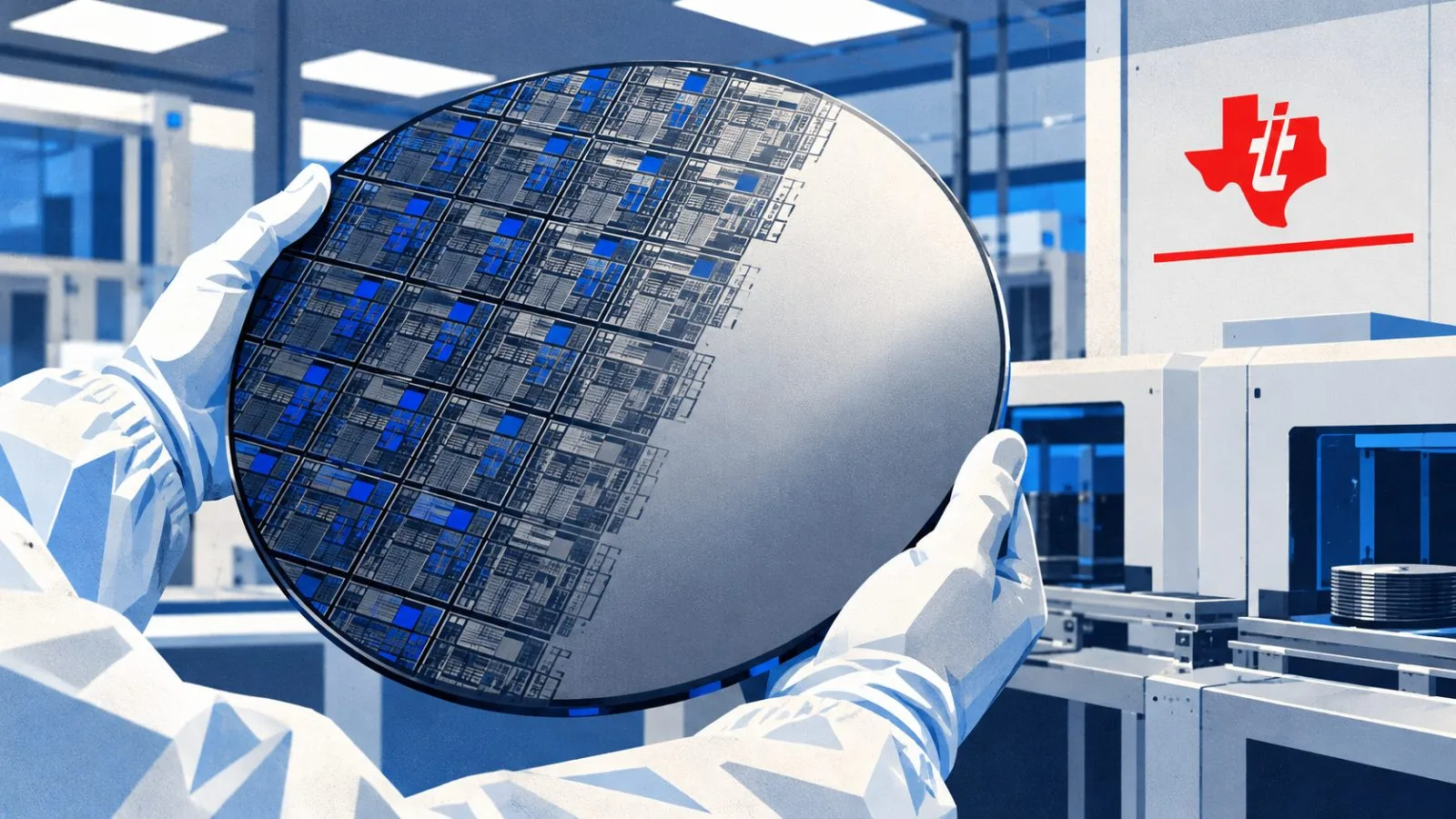
Capital Wealth Planning founder and CEO Kevin Simpson said he bought Texas Instruments shares at $293 each after semiconductor stocks weakened, citing broadening demand and improving cash generation beyond artificial intelligence.
In the third quarter, Texas Instruments reported revenue of $6.06 billion and earnings per share of $2.62, up 28% and 77% from a year earlier, respectively. Data-center revenue grew about 95%, while industrial revenue climbed more than 40% and automotive revenue rose by a percentage in the mid-teens.
The company’s analog chips and embedded processors serve automotive, industrial, data-center and consumer-electronics applications. Simpson said that mix provides exposure to artificial intelligence demand without making AI the company’s only growth case.
“AI helps, but it’s not the whole bet,” Simpson wrote.
For the 12 months through September, operating cash flow was $9.9 billion, up 43%. Capital spending on manufacturing capacity fell to $2.6 billion from about $4.8 billion, and free cash flow reached $8.4 billion, up from $2.4 billion.
About $1.6 billion of the free cash flow came from CHIPS Act benefits, including direct proceeds and tax savings. Without those benefits, free cash flow would have totaled about $6.8 billion, compared with $5.2 billion in dividends paid during the period.
The quarterly dividend rose 7% to $1.52 per share, marking the 23rd consecutive year of increases. The annualized payout is $6.08 per share.
Simpson said the dividend provides income during the industry recovery but does not remove the risks of a cyclical semiconductor business.