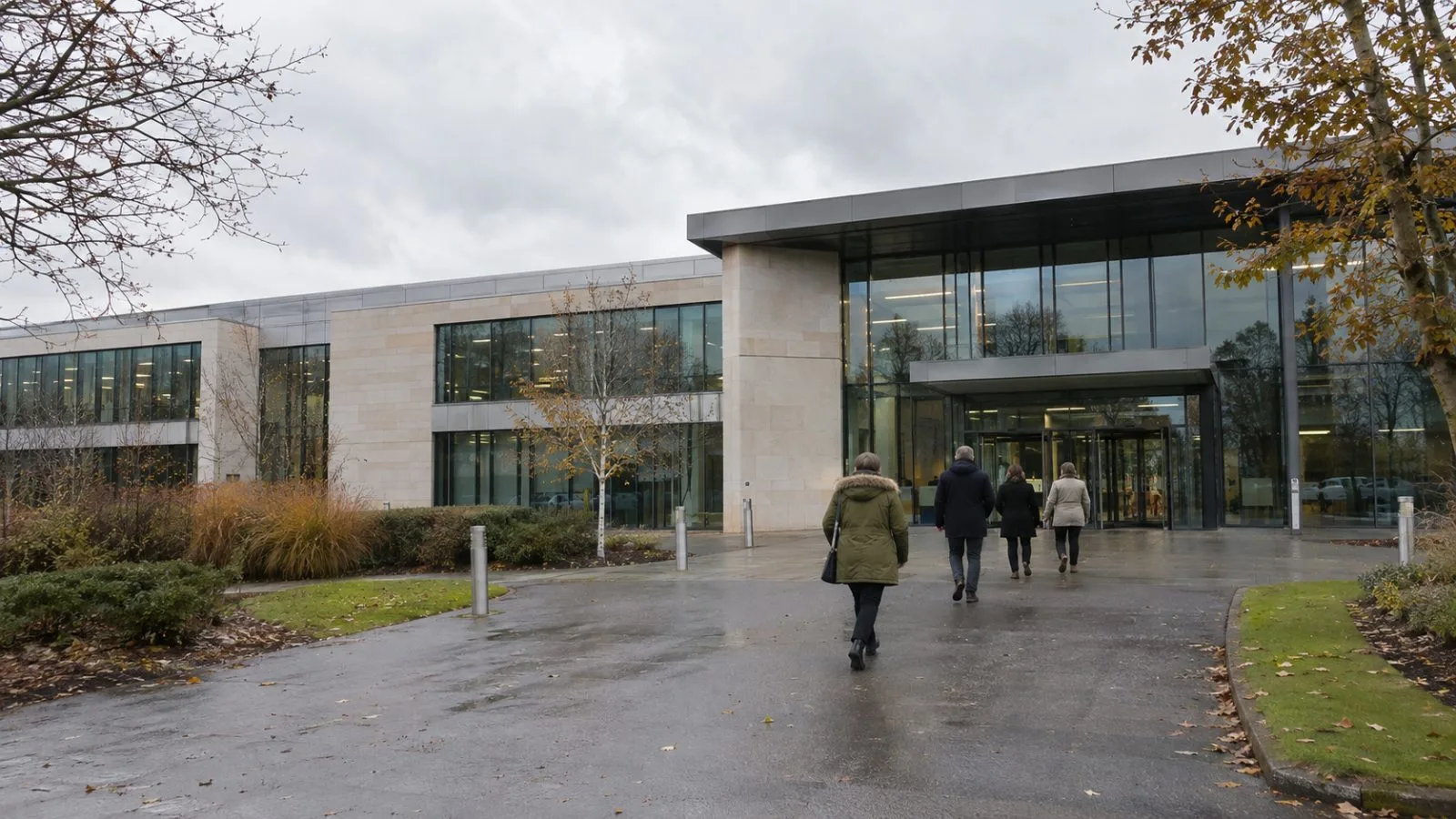
King Charles III opened the National Cyber Force’s new headquarters in Lancashire, giving Britain’s offensive cyber operations a permanent base as the government ties the facility to regional skills and employment.
Ribble House is in Samlesbury, within the North West Cyber Corridor, which the force says runs from Manchester to Lancaster. The headquarters also has wider security significance: the National Cyber Force (NCF) says its work addresses threats from state and non-state actors.
Established in 2020, the NCF combines four UK institutions: the Defence Science and Technology Laboratory, the Secret Intelligence Service, Government Communications Headquarters (GCHQ) and the Ministry of Defence. The force says its offensive cyber activity is intended to protect UK security and interests and support military operations. It does not routinely disclose details of its operations.
A 2021 government announcement about the site cited earlier UK cyber activity against Daesh in 2016 and ISIS propaganda networks in 2018. The announcement presented Samlesbury as a way to build the North West’s cyber sector and expand skilled employment.
The Royal Family said Charles received operational briefings and toured technical areas during his visit. GCHQ Director Anne Keast-Butler said the force was “perfectly placed to boost the development of the North West Cyber Corridor.”
The government selected Samlesbury as the force’s permanent location in 2021 and projected “thousands of highly skilled jobs” in the North West. Its Nov. 16 announcement gave no current staffing figure for Ribble House, jobs-created tally or construction-cost estimate. It also did not quantify the site’s economic impact.
The government also cited its Digital and Cyber Bursary as part of the regional skills effort. A Jan. 29 parliamentary answer counted 500 participants across cohorts: 100 graduates from the 2024-25 cohort, 115 Year 13 students and 285 Year 12 students in two 2025-26 cohorts. The government says bursary students study subjects including computer science, cybersecurity, engineering, data science and artificial intelligence.