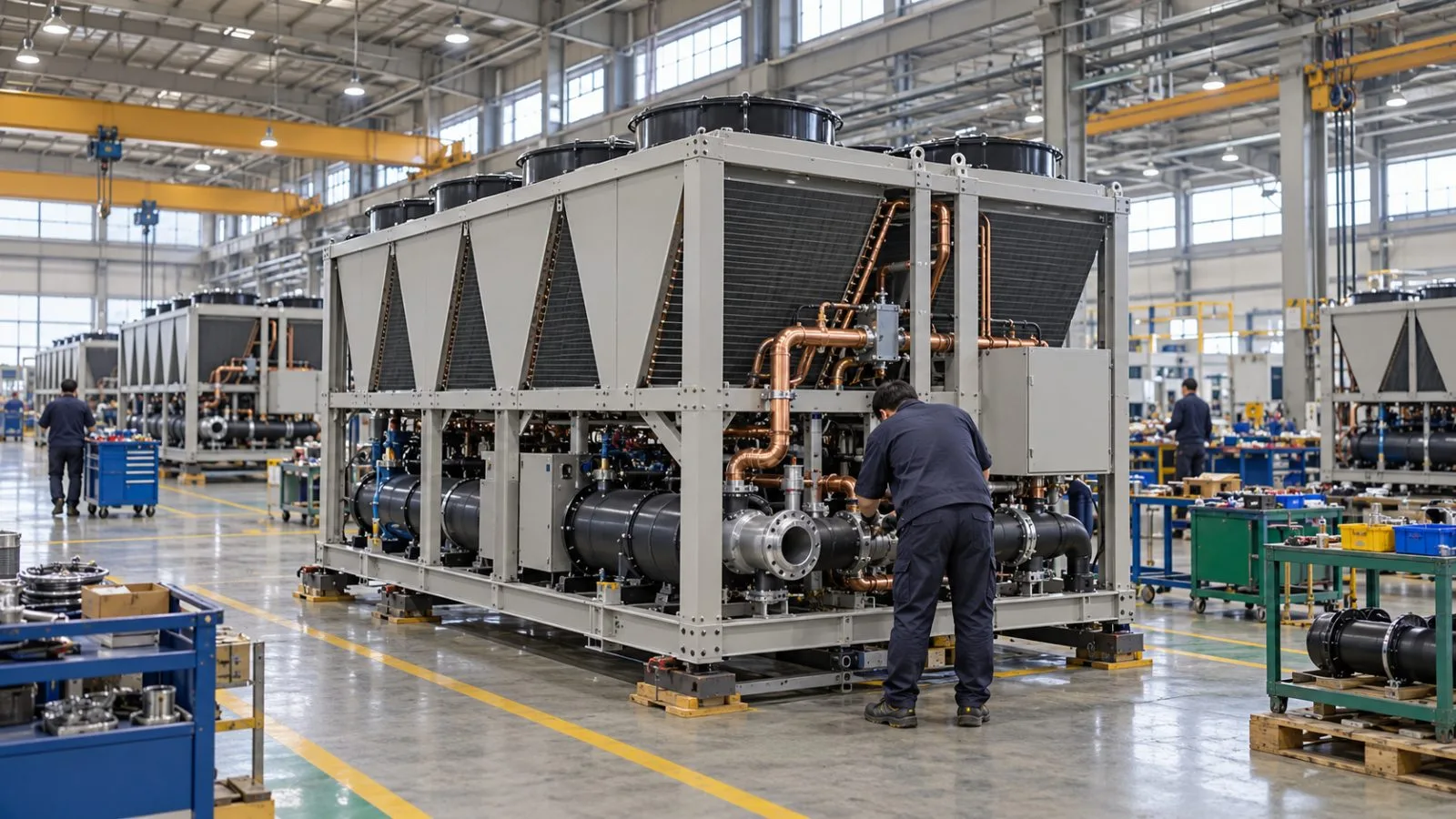
LG Electronics said cumulative orders for cooling equipment used at AI data centers passed 3 trillion won by the end of September, highlighting a growing business as the South Korean company reported higher third-quarter revenue. The orders totaled about 600 billion won by the end of the first half, according to LG.
The Korea Herald reported that LG secured a long-term chiller-supply agreement for North American AI data center projects with aggregate capacity above five gigawatts. It also reported that the company is expanding manufacturing facilities as demand rises.
LG's finalized results put third-quarter operating profit at 781.9 billion won, while revenue reached 23.82 trillion won, up 8.9% from a year earlier. The Herald attributed the 13.5% year-on-year increase in third-quarter operating profit to improved television results and steady automotive-electronics sales.
Compared with the second quarter, operating profit was 50.5% lower than the previous 1.58 trillion won. The earlier quarter included a one-time tariff refund that boosted earnings, the Herald reported. For the first nine months, LG recorded operating profit of 4.03 trillion won, a 55.9% increase from a year earlier and above its 2.48 trillion won total for full-year 2025.
All four main divisions stayed profitable, but results varied. Vehicle Solution delivered record quarterly revenue of 2.83 trillion won and operating profit of 190.3 billion won, with a 6.7% margin. Television and media posted operating profit of 146.7 billion won on revenue of 5.02 trillion won; the Herald pointed to premium OLED television sales and growth in emerging markets.
Home appliances brought in 7.04 trillion won in revenue, the highest among the divisions, and earned 259.2 billion won in operating profit. Its margin was 3.7%, down from almost 10% in the prior quarter, when the tariff refund benefited the business.
Eco Solution, which houses the cooling business, earned 87.2 billion won in operating profit, compared with 236 billion won in the second quarter. Its margin was 4%, versus 8.6% previously. The Herald said higher spending on future growth partly contributed to the decline.