Lebanon’s September inflation data show energy-related costs rising more than twice as fast as overall prices, adding economic pressure as Palestinian refugees face barriers to regulated work.
The Central Administration of Statistics (CAS) reported that the consumer price index rose 17.53% from September 2025 and 1.35% from August. The category covering water, electricity, gas and other fuels increased 38.91% year over year and 5.06% month over month. These national figures do not measure prices in refugee camps separately.
In August, the World Bank projected that inflation would reach 17.5% in 2026, citing supply disruptions, higher shipping costs and rising oil prices. That full-year forecast is distinct from CAS’s September year-over-year reading.
The Lebanese Palestinian Dialogue Committee (LPDC) says fragmented employment rules continue to limit Palestinians’ access to regulated professions. Law, medicine, engineering and pharmacy are among fields reserved for Lebanese nationals or subject to reciprocity requirements, the committee says. It also says labor and social security changes made in 2010 had limited effects; 729 work permits were issued to Palestinian refugees in 2016.
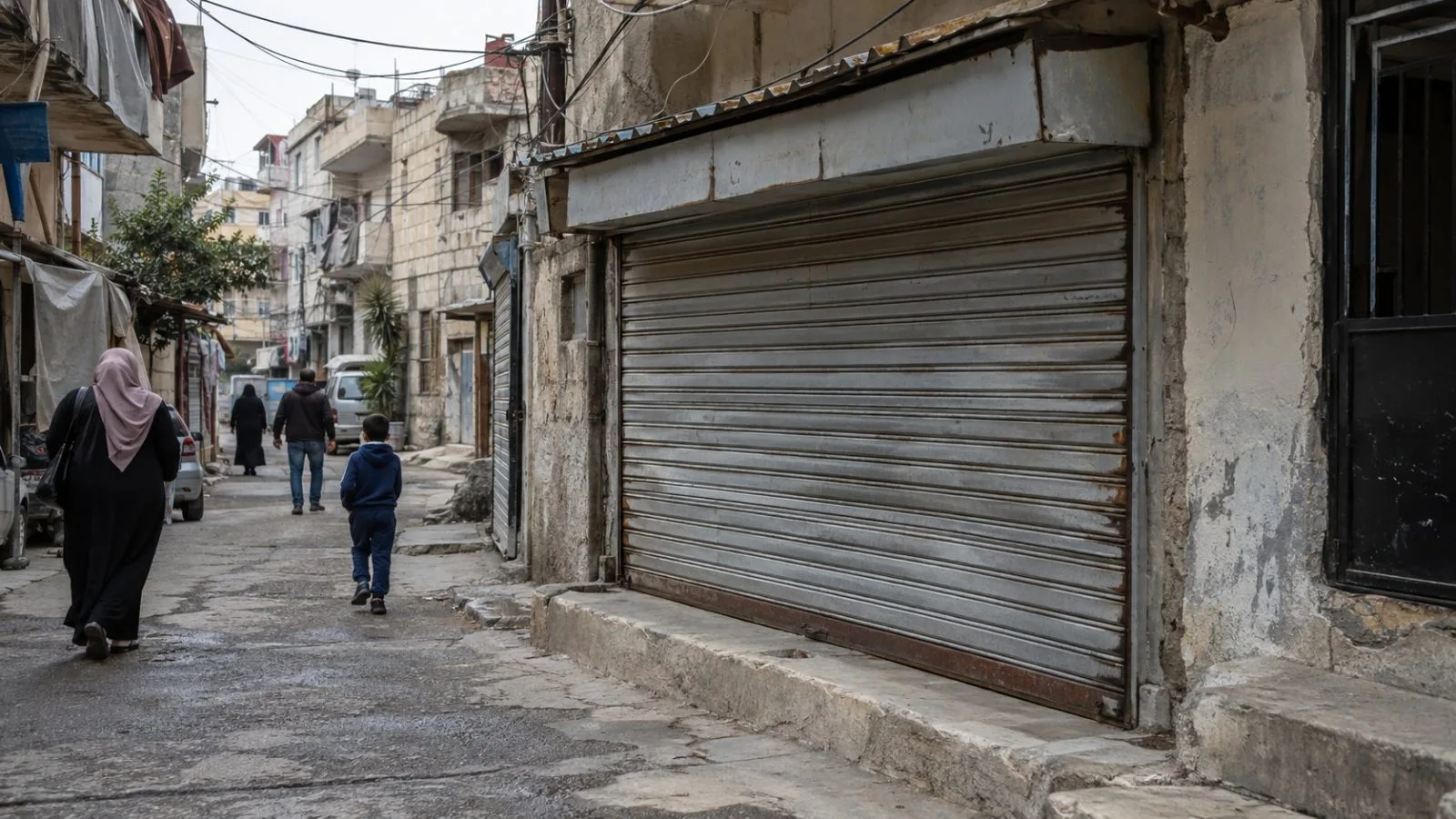
Al Jazeera reported Nov. 1 that Osama Najjar, a Palestinian refugee, closed his aluminium shop in Beddawi camp in early 2024 after business slowed and bills became difficult to pay. Najjar cited high prices and electricity bills as concerns. “The whole Palestinian situation in the camps is tragic,” he told the outlet.
The U.N. Relief and Works Agency for Palestine Refugees in the Near East (UNRWA) reported that 222,000 Palestinians lived in Lebanon as of February 2025, including 195,000 from Lebanon and 27,000 from Syria. It estimates that 45% of Palestine refugees in the country live in its 12 recognized camps. As of March 2023, 80% lived below the national poverty line adjusted for inflation.
The U.N. said on Sept. 24 that UNRWA faced a $100 million cash-flow deficit for 2026. The figure covers the agency’s operations across its fields and is not specific to Lebanon.