South Korean President Lee Jae Myung pressed Washington to move wartime operational control to Seoul, while North Korea considered additional border deployments amid tensions along the border.
Lee said discussions with Washington were progressing and argued that South Korea should not continue relying on another country for wartime command. He made a similar case in an earlier push for South Korean control of wartime command. U.S. Forces Korea Commander Gen. Xavier Brunson told a Washington forum that the allies needed to reassess how they measured readiness under changed security risks.
South Korea’s Ministry of National Defense (MND) says the transfer requires three mutually agreed conditions: South Korea’s military capabilities, the alliance’s ability to respond to North Korea’s nuclear and missile threats, and a security environment suitable for the change. The Combined Forces Command would remain in place, led by a South Korean four-star general. Yonhap News Agency reported Oct. 15 that Seoul seeks the transfer before the administration’s term ends in 2030. The allies have not announced a handover date.
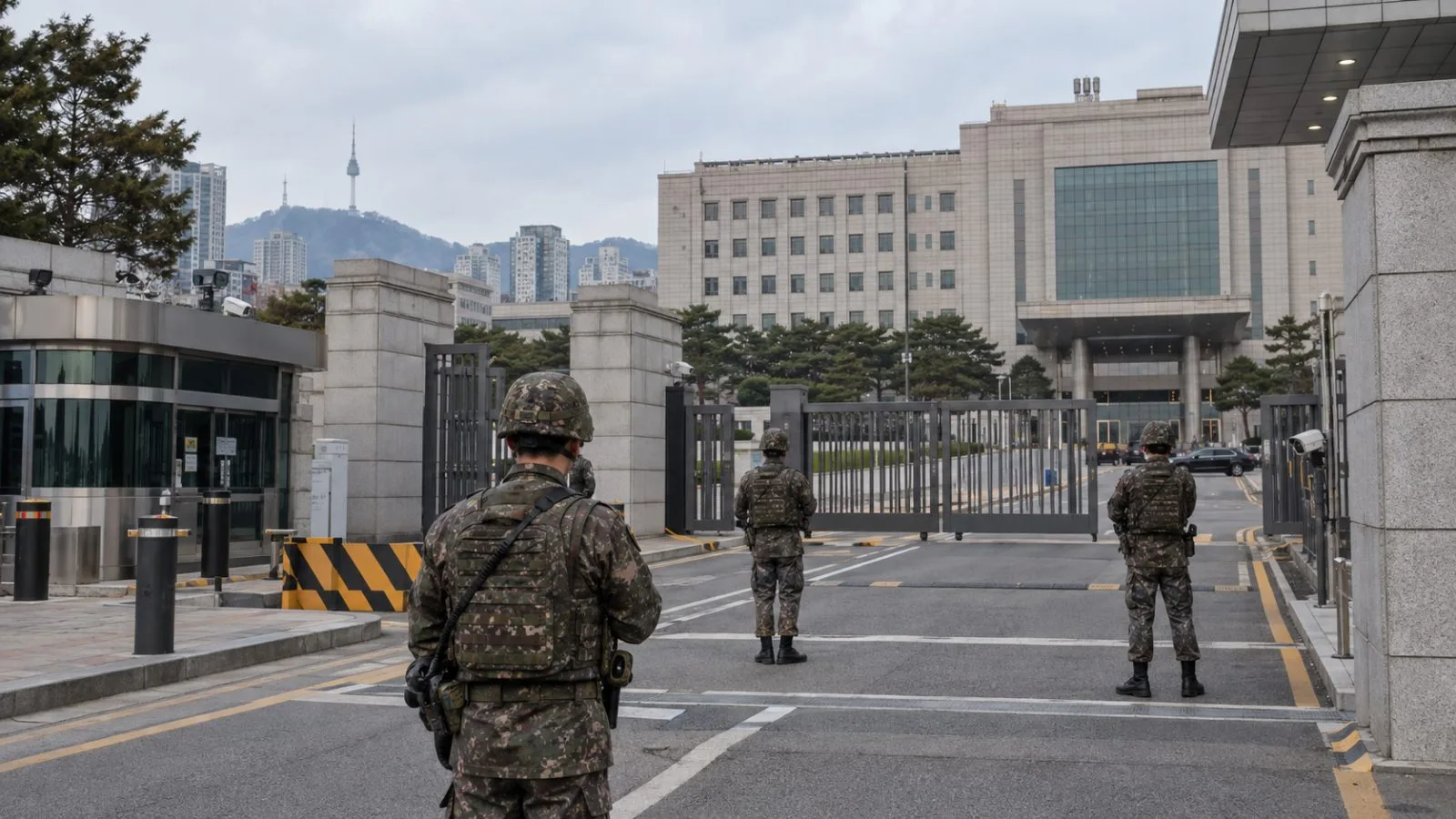
Kim Yo Jong, department director of the Central Committee of the Workers’ Party of Korea, said North Korean military leaders were reviewing whether to station additional tactical strike assets near the southern frontier. Her statement also raised the possibility of restarting loudspeaker broadcasts. Kim accused South Korean forces of repeated warning shots and loudspeaker messages since August. South Korea’s military says its warnings followed North Korean soldiers crossing the military demarcation line during border construction.
Seoul has blamed North Korean mines for the Sept. 21 mine blasts that injured three South Korean soldiers; Pyongyang denies responsibility. The Associated Press said a 2015 mine incident injured two South Korean soldiers, and that Seoul’s subsequent loudspeaker broadcasts helped bring the Koreas close to armed conflict.
Yonhap reported Oct. 15 that the allies planned to discuss unresolved issues before their annual Security Consultative Meeting, usually held in late October or early November. The report said the meeting date had not been set.