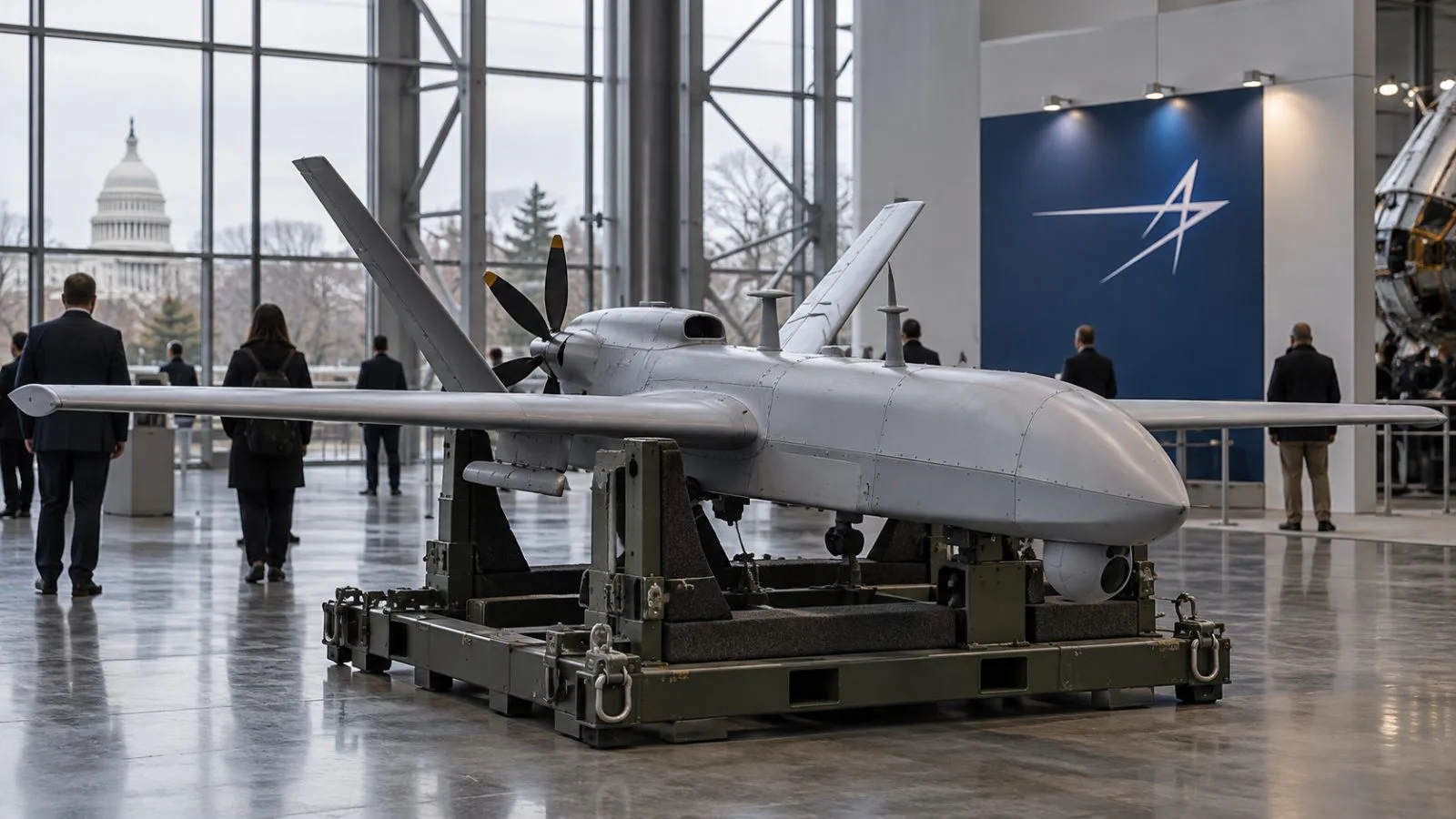
WASHINGTON, Oct. 15 — Lockheed Martin Skunk Works and The Royal Netherlands Aerospace Centre (NLR) expanded cooperation in Washington, naming unmanned aerial systems (UAS) among four priorities for linking Dutch defense capabilities to global supply chains.
The four workstreams are connectivity to the Dutch industrial base, military operational analysis, technology roadmaps and UAS collaboration. The partners said they aim to connect the Dutch defense industrial base with international supply chains and bring military mission needs closer to capability requirements. They also describe the effort as supporting Royal Netherlands Air Force readiness.
The latest phase builds on an initial memorandum of understanding signed in Washington on Oct. 17, 2024. Lockheed Martin’s announcement about that agreement listed industrial-base connections, operational analysis and technology roadmaps among the cooperation areas. It also cited European strategic autonomy. Those three themes appear alongside UAS in the four priorities now outlined.
The organizations cite cross-border integration and the NATO alliance as reasons for the cooperation. Their announcements describe intended benefits for the Dutch defense industrial base and the Royal Netherlands Air Force, while giving no detail on who would bear costs for specific work.
Lockheed Martin said projects involving technologies such as thermoplastics had advanced under the collaboration. Its announcement offered that as an example of work to date, but did not connect it to a named aircraft or UAS program.
The public outline does not specify a procurement, financial terms, funding, work-share arrangements or deliverables. It also gives no timetable or next milestone, leaving the four areas as stated priorities rather than a defined program schedule.
NLR CEO Tineke van der Veen said cross-border partnerships are “essential to deliver systems that no single nation can build alone.”