
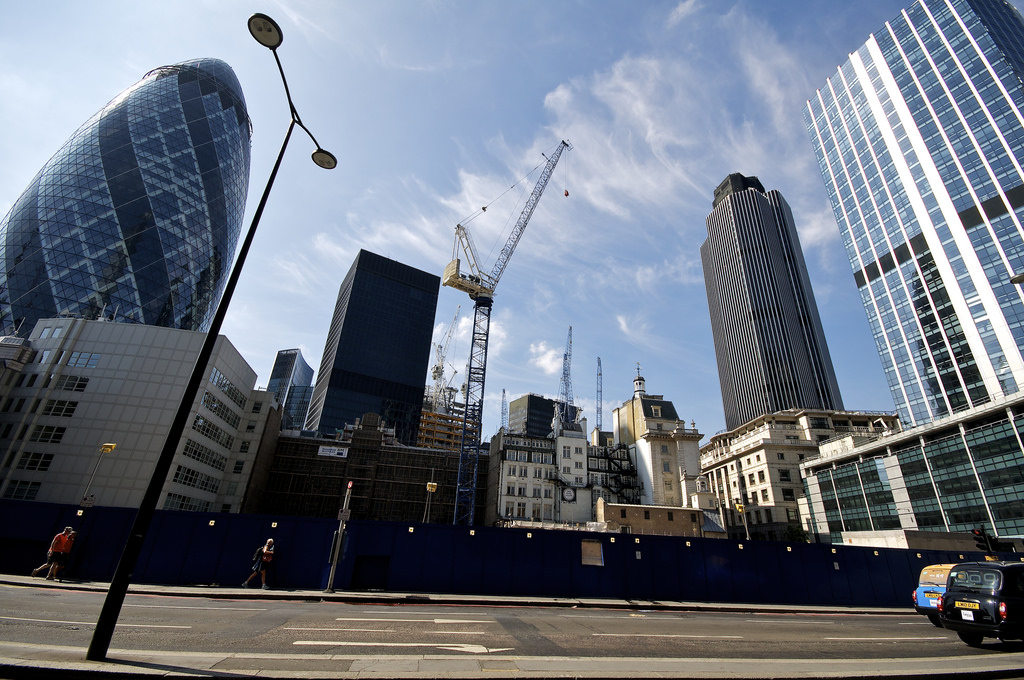
A new skyscraper is set to join the City of London’s world-famous collection of oddly-designed buildings with novelty names. With 73 storeys, the Trellis will rival the Shard in height, and overshadow its next-door neighbours, the Gherkin, the Walkie-Talkie and the Cheesegrater. If all goes to plan, the tower will rise from the rubble of the existing Aviva building at 1 Undershaft, sometime in the 2020s.
In the aftermath of Brexit – at a time when investors are spooked and the pound has plummeted – the local government of London’s finance district (the City of London Corporation) was on the look out for a good news story. Keen to cast off the shroud of uncertainty and cement London’s status as a global financial hub, the City of London’s planning and transport committee chair, Chris Hayward, boldly proclaimed that “this development shows the high levels of investor confidence in London’s status as a global city following our decision to leave the European Union”.
Yet skyscrapers are not just slick, glassy lures for business and wealth; they tell us something about the character of London itself. St Paul’s Cathedral used to be the dominant landmark of the city, impressing locals and visitors alike with its scale and architectural finesse. Now, skyscrapers are the dominant structures, giving the finance sector an imposing physical presence.
Power building
Just as cathedrals were historically built to represent the power and presence of the church in everyday life, the Trellis is the latest tall building to speak for the dominance of the global financial market as a driving force in Western society. The scale and the grandeur of these distinctive constructions is a tribute to those who deliver the City’s wealth and success – and a symbol of the power they hold.
This power comes from the City of London’s status as one of the largest concentration of banking and financial services industries in the world. The City turns over an estimated US$1.9 trillion worth of foreign exchange each day, accounting for 37% of global capital flows.
It is also a critical site for job creation, with nearly 150,000 people employed by the financial sector and a further 140,000 in legal and accounting professions. In fact, countless jobs throughout the UK depend of the prosperity of its financial sector.

The fable of St Paul and the Cheesegrater. Tim Benedict Pou/Flickr, CC BY
There is a dark side to these built behemoths, though. For those who pass through the City’s streets, the shadows of these towering structures loom over the tightly knitted network of lanes and alleys, creating a sinister and somewhat claustrophobic feeling. They can intrude into, or even engulf public spaces, blocking out the sun or blocking off access routes.
There have been some attempts made to humanise these buildings. Their strange names and peculiar shapes have become figures of fun and play. They offer viewing platforms, sky-high dining experiences and interactive learning environments, to invoke a sense of identity and ownership.
Human error
But above all else, skyscrapers symbolise the deep entrenchment of market ideology within the very fabric of our society. These buildings mark out a stark geographical boundary of wealth and exclusivity, while their growing numbers reflect the concentration of wealth, not only in a specific area of London, but among a particular class of people. High levels of inequality indicate that this fountain of wealth does not trickle down throughout the rest of society – instead, it swills around the City.
Yet if it seems the architecture in this area of London is an uncritical homage to capitalism, then dig a little deeper: there are cautionary tales hidden in the history of London’s built environment. The failed Pinnacle project is an allegory for the financial market’s instability – and the devastating consequences when it fails.
The Pinnacle was designed to be 62 storeys tall – but it never rose beyond seven. After the global financial crisis hit in 2008, funding dried up, construction was halted, and the Pinnacle became known as the Stump. Only this year have developers been given permission to proceed with a new high-rise design, which will grow alongside the Trellis, to be completed in 2019.
Failed funding structures and overconfident developers are as much a part of the modern financial sector as wealth and job creation. But while old foundations can be used for new buildings, the massive impacts of financial sector failures are more difficult to mend.
 Alex Simpson has received funding from the ESRC.
This article was originally published on The Conversation. Read the original article.


