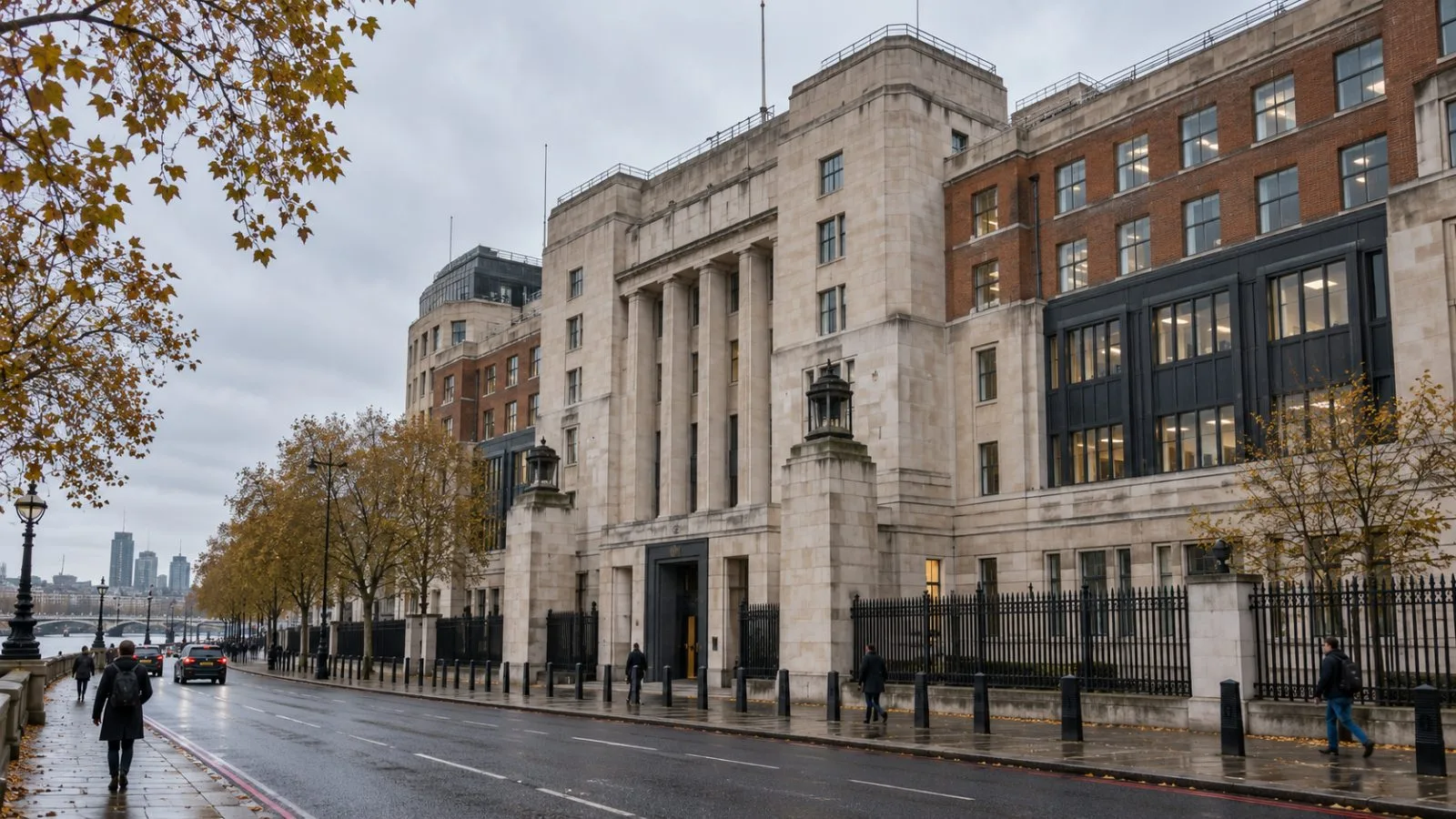
MI5 Director General Sir Ken McCallum warned that artificial intelligence could change the biological weapons threat, as governments weigh how to control misuse of tools that also serve medical research.
In his Oct. 13 annual threat update, McCallum said the outcome he feared had not yet occurred. He said MI5 launched an AI Threat Assessment Centre in 2026 to bring security and technical expertise together. Based at MI5, the center draws on the UK AI Security Institute (AISI) and other agencies to assess emerging risks.
AISI reported in December 2025 that frontier models had exceeded its expert benchmark on open-ended biology questions. The models still struggled with end-to-end plasmid design, and the institute cautioned that results from controlled tests may not carry over to real-world work. The findings do not establish that a model can produce a biological weapon.
In a September report, AI developer Anthropic flagged five instances of Claude use involving biological work with potential weapons applications. Anthropic said the report covered activity from December 2025 through August 2026. It did not claim those users intended harm or that an AI-assisted attack was imminent.
The same biological AI capabilities can aid drug and vaccine research, making decisions about restrictions difficult. Tom Inglesby, director of the Johns Hopkins Center for Health Security at the Bloomberg School of Public Health, discussed the risk on The Guardian’s Science Weekly podcast on Oct. 20.
In a 2024 paper, Inglesby and his co-authors called for U.S. federal oversight of the most concerning biological AI models, including reviews before their release. They drew a parallel with existing U.S. controls on sensitive research.
Britain’s October 2024 guidance recommends screening customers and orders for synthetic nucleic acids. The government describes the guidance as voluntary and says making it mandatory remains an option. The UK guidance addresses access to biological material, while the U.S. proposal focuses on assessing models before release.
The World Health Organization says the Biological Weapons Convention bars countries from making or obtaining biological and toxin weapons, keeping stockpiles, transferring them or using them. A United Nations working group on strengthening the convention is scheduled to meet Dec. 7-11, 2026, in Geneva.