


 Meta Launches Muse Wonder AI Models, Shares Rise 3.7%
  Solidigm Taps Goldman, Morgan Stanley for $10 Billion US IPO
  XRP Price Drops 3% Despite Ripple-Backed Evernorth Nasdaq Debut
  Amazon Cuts More Jobs as AI Investment Expands
  Bitcoin Price Faces Volatility Ahead of US CPI and Fed Speech
  Yandex Data Center Hit by Drone Strike as Russia-Ukraine Cyber Infrastructure Attacks Escalate
  US Suspends Microsoft, Adobe From Green Card Program
  Anthropic Launches Claude Dashboards and Motion AI Tools
  Nvidia’s China AI Chip Market Share Falls to 34% as Huawei Gains Ground
  Elon Musk Accuses Indian Telecom Giants of Blocking Starlink Launch
  Elon Musk Eyes Semiconductor Manufacturing Expansion With $15 Billion Terrafab Project
  Arthur Hayes Announces FLOP Testnet Launch Within Weeks
  OpenAI Revenue Hits $50 Billion, Below Earlier $70 Billion Estimate


 Add as a preferred source on Google
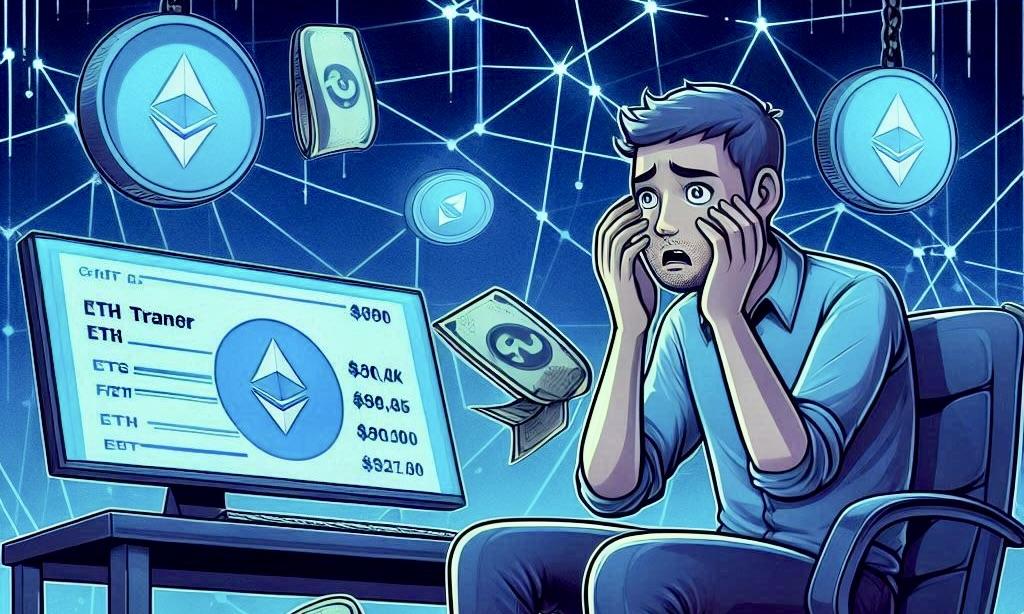
In an extraordinary blunder, a crypto user accidentally forked out $90,000 in gas fees for a $2,200 Ether transfer, highlighting the critical risks of cryptocurrency mishandling.
Crypto User Pays $90K Fee
The gas expenses for what ought to have been a straightforward $2,200 Ether transfer ended up costing an unidentified crypto user $90,000.
According to data mentioned in an Aug. 11 post to X by the anonymous user DeFiac, the user spent 34.26 Ether on gas, which is equivalent to $89,200 at current pricing, in order to transmit 0.87 ETH, which is worth just $2,262.
Staggering Overpayment in ETH Fees
Transferring ETH shouldn't cost more than $5, given gas prices on the Ethereum network are now at yearly lows of 2 to 4 gwei. More than 1,783,900% of what was due was overpaid by the user.
In the cryptocurrency industry, so-called "fat finger" transactions happen frequently.
An NFT trader shelled out 1,055 ETH (equivalent to $1.6 million in 2023 dollars) for an NFT that originally cost $1,000.
Cointelegraph reports that claims of wash trading surfaced when an OpenSea collector spent 100 ETH (equivalent to $191,000 at the time) on a complimentary NFT mint on April 6.
Risk of Costly Crypto Mistakes
When it comes to transfers, it's not just retail players who mess up. Thevamanogari Manivel, an exchange user from Australia, received $7 million from the Singapore-based crypto exchange Crypto.com in May 2021.
Manivel concealed the accident from authorities, spent the money on a Melbourne property worth millions of dollars, and wired nearly $4 million to a foreign account. For "dealing in the proceeds of crime," she received a 209-day prison term.
Accidental overpayment of gas fees on the Ethereum mainnet is one possibility; a more complex type of money laundering is another.
To validate a transaction in Ethereum, the user must know which validator will be checking it and submit it to the relevant block.
Next, in order to prevent the wrong entity from receiving the payments, the anonymous user would have had to have been closely collaborating with that validator.
Northstake, a crypto staking service, said in October 2023 that three Ethereum staking protocols and portions of the mainnet had total criminal and high-risk activities ranging from 0.46 percent to 1.56 percent.
Northstake stated that this raises worries among regulated businesses interested in testing the waters of liquid staking protocols and decentralized finance based on Ethereum, even though the number is very small.







