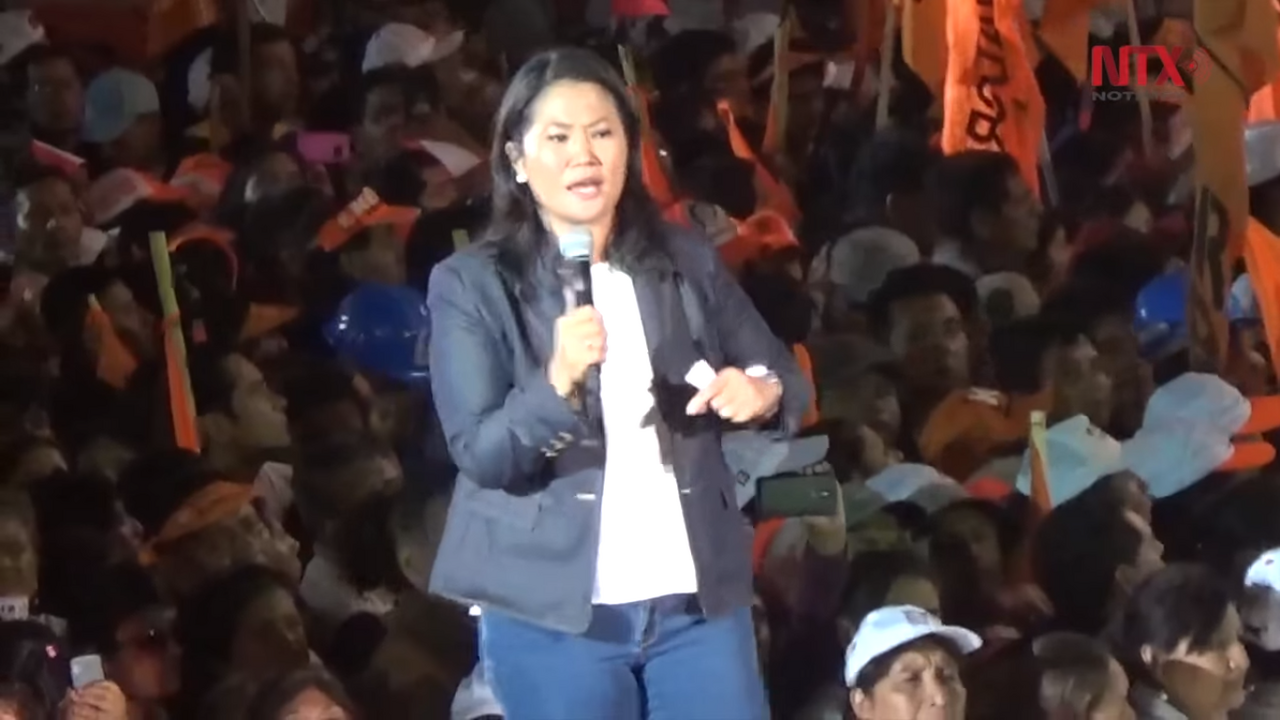
Peru’s presidential election remains too close to call as electoral authorities begin reviewing hundreds of thousands of contested ballots, with conservative candidate Keiko Fujimori holding a razor-thin lead over leftist rival Roberto Sanchez.
According to Peru’s National Office of Electoral Processes (ONPE), more than 98% of votes have been counted. Fujimori moved ahead late Wednesday after overseas ballots were included in the tally, securing 50.002% of the vote compared with Sanchez’s 49.998%. The margin separating the two candidates is roughly 600 votes out of nearly 18 million ballots cast.
While only nine of more than 90,000 polling stations remain uncounted, around 1,600 polling stations representing approximately 400,000 votes have been referred to Peru’s National Elections Jury (JNE) for review. Most of the disputed ballots originate from the Lima metropolitan area, a region considered a stronghold for Fujimori. Election officials expect the review process to take several weeks before final results are confirmed.
Financial markets reacted positively to the latest developments. Peru’s benchmark stock index rose 3.94%, while the sol strengthened 0.56% against the U.S. dollar. U.S.-listed Peruvian companies also posted gains, with mining company Buenaventura climbing 6.8% and Intercorp Financial Services advancing 3.2%. The iShares MSCI Peru and Global Exposure ETF increased by 5.6%.
The race has remained highly competitive since election day. Exit polls initially favored Fujimori, while a quick count conducted by Ipsos showed Sanchez slightly ahead. Sanchez, who gained momentum through strong support in rural regions, has recently raised concerns over what he described as unusual developments in the vote-counting process. He has met with international observers from the European Union and the Organization of American States, emphasizing the need to protect democratic integrity.
Sanchez’s campaign is also seeking to annul votes from 1,750 polling stations across Peru and 657 polling stations in the United States, citing alleged irregularities. However, Peru’s Foreign Minister Carlos Pareja stated that no issues were detected with overseas ballots, while international observers reported that the election was conducted without major problems.
Fujimori, making her fourth consecutive runoff appearance, urged patience and confidence in the electoral process. Speaking to reporters, she said the presence of thousands of poll watchers and international observers ensured transparency and strengthened public trust. The final outcome of Peru’s 2026 presidential election now depends on the review of contested ballots and the resolution of ongoing legal challenges.