


 Arthur Hayes Announces FLOP Testnet Launch Within Weeks
  Russian Strikes Kill Six in Ukraine, Including Three in Kharkiv
  Bitcoin Price Drops as US Dollar Hits 18-Month High
  European Auto Stocks Rise as EU-China Trade Deal Targets Hybrid Imports
  Most Americans Oppose Election Betting on Prediction Markets, Poll Finds
  XRP Ledger Foundation Confirms 100B Supply Safe After Security Fix
  Trump Defends Russian Diesel Deal Amid US Sanctions Backlash
  Trump Denies Russia and China Are Helping Iran in U.S. Conflict
  US Judge Blocks Trump Administration’s Taxpayer-Funded Political Ads
  DeFi Development Adds 22,070 SOL to Solana Treasury
  Zcash Price Analysis: Can ZEC Rebound Above $1,300?
  Bank of America Predicts Yen Rebound as USD/JPY Faces Risks
  Trump Announces Russia-Ukraine Energy Ceasefire as Zelenskiy Awaits Details
  Navigating the Crypto Pulse: Weekly Market Resilience and Institutional Inflows
  Greenland Lawmakers Back Trump Security Deal Despite Economic Concerns
  Ethereum Foundation-Linked Wallets Move $11.13M in ETH to Kraken


 Add as a preferred source on Google
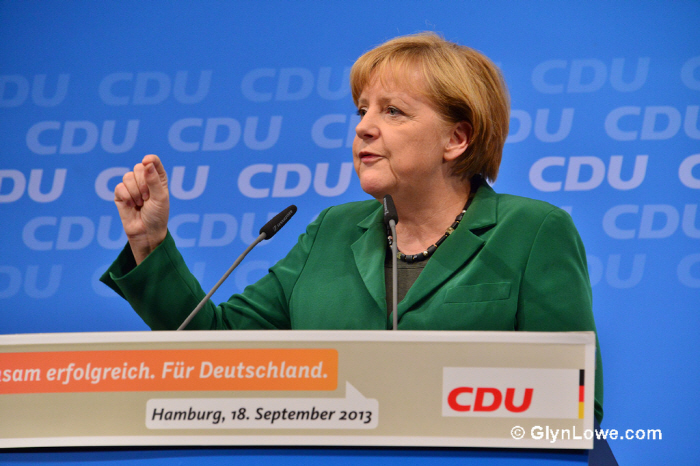
Angela Merkel’s Christian Democratic Union has won a resounding victory in a regional election in Germany’s most populous state, North-Rhine Westphalia (NRW). The CDU is now in pole position to be the largest party when Germany next goes to the polls in September. But Merkel won’t be taking anything for granted just yet.
The impressive speed with which Martin Schulz’s Social Democrats (SPD) caught up with the CDU over the winter – a ten point lead in national opinion polls was whittled down to effectively nothing – had given hope to social democrats Europe-wide.
Schulz is a pro-European federalist with impeccable centre-left credentials; the very antithesis to the type of outsider candidate that has appeared in many other parts of the democratic world. He appeared to be on the cusp of taking German politics by storm.
If, however, Schulz is to lead the SPD to power in September then he needs to translate these hopes and expectations into votes. When the SPD failed to do that in a regional election in the Saarland on March 26 it could be explained away by looking at the local context. The CDU candidate was popular and the Left Party had a strong base, squeezing the SPD vote share.
A second poor performance in Schleswig-Holstein on May 7 was tougher to explain, however. This weekend’s loss of seven percentage points on the previous performance in 2012 in North-Rhine Westphalia is, however, nothing short of calamitous.
Heartlands
The SPD challengers to Merkel would have hoped to do well in NRW. It’s their traditional heartland, much as the north of England is to the Labour Party in the UK. It’s also Schulz’s home state. Armin Laschet, the victorious CDU candidate, didn’t have any particular popular resonance and Hannelore Kraft (the incumbent “minister president” and SPD leader in the state) was not so long ago being touted as a possible chancellor herself. The SPD hoped to to use this election as a springboard to bigger and better things; instead it’s now looking at a historically bad performance of 31%. NRW, in other words, presents just the type of regional election where a budding chancellor-party would hope to be filling its boots; instead, this was nothing short of a catastrophe.
Philipp Wittrock from Der Spiegel magazine may be taking the polemics a little too far by claiming that “victory in September seems as distant for the Social Democrats as does democracy for the North Koreans”, but it is nonetheless clear that Merkel is now odds-on to claim her fourth election victory.
That said, there are certainly NRW-specific phenomena that won’t be evident when all Germans vote on September 24. The Free Democratic Party (FDP), for example, will not do nearly as well in the national election as it did in North-Rhine Westphalia (the home state of its leader, Christian Lindner), but that’s unlikely to benefit the SPD; if German liberals don’t vote FDP then generally they are more at home voting CDU. The SPD-Green government in NRW was also widely criticised for failing in important areas such as transport and education and it is no coincidence that both parties did badly.
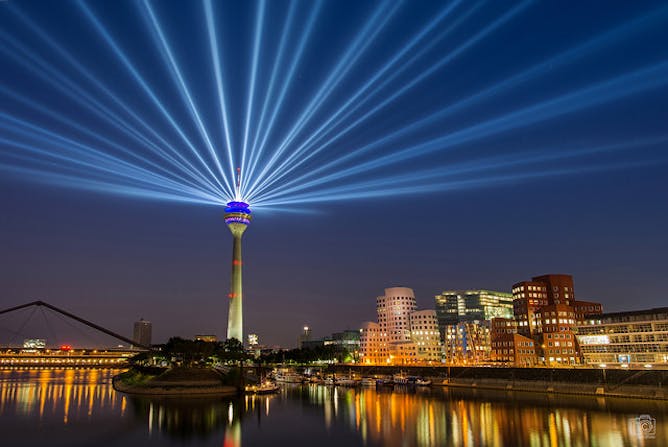
NRW capital Düsseldorf sends a signal for September elections. Jennifer Stahn/Flickr, CC BY-NC
Routes closed
The bigger point moving forward is that Merkel’s CDU appears to be regaining its footing after a tough year. The chancellor will do all she can to stop complacency setting in, while hoping that events don’t throw her off course. Merkel’s strategists won’t be thinking so much of possible Brexit palpitations or another terrorist strike; the bigger worry is a rise in relevance of the refugee issue.
The fact that the EU-Turkey agreement on closing the so-called Balkan route to Europe for potential asylum-seekers continues to hold is significant in this regard. There are people in Turkey who are well aware that if they want to get further concessions from the EU then doing so in the run up to the September vote might be the best time to do it.
It is clear that the SPD has much the bigger challenge. An SPD-Green coalition is mathematically very unlikely, and the idea of a red-red-green (RRG) government (SPD, Greens and the Left Party) is by no means universally popular within the SPD itself, even though it is the only viable governing option that would lead to Schulz becoming chancellor. A significant minority of SPD supporters actually regard RRG as the worst of all options whilst the overwhelming majority of voters on the centre-right are put off by the idea. The wider electorate will be just as reluctant and the SPD will be hard pushed to square that circle.
With Merkel often appearing to be nothing short of leader of the free world, the SPD can’t fall back on the fact that a number of its signature policies are not just popular, but have also found their way into government policy. Schulz was the fresh-faced outsider who could unsettle the CDU. He was the candidate the Christian Democrats really didn’t want to have to face. No longer. Unless something drastic happens, Schulz may well go down as the great hope that failed before he’d even really had a chance to succeed.
 Daniel Hough does not work for, consult, own shares in or receive funding from any company or organization that would benefit from this article, and has disclosed no relevant affiliations beyond the academic appointment above.







