
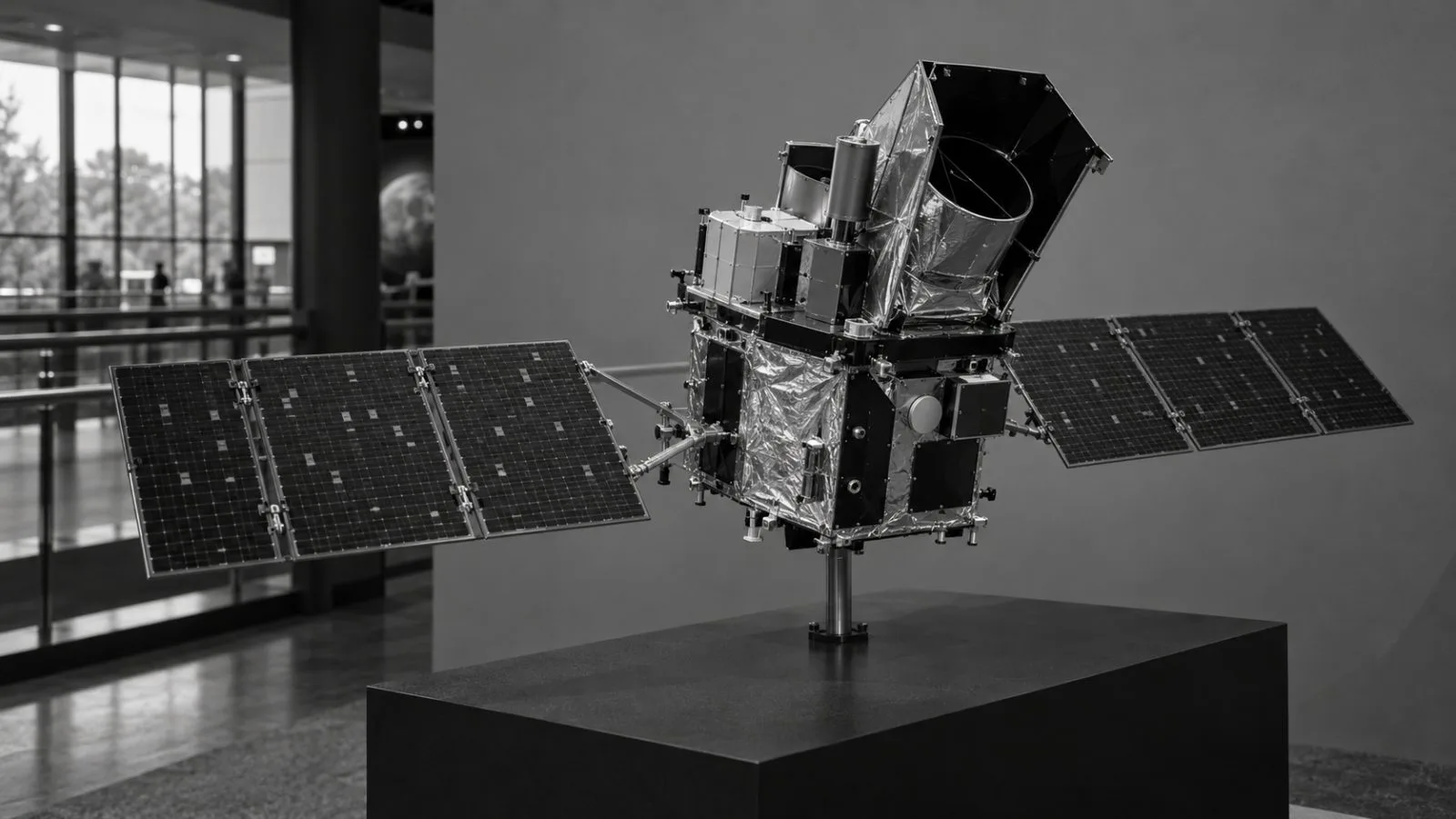
NASA’s Neil Gehrels Swift Observatory re-entered Earth’s atmosphere over Indonesia on Wednesday, Nov. 4, ending a nearly 22-year mission that expanded rapid observations of gamma-ray bursts and other cosmic events.
The U.S. Space Force (USSF) confirmed the spacecraft’s return at 7:39 a.m. EST (12:39 UTC), NASA said, over North Sumatra. The location was about 3.4 degrees north latitude and 98.6 degrees east longitude. NASA expected most of the craft to burn away during its descent, although some components could remain intact.
NASA linked the faster loss of altitude to heightened solar activity, which increased drag from Earth’s upper atmosphere. It also said restarting observations after a pause added drag. By Oct. 20, Swift was about 171 miles (275 kilometers) above Earth and unable to counter the drag; it moved into safe mode as operators prepared for re-entry.
The re-entry occurred on the date in NASA’s Nov. 2 forecast. Swift launched in November 2004 with an initial two-year mission. Its instruments were designed to detect gamma-ray bursts and quickly turn toward them for closer study. Swift could pivot to a burst in roughly a minute, NASA said, with instruments spanning gamma-ray, X-ray, ultraviolet and visible wavelengths; its alerts also prompted follow-up by other observatories.
NASA says Swift logged more than 2,000 gamma-ray bursts and observed over 1,400 supernova explosions. Research drawing on its data has appeared in about 7,000 scientific papers.
NASA awarded Katalyst Space a contract in September 2025 to try to raise Swift’s orbit. The firm’s LINK spacecraft launched in July 2026, but communications losses and trouble controlling its orientation led NASA and Katalyst to end the plan without LINK capturing Swift. NASA said the effort also aimed to build commercial spacecraft-servicing capabilities.
NASA says it is exploring how current space telescopes and future capabilities can sustain rapid follow-up observations of cosmic events.