In Sept. 28 monitoring, Mexico’s Procuraduría Federal del Consumidor (Profeco) reported a basket price range of MXN 739.90 to MXN 911.77; the figures do not establish whether the pact lowered overall food costs.
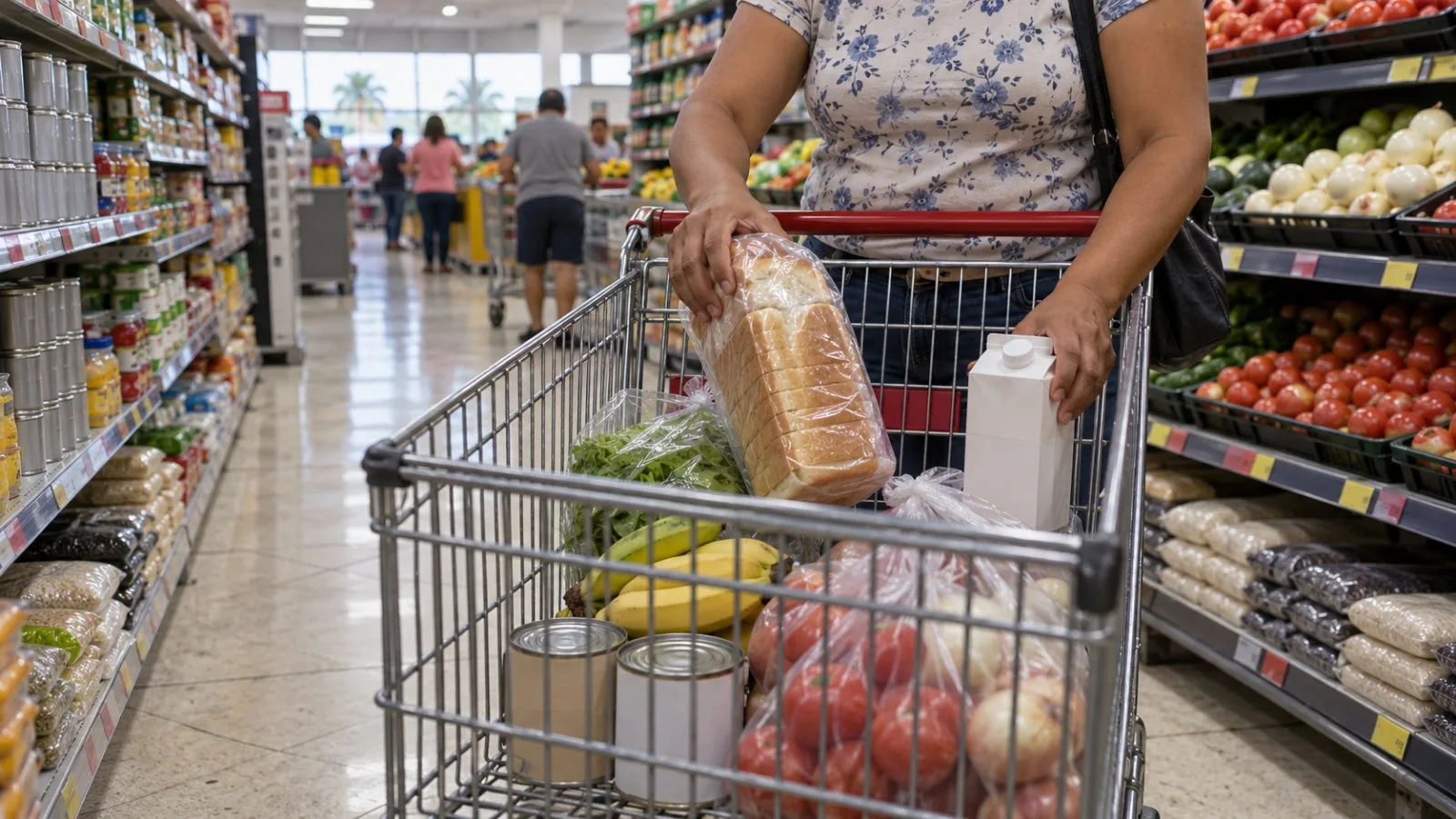
In weekly monitoring presented Sept. 28, Profeco reported a low of MXN 739.90 at Mega Soriana La Diana in Acapulco and a high of MXN 911.77 at Ley Juventud in Durango. The pact’s target is MXN 910 for the 24-item basket.
Mexico renewed the Paquete Contra la Inflación y la Carestía (PACIC) on May 29 with 32 supplier and supermarket companies. The six-month renewal kept the basket target at MXN 910. President Claudia Sheinbaum Pardo has described the basket as a week’s basic goods for a family of four.
The Secretaría de Hacienda y Crédito Público (SHCP), Mexico’s finance ministry, announced PACIC on May 4, 2022. The agreement aims to stabilize prices for 24 basic products and increase domestic food production. SHCP said participating companies could choose brands and product formats, describing the arrangement as voluntary rather than a price-control measure.
Household spending figures provide context on food’s place in family budgets, but do not measure PACIC’s effect. The Instituto Nacional de Estadística y Geografía (INEGI) reported that food, beverages and tobacco made up 34.9% of Mexican households’ monetary spending in 2025. The share was 40.3% for rural households and 33.9% for urban households. The survey tracks spending patterns; it does not compare food costs with and without the pact.
The Guardian reported Oct. 16 that economist Isabella Weber cited Mexico’s arrangement as a retail-level affordability approach in a broader argument for using varied policies to make essentials more affordable.
A separate federal decree extended tariff exemptions and import-procedure measures for selected basic goods through Dec. 31, 2026. The decree said the measures were intended to counter inflation and support product availability.