Michigan Senator-elect Abdul El-Sayed opposed President Donald Trump's tariffs on Canada and campaigned to lower them, CNBC reported in a segment published Nov. 14.
Democrats will control both chambers of Congress in 2027, but Trump still has two years in office. His executive powers over trade and support among some Democrats for targeted tariffs could complicate efforts to remove the barriers.
Canada's benchmark stock index rose 2.3% on Nov. 4, the day after the midterm election, its biggest daily gain in seven months, CNBC said in “Could Democratic Gains Bring Tariff Relief For Canada?”
The United States and Canada have closely connected supply chains in automobiles and energy. Bilateral trade reached $872 billion in 2025, down 4.6% from 2024. Canada sends about 70% of its goods exports to the United States.
Trump first imposed tariffs on Canada in March 2025. Trade barriers expanded over the following 20 months through changing tariff rates, Canadian retaliatory duties and legal challenges.
Some Democrats want to end the tariffs following their midterm victory. The Constitution gives Congress authority to impose tariffs, although lawmakers have delegated some of that power to the president.
Trump exempted plywood sheets, paper products and refrigeration equipment before the election in an effort to help Maine Senator Susan Collins. Those exemptions provided relief for some Canadian exporters.
Canadian steelmaker Algoma Steel and lumber producer West Fraser Timber are among the companies that could benefit from lower US tariffs. Whether businesses would pass tariff savings to consumers through lower prices remains open.
Steel and aluminum duties present a particular obstacle. Canada wants those tariffs removed, while some Rust Belt Democrats support keeping targeted duties. Tariffs could also remain part of negotiations with Canada.
Canada's retaliatory tariffs and other disputes further complicate the relationship. Some provinces have barred US companies from bidding on public projects and removed American alcohol products from store shelves.
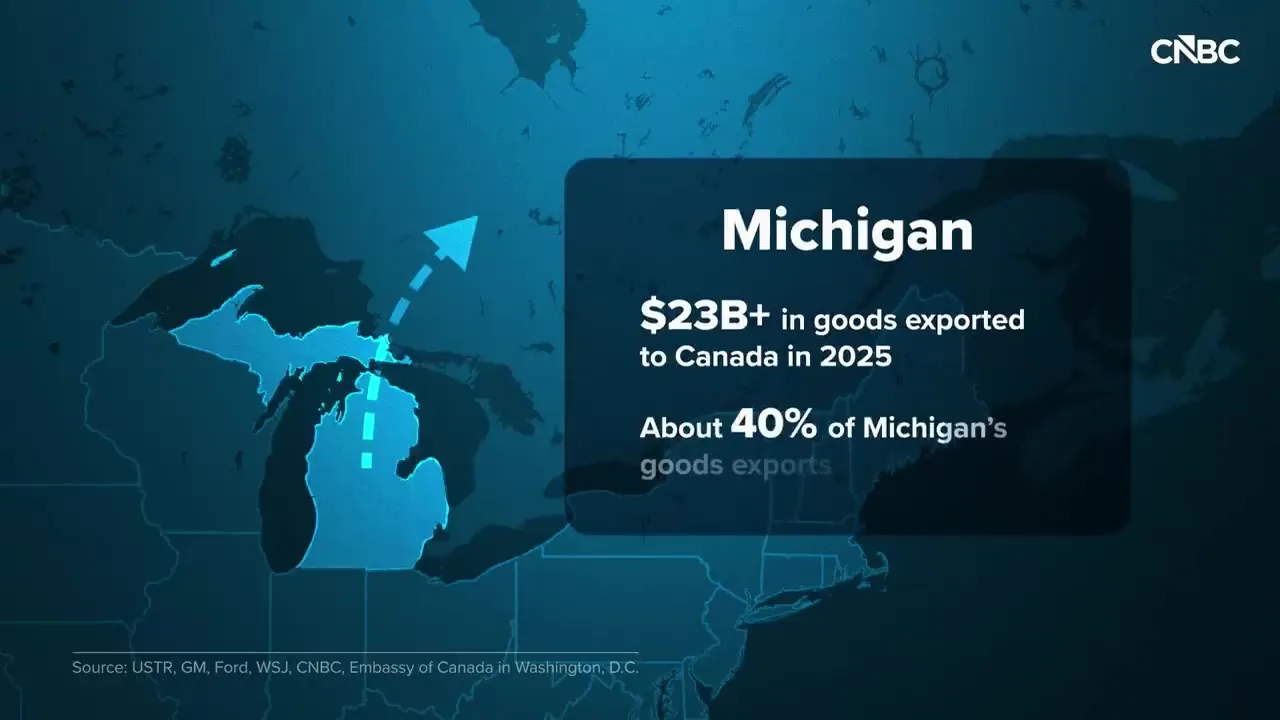
Canada was the largest export market for US goods in 2024, taking 16.8% of American exports. Michigan shipped more than $23 billion in goods to Canada in 2025, about 40% of its goods exports.
General Motors and Ford rely on Canadian production in their supply chains. That includes Canadian-made engines for trucks and sport utility vehicles sold in the United States.
Canada was also Maine's largest export market in 2025, buying $1.3 billion in goods, or 41% of the state's goods exports. Shipments included $299 million in fish and lobsters, $219 million in natural gas and $132 million in wood products.
Previous US-Canada trade talks have collapsed, and disputes over steel, lumber and automobile manufacturing remain unresolved. The timing and scope of any further tariff relief remain unsettled.