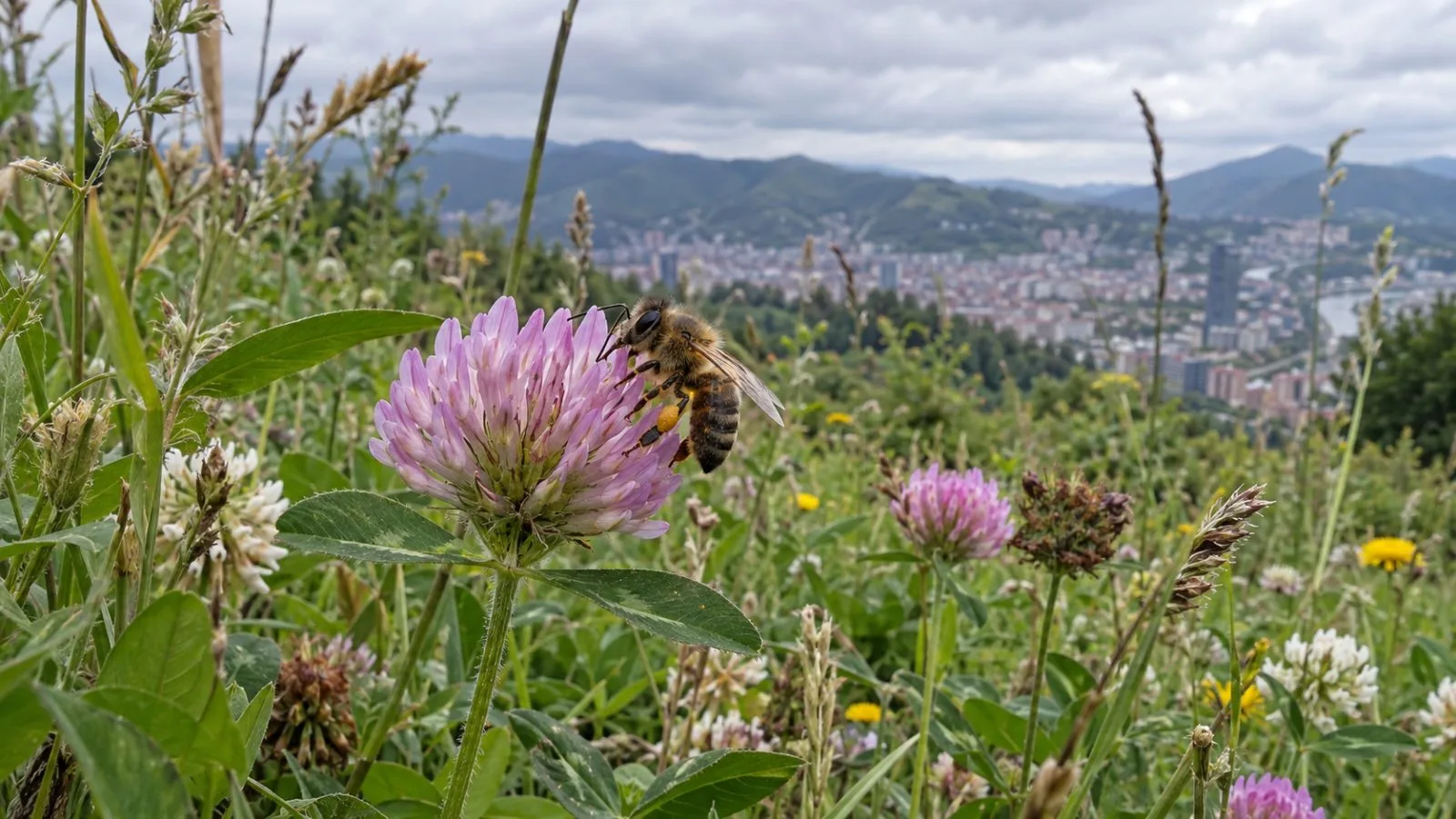
Most European wild bee species whose trends could be measured became less likely to appear at individual sites over a century, a study found, with possible consequences for plants and pollination-dependent crops.
The analysis, published in the Proceedings of the National Academy of Sciences, used more than 4 million records spanning 1921 to 2020. Those records covered 88% of Europe’s known bee and hover fly species. Ainhoa Magrach, an Ikerbasque Research Fellow at the Basque Centre for Climate Change (BC3), said the researchers could estimate trends for only about 40% of species, generally the more common ones, in comments published by Science Media Centre Spain.
Among species with enough records for estimates, most bees and about half of hover flies showed falling occupancy, meaning a lower chance of being found at a particular location. Many species still occurred somewhere in Europe even as they lost ground at individual sites.
The local declines did not always translate into fewer species across an entire region. Regional counts changed little across much of Europe. They fell for both bees and hover flies in the Atlantic and Continental regions, while the Alpine region recorded a recent increase in bee species.
Magrach said the declines could affect reproduction in wild plants and crops that rely on pollination. The Intergovernmental Science-Policy Platform on Biodiversity and Ecosystem Services (IPBES) estimates that animal pollination benefits the yield or quality of more than 75% of leading global food crop types and helps nearly 90% of wild flowering plant species reproduce. The crop figure describes types of crops, not the share of food produced.
The Spanish National Research Council (CSIC) identifies habitat loss, fewer flowering plants and pesticide use associated with intensive farming as pressures on pollinators. The study’s occupancy findings do not establish how much each pressure contributed. Magrach also said historical records are stronger for northwestern Europe than for southern and eastern areas, limiting the trends researchers could estimate there.
Countries are meeting in Yerevan, Armenia, through Oct. 30 for the first global review of progress under the Kunming-Montreal Global Biodiversity Framework.