NEXTDC said Friday that opposition to its Melbourne M3 project will change where it builds data centers and how early it consults nearby communities, highlighting local approval and power access as growing risks for AI infrastructure expansion.
The Australian operator said it does not intend to pursue new development opportunities near residential properties. Chief Executive Craig Scroggie said public expectations have changed as artificial intelligence increases demand for large computing facilities, adding that residents’ concerns about proposed power poles “deserved to be heard earlier.”
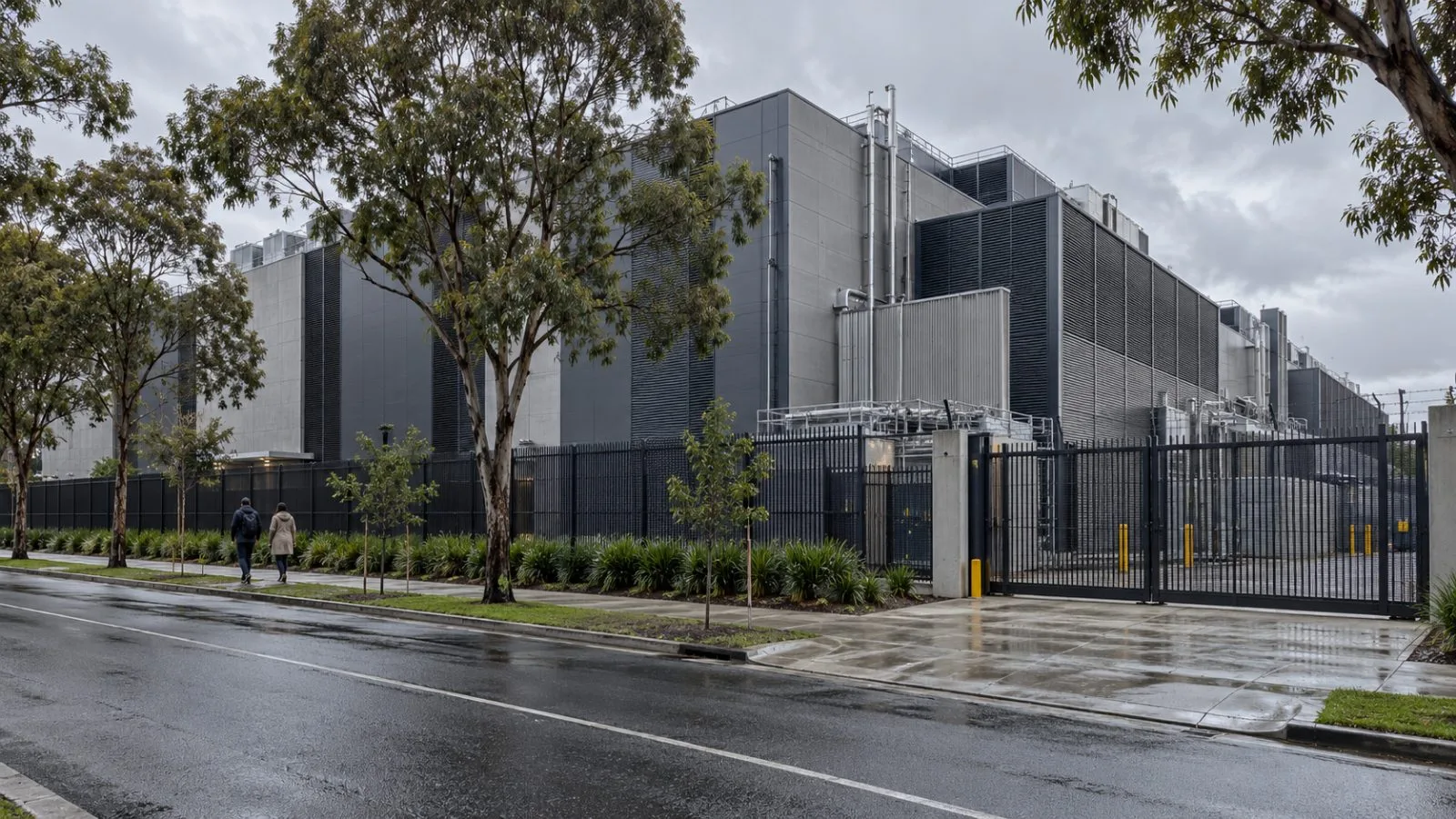
M3 has been under development since 2021 in an industrial precinct in West Footscray. Jemena suspended parts of the electricity work in September, citing safety concerns, community opposition and limited access to work sites. NEXTDC is reviewing alternative routes, underground connections and other grid options; it said the next increase in supply is currently expected in fiscal 2028, subject to those discussions with Jemena.
The Victorian government’s planning decision on M3’s final Stages 6 and 7 remains pending. NEXTDC said the process should resume after the Nov. 28 state election, while construction continues.
The delay prompted NEXTDC to leave the affected M3 contracts out of its fiscal 2027 guidance. The contracts represented about A$140 million each in previously expected net revenue and underlying EBITDA, but the company said their contribution cannot yet be estimated reliably. NEXTDC previously outlined the effect of the Melbourne power delay.
In a Nov. 20 filing, NEXTDC lifted fiscal 2027 net-revenue guidance to A$485 million-A$500 million and underlying EBITDA guidance to A$260 million-A$275 million. Capital-expenditure guidance stayed at A$4.5 billion-A$5 billion, with spending directed toward contracted capacity; uncontracted projects including M4, M5, S5, S7, GC1 and AK1 remain on hold.
A Reuters report published by StreetInsider said NEXTDC shares had fallen 42% after the Melbourne setback, using Reuters’ measurement period. NEXTDC operates 18 data centers in Australia and Malaysia, has five sites in development and reported a forward order book of about 565 megawatts at the end of fiscal 2026.
The company plans a standing community consultative committee for M3 and broader engagement programs for sites in Australia and Asia under board oversight. It expects to update investors on M3 with its half-year results in February 2027, or earlier if a material development occurs.