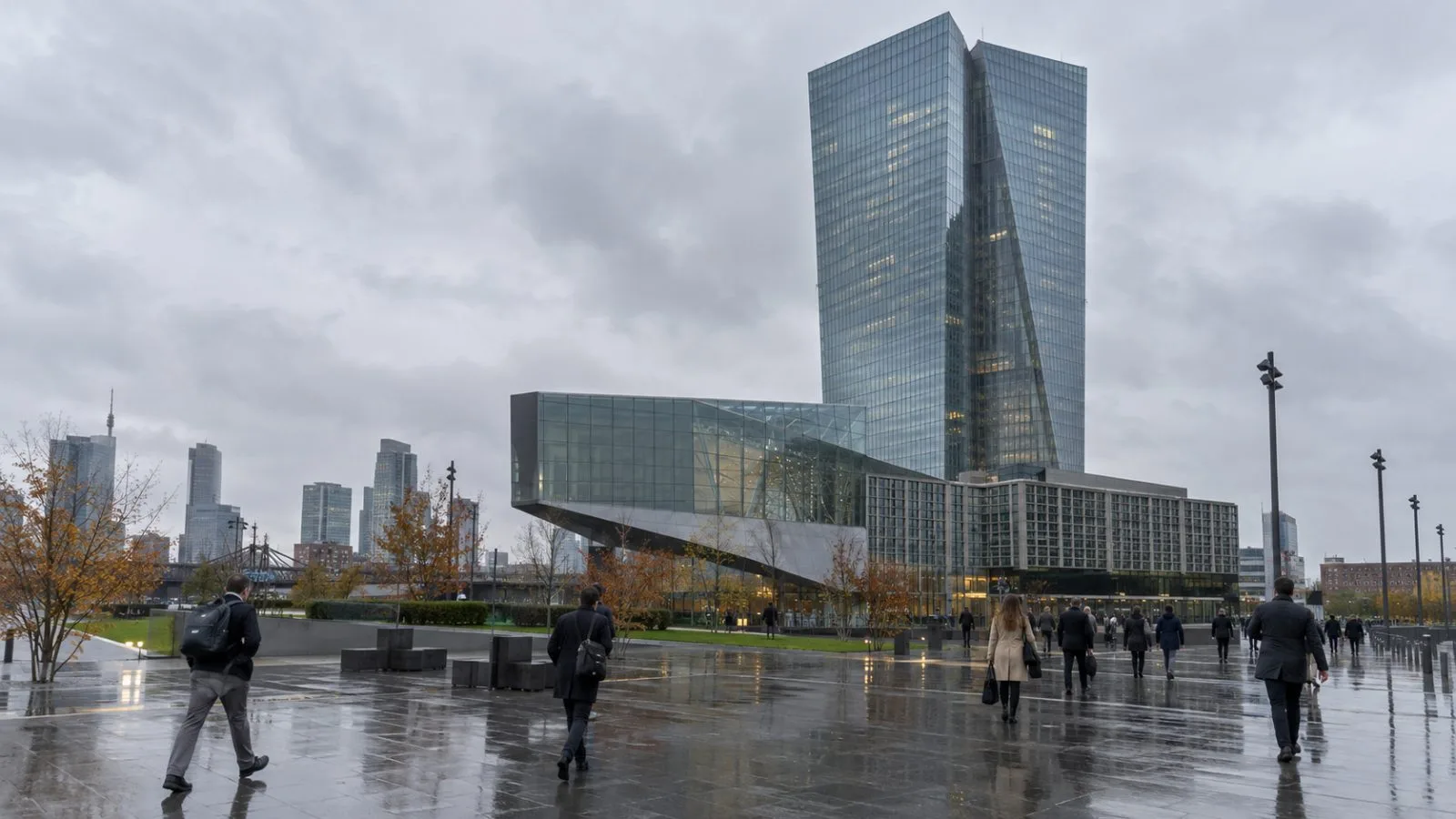
Joachim Nagel, president of Germany’s Bundesbank and an ECB Governing Council member, said Nov. 3 that a December rate increase was very likely as euro-area inflation pressures intensified.
Nagel said the case for a rate rise would change if the outlook improved substantially. The ECB’s Sept. projection had already assumed another increase, he said, and current price pressures were bringing the euro area closer to that forecast’s adverse scenario. His comments describe his assessment; the Governing Council has not announced a December increase.
Eurostat reported annual euro-area inflation of 3.8% in September, up from 3.2% in August. Energy inflation rose to 18.9% from 14.3% and contributed 1.71 percentage points to the annual rate.
The ECB kept its deposit facility rate at 2.50%, its main refinancing operations rate at 2.65% and its marginal lending facility rate at 2.90% on Oct. 29. The Council said rising energy costs could add to price pressures and weigh on growth. Wages had not yet reacted materially, it said, and policy decisions would be made meeting by meeting using new data, without a preset sequence of rate moves.
Nagel linked much of the energy price increase to continuing conflicts in the Middle East. He said monetary policy cannot reverse a supply shock in energy, but can limit its effects across the economy. He warned that repeated increases could feed into other prices and wage demands. Higher bills for fuel, rent and groceries are already worrying households, he said.
The remarks follow Nagel’s earlier warning about energy costs and euro-area inflation. The ECB has raised rates twice in 2026, Nagel said.
Eurostat’s flash estimate of October inflation is scheduled for Wednesday, Nov. 4. The ECB’s next policy meeting is set for Dec. 16-17, when the Governing Council is due to consider new Eurosystem projections extending through 2029, Nagel said.